Player versus Player in the Early Blackmoor Campaign
Rodney Hampton
- 15 minutes read - 3131 wordsDave Arneson tried to show us the right way to play the game
On Chainmail and Braunstein
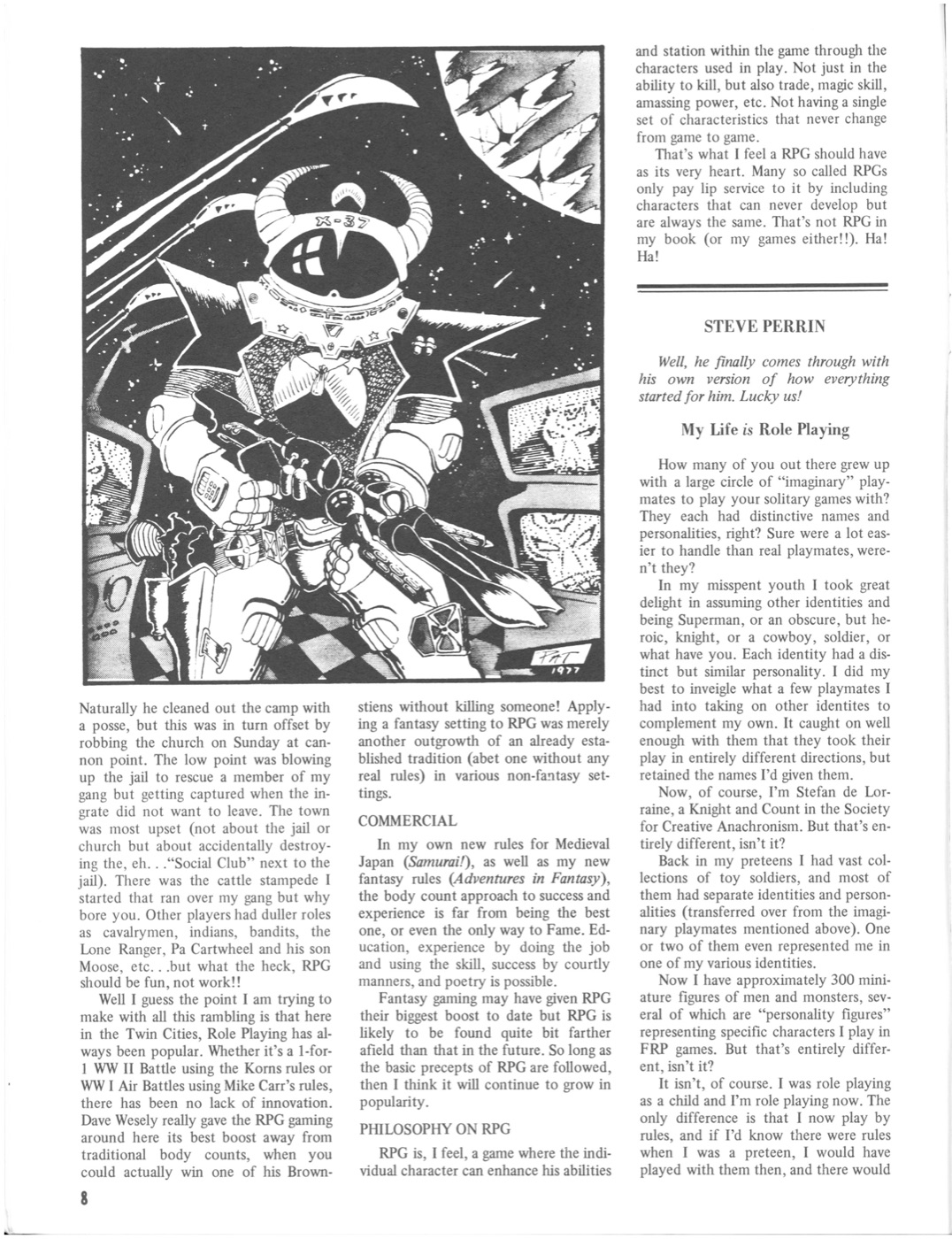
If you follow certain Dodos on X and in certain forums, you’ll get a very mistaken view on the origins of Dave Arneson’s Blackmoor Campaign. So, it’s best to hear from the man himself. In Different Worlds, “My Life and Role-Playing 3,” Issue 3, Chaosium, Albany, California, June/July 1979, pp. 6-8 [not available online any longer] we get several straightforward quotes:
- “RPG is . . . a game where the individual character can enhance his abilities and station within the game through characters used in play. Not just in the ability to kill, but also trade, magic skill, massing power, etc.” “In my own new rules for Medieval Japan (Samurai!), as well as my new fantasy rules (Adventures in Fantasy), the body count approach to success and experience is far from being the best one, or even the only way to Fame. Education, experience by doing the job and using the skill, success by courtly manners, and poetry is possible.”
- “Blackmoor was not the first RPG game that I was in. Not by a long shot. Some years previously, I had been involved in a Napoleonic battle in the town of Brownstein [sic], where as a local student leader, I tried to rally resistance to thwart a French attack (I ended up arrested by the Prussian General because I was ‘Too fanatical’). Prior to that I found myself as a professor at a South American University trying to pass out leaflets to overthrow ‘El Chiefe.’” [Referring to Braunstein and Banania by Dave Wesely]
- “Rules? What rules!?!? Chainmail to handle the combat at first. A system of magic based on ANIMAL-Type, VEGE-TABLE-Type or MINERAL-Type with a hodge-podge of spells, populating the Dungeon fairly logically (Orcs and minions on one level, etc.), Magical Artifacts, Encounter Tables when the adventurers wanted to go off after bigger and better things, and so on.”
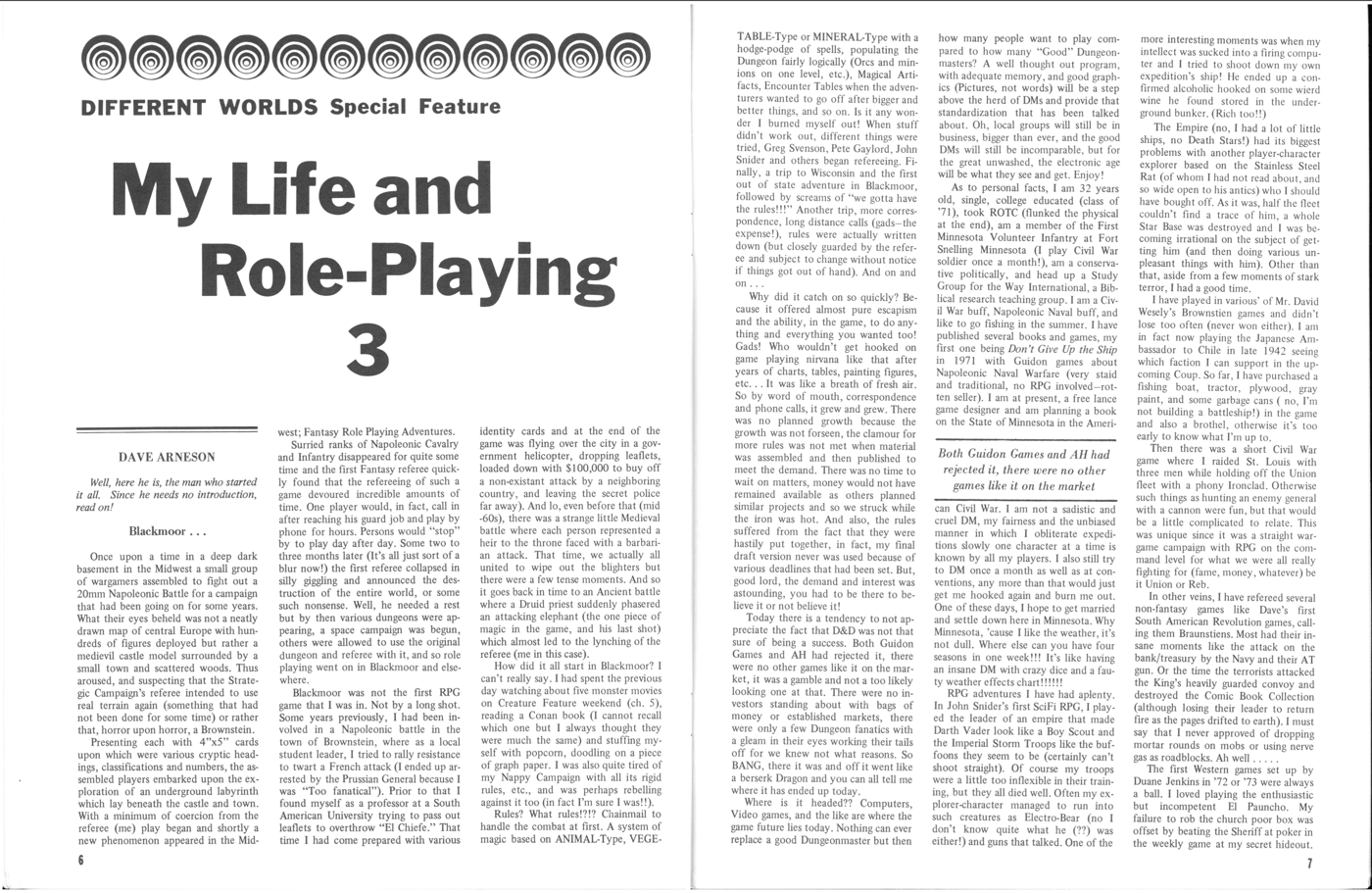
Robert J. Kuntz, Dave Arneson’s True Genius, Three Line Studio, Corsica, France, April, 2017 has attempted to prove that Gygax’s shift from an open form RPG concept to a closed form concept was a mistake and departure from Arneson’s approach. Further, Kuntz argues that Arneson’s evolutionary approach to game design was not captured in the artifacts that we have “Classic D&D” (or Original D&D) and First Fantasy Campaign (FFC). Rather, those were just snapshots of the state of the game at a time. And Gygax was not the true builder of the hobby that he seems. Arneson built the first “house” and Gygax merely used those blueprints as a leaping off point to “re-model” the house (mimicry, not innovation). Finally, he argues that neither Chainmail nor Braunstein are the lineal ancestors of Arneson’s conception of D&D, but are merely two influences. To quote Kuntz, “In summary, Chainmail and Braunstein are influences but cannot be used “AS-IS” to produce even a fraction of D&D’s systems qualities. Arneson’s unique system transcends its parts, influences included.”
Unfortunately for Kuntz, his initial straw man is that both Gygax and Wesely were independently claiming to have germinated the seed from which the RPG hobby grew. I’m not sure I’ve seen a non cherry-picked quote from either man that stakes a definitive claim to the origins of the hobby. Indeed, given one interview with Wesely and his blasé attitude toward intellectual property, it seems completely out of character for him to have made such an assertion.
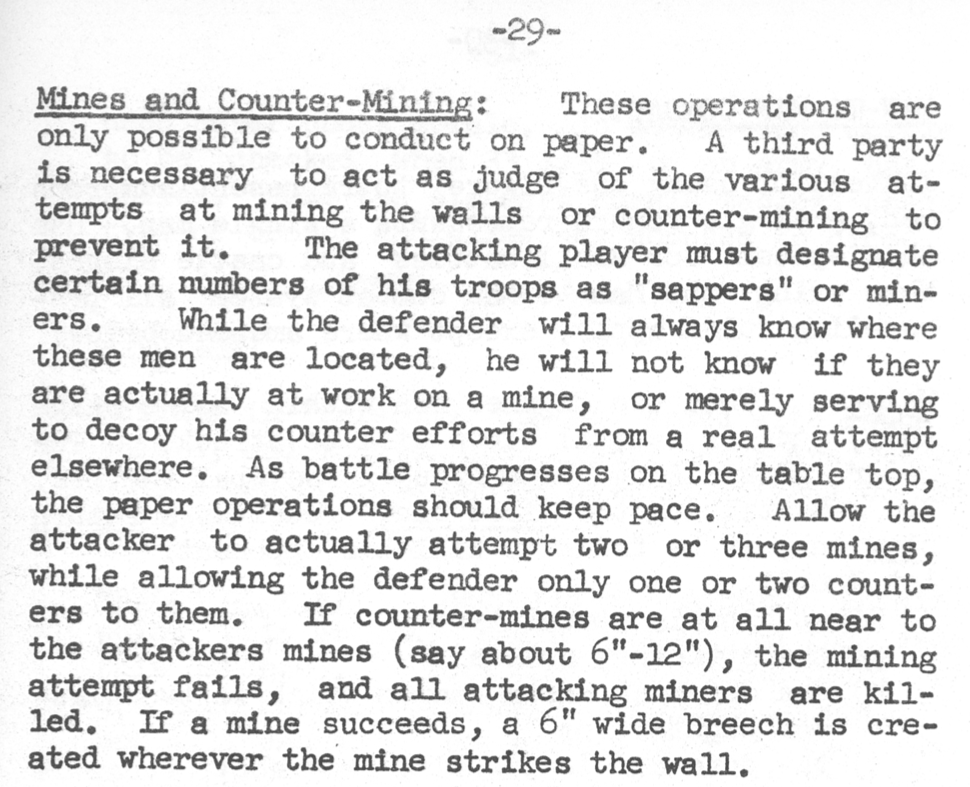
I can see Gygax as a hype-man staking a firmer claim, but Kuntz doesn’t do himself any favors by overstating his case that dungeon adventures do not exist in Chainmail. Mines and counter-mines are clearly described. Although the rules do not envision using the man-to-man mechanism to play out such deadly, underground encounters, they are easily adapted to do so.
- Kuntz p. 48: “. . . Gary Gygax’s repeated assertions that Chainmail gave birth to D&D; and this claim was also made by him to include David Megarry’s board game, Dungeon! even though no dungeon adventures, for one minor example, occur in Chainmail.”
- Chainmail 1st edition p. 29:
 Side Note: Alatriste has a great scene that I can’t help but insert before we move forward.
Incidentally, pp. 22-25 highlight Kuntz’s motives for downplaying Gygax’s contributions to the hobby and pumping up Arneson’s. Dominic Martyne has unpacked this in much greater detail in D&D: An American Institution, Critical Dom Entertainment, 2026, available at https://www.drivethrurpg.com/en/product/573214/d-d-an-american-institution?affiliate_id=2658330.
So what are we to make of Arneson’s quotes in Different Worlds Issue 3? Arneson gives us a wide ranging definition for RPGs (which excludes the Chainmail and Braunstein scenario strictly rules as written (but possibly not Duane Jenkins’ Brownstone). Arneson does, however, give a hat-tip to both influences in a way that denotes their primacy. And FFC does have fingerprints of Chainmail throughout. I think Kuntz doth protest too much.
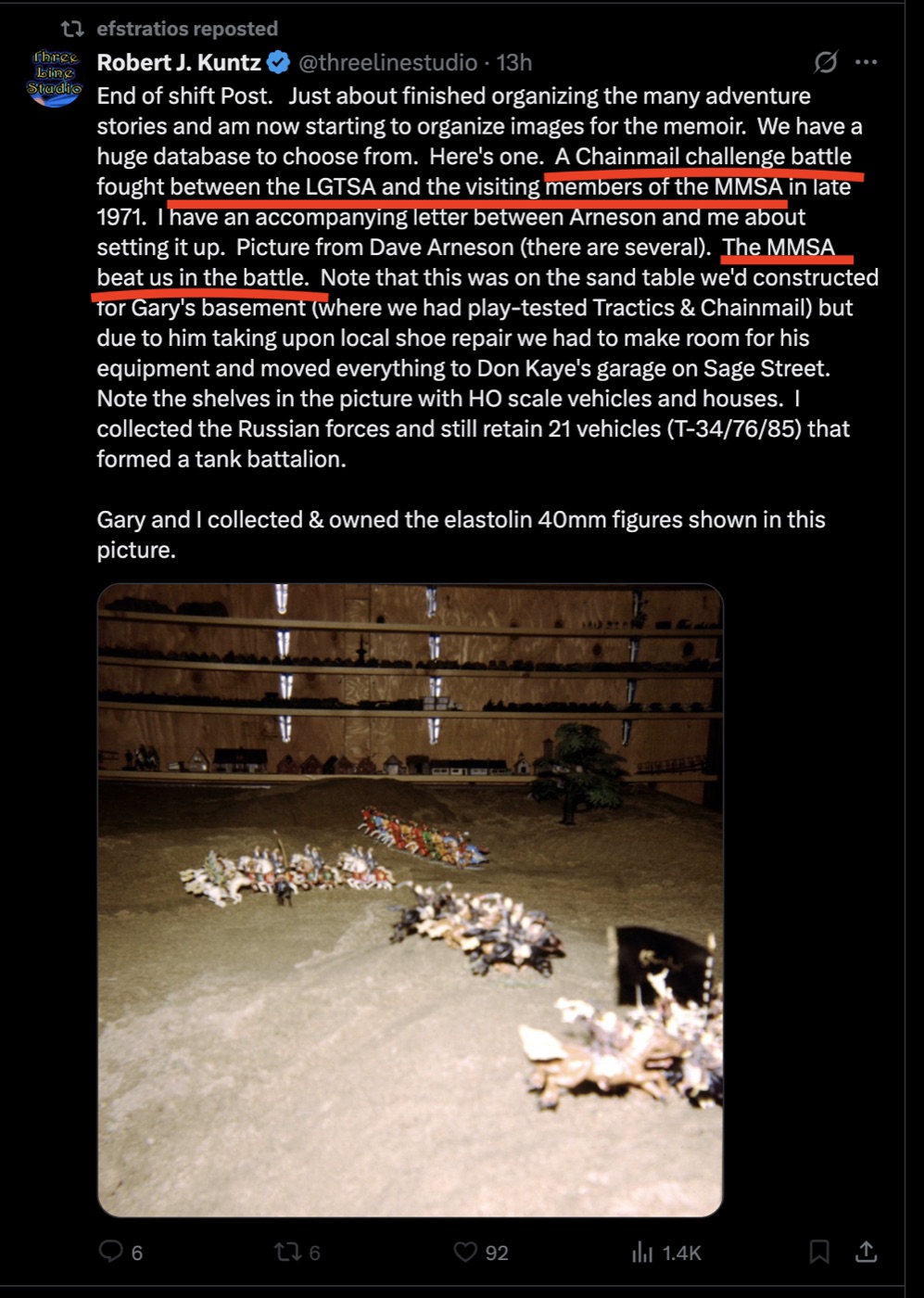
As for the Player versus Player aspect, Chainmail (a miniature wargame) and Wesely’s Braunstein and Banania scenarios pit players against one another. Player skill in the form of wits, tactical skill, and even charm are front and center. And there is no doubt that the wargamers in the Twin Cities played Chainmail enough to achieve some mastery of the rules in 1971 (the year of its publication). Thanks to Rob Kuntz, we have the following account of a game that pitted players in the LGTSA (Lake Geneva Tactical Studies Association) against those in the Twin Cities’ MMSA (Midwest Military Simulation Association).
Other Games in the Twin Cities
Turning again to the article in Different Worlds, Arneson describes playing in either Star Probe (c. 1974-5) or possibly Star Empires (1977) by John Snider. Arneson had his “biggest problems with another player-character explorer based on the Stainless Steel Rat . . . who I should have bought off. As it was, half the fleet couldn’t find a trace of him, a whole Star Base was destroyed and I was becoming irrational on the subject of getting him (and then doing various unpleasant things with him).” [Also see Arneson on the first page saying that 3 months after Blackmoor began, he burned out. Other dungeons sprung to life and “a space campaign was begun.” So it is possible a nascent version of Star Probe was in the works as early as 1971.]
Arneson describes his exploits duping other players in Banania: “That time I had come prepared with various identity cards and at the end of the game was flying over the city in a government helicopter, dropping leaflets, loaded down with $100,000 to buy off a non-existent attack by a neighboring country, and leaving the secret police far away).” And in other -steins where there was clearly a winner and several losers: “I have played in various of Mr. David Wesely’s Brownstien [sic] games and didn’t lose too often (never won either).”
Arneson gets up to more shenanigans in a game on-going at the time of the interview (c. 1979): “I am in fact now playing the Japanese Ambassador to Chile in late 1942 seeing which faction I can support in the upcoming Coup. So far, I have purchased a fishing boat, tractor, plywood, gray paint, and some garbage cans . . . in the game and also a brothel.”
More adaptations of games come pouring out of Arneson, showing the kinds of continual player versus player activity in the Twin Cities: “Then there was a short Civil War game where I raided St. Louis with three men while holding off the Union fleet with a phony Ironclad. Otherwise such things as hunting an enemy general with a cannon were fun, but that would be a little complicated to relate. This was unique since it was a straight wargame campaign with RPG on the command level for what we were all really fighting for (fame, money, whatever) be it Union or Reb.”
And Arneson presided over non-Medieval -stein games as well wherein players seem to have been just as aggressive as Arneson in pursuing their aims: “In other veins, I have refereed several non-fantasy games like Dave’s first South American Revolution games, calling them Braunsteins. Most had their insane moments . . . I must say that I never approved of dropping mortar rounds on mobs or using nerve gas as roadblocks.”
Arneson describes playing in Duane Jenkins’ Brownstone games “in ‘72 or ‘73” which I am more inclined to believe took place earlier in the timeline. Maybe this was 71-72 instead or late 70-71. In any case, Arneson tells us of starting a cattle stampede that ran over his own gang (a little like the remake of 3:10 to Yuma). In addition to the notorious El Pauncho and the Sheriff, players had “roles as cavalrymen, indians, bandits, the Lone Ranger, Pa Cartwheel and his son Moose, etc.” The list of roles (and an understanding of Western TV shows and movies from the time) helps us understand the conflicts built into Jenkins’ setting. Players would have understood the tropes.
Digression: I’ve often felt that every Boot Hill module I have read, especially the election one, would absolutely have been better written as a set of -steins. My role as a player in “Hail Steinser” where the election of a new ruler was a central theme just reinforces what the BrOSR had already discovered about Boot Hill and Gangbusters.
Arneson pours out more pure gold in the interview: “ . . .[H]ere in the Twin Cities, Role Playing has always been popular. Whether it’s a 1-for-1 WW II Battle using the Korns rules or WW I Air Battles using Mike Carr’s rules, there has been no lack of innovation. Dave Wesely really gave the RPG gaming around here its best boost away from traditional body counts, when you could actually win one of his Brownstiens [sic] without killing someone! Applying a fantasy setting to RPG was merely another outgrowth of an already established tradition (abet [albeit?] one without any real rules) in various non-fantasy settings.”
Unpacking This Paragraph
Yes, we need to linger on this entire paragraph. “Role Playing” could be re-written as “Here in the Twin Cities, playing a Role has always been popular.” The examples Arneson cites for this proposition are telling. Michael F. Korns, Modern War in Miniature, M&J Research Co., Lawrence, Kansas, 1966, pp. 9-11 showcases the interaction between a judge and opposing players in a World War II skirmish. It reads exactly like a play example for a modern RPG. The fact that Arneson cites this ruleset as something they played in the Twin Cities, has been discussed ad nauseam in a thread on proboards. Mike Carr’s rules for Dawn Patrol / Fight In the Skies were an influence on OD&D’s aerial combat rules as well as setting up players to run a campaign with pilots on different sides of World War One. Arneson confirms that there was an individual winner in each of Wesely’s -stein games but that violence was not necessarily a requirement for success. Finally, I think what Arneson was saying in the final sentence is better rendered like this: Playing a Role in a game was already a tradition in the Twin Cities for non-fantasy settings, so applying the concept of playing a Role to a fantasy setting was a natural evolution.
Clear Examples
Greg Svenson’s early play report from Blackmoor tells us a lot, but before we go there, I’d like to point out three things from Arneson’s First Fantasy Campaign (FFC).
- David Wesely (aka “The Weasel”) took over as the Baron of Blackmoor Castle. He played a treacherous character who conspired with The Egg of Coot. This led to the demise of several other players’ characters and the loss of the strategic fortification.
- Kurtis Krey played Blackmoor’s first evil Wizard. The description of “The Black Hall” tells us “the Wizard with the enemy released his spell through the ten enemy representatives there in the Hall. In forms too terrible to describe, the ten enemy representatives attacked their victims who manfully tried to defend themselves against their gruesome adversaries. As a result of this, courage, nine of the enemy were killed but of the 10th, no trace was ever found.” Krey’s further exploits are also related in this blog.
- Baron Fant (played by Dave Fant) was turned into a “‘traditional’ Slavic vampire” known as “Sir Fang” who wanders about Blackmoor’s dungeon. There are rules for advancement since he started as a Vampire x 5 and had since become “much stronger than that.” FFC has a section entitled “How to Become a Bad Guy” (aka a monster) with guidance so a Referee can allow campaign participants to play other types of monsters too.
Greg Svenson’s account tells us so much more. He starts as a mere “flunkie” man-at-arms in the employ of the Baron. He and his compadres are sent into the dungeon below to hunt “an evil wizard, played by Jim Abler, and his pet balrog, played by John Soukup.” Sometime after the end of this adventure he is promoted to “Hero” by Arneson the Gamemaster.
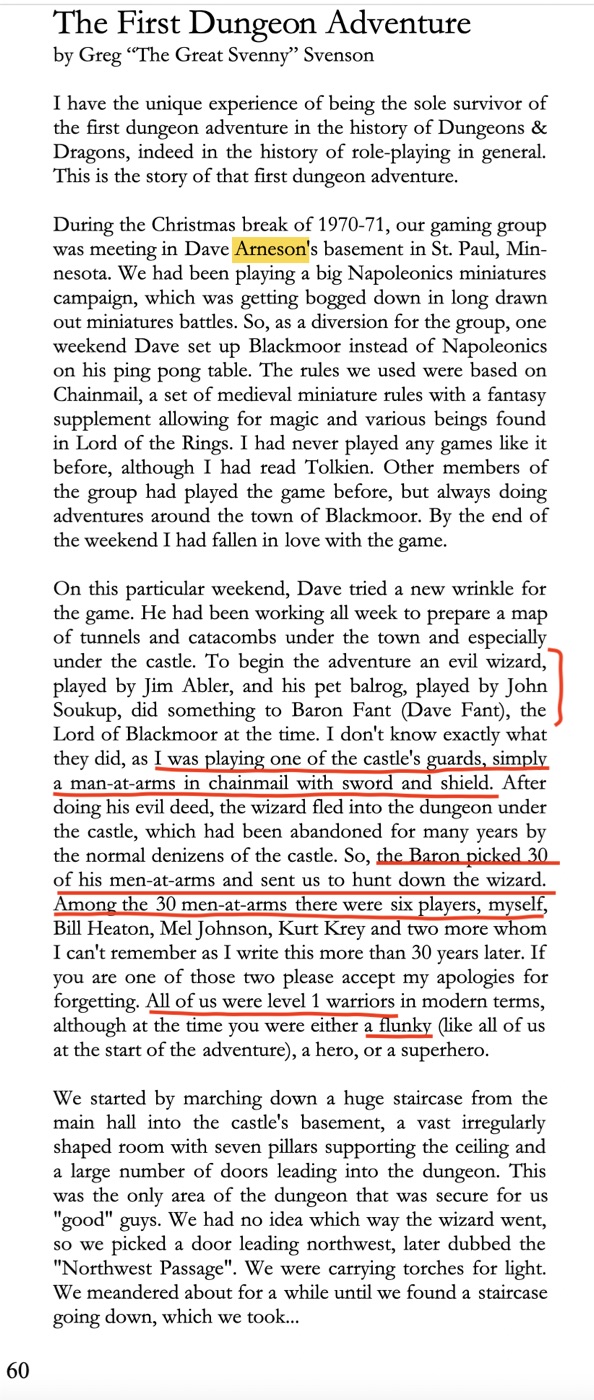
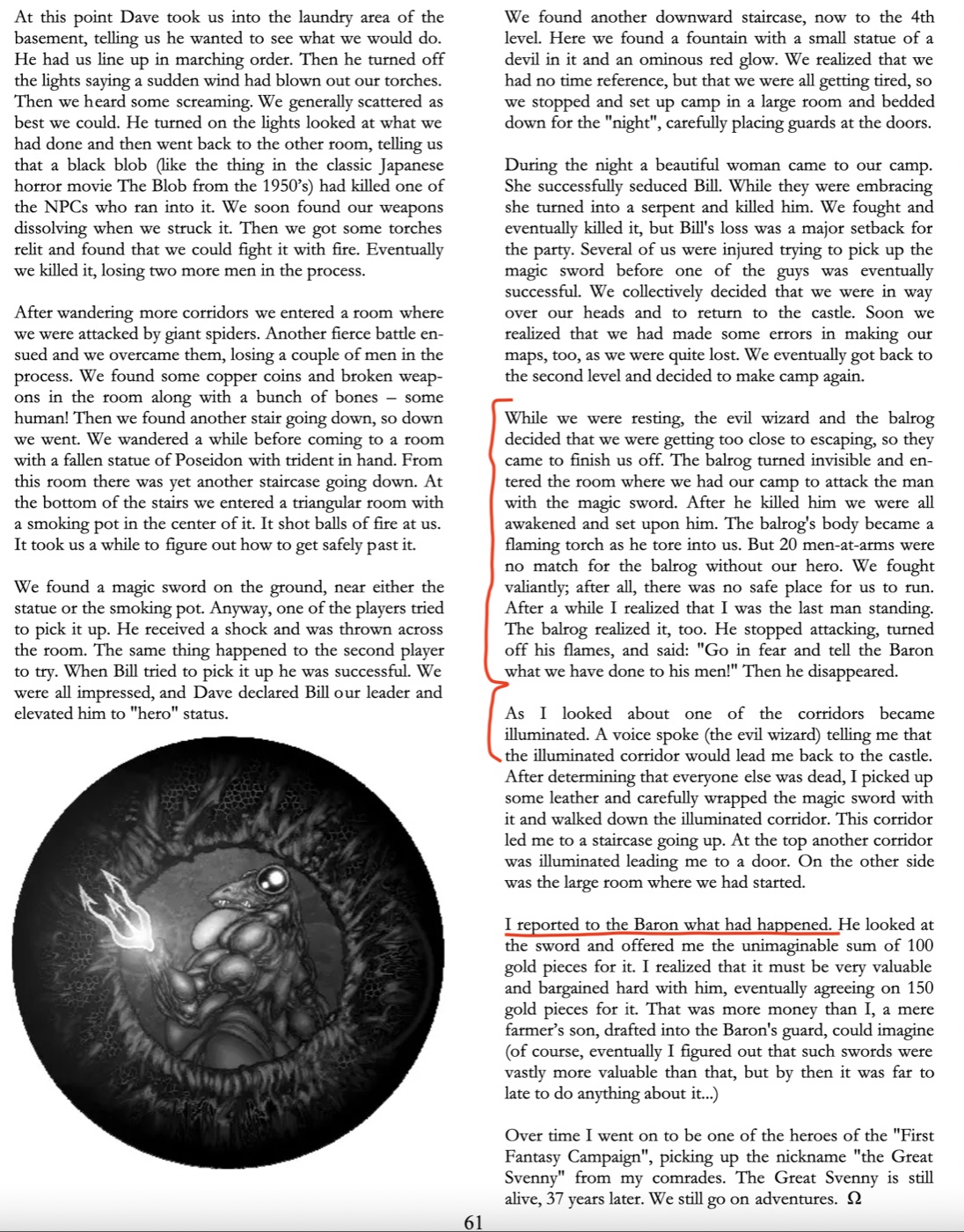
Svenny later went on to fight “Frederick the 1st, [K]ing of the Orcs (played by Fred Funk)” on level 10 of the dungeons under Blackmoor Castle. As a result, the Orcs put out a price on Svenny’s head.
Fight On!
There is another “Interview with Dave Arneson” in Fight On!, Issue 2, Ignatius Ümlaut, Publisher, Ypsilanti, Michigan, Summer 2008, pp. 63.
- Q: “How quickly did players in the early games start to shift from the tactical/imaginative exercises to things like building their own kingdoms, becoming knights, building towers, etc.?
- A: . . . Greg Svenson and Richard Snyder [sic] were first to branch out; it took several months to start their kingdoms.
It is well known that promotion from “flunkie” to Hero was often quite rapid. By 1972, it seems, there were several players with their own holdings. And in Blackmoor’s third year, as described in First Fantasy Campaign, an entire four-season campaign between the forces of Law and Chaos was envisioned. Players would “organize their own forces based on experience and goodies acquired enroute to their Greatness.”
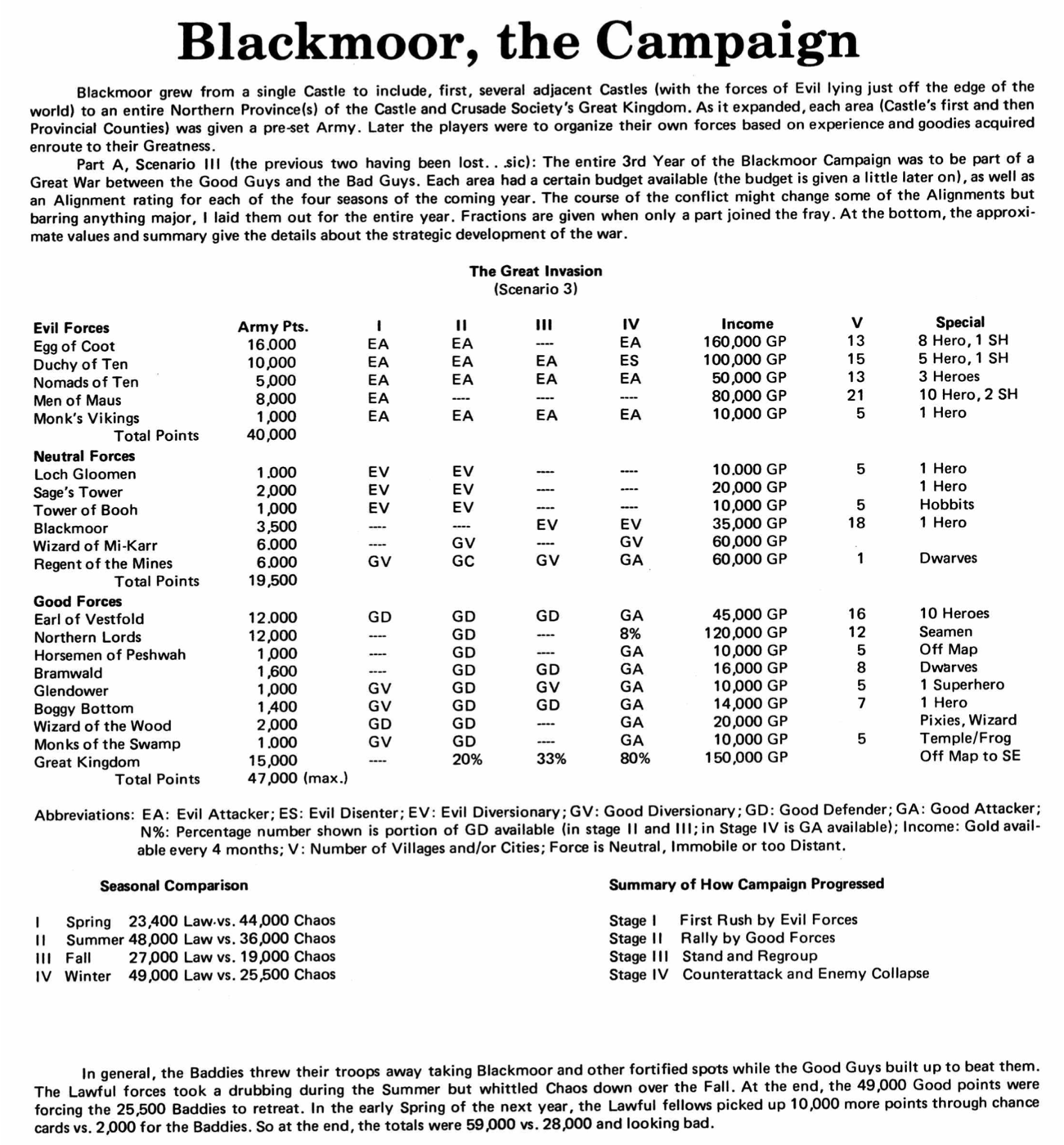
Unless someone has played Chainmail, the scale of the armies outlined by the point values (and text on the following pages) is staggering. Yet Arneson claims at the bottom of his introduction that his players actually engaged in this campaign. Arneson was keeping score. Yet we have no session reports, which is odd. I suppose these may have been part of the two truckloads of material that are now in other people’s hands (per a private conversation I had with another Twin Cities gamer).
1973 Drafts
What prompted me to write Dragons Beyond and Midwest Fantasy Wargame: The Primeval RPG were the two documents recovered from the Twin Cities: Beyond This Point Be Dragons / Dalluhn Manuscript and the draft that shook out of the Arneson v. Gygax lawsuit.
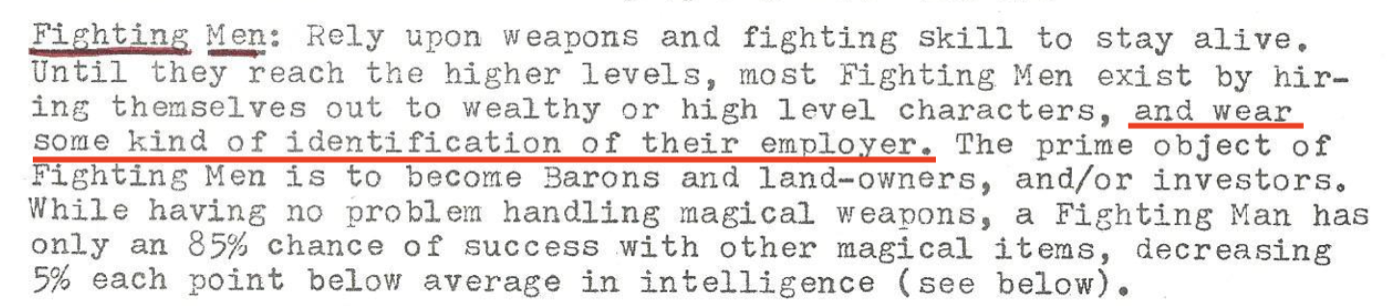
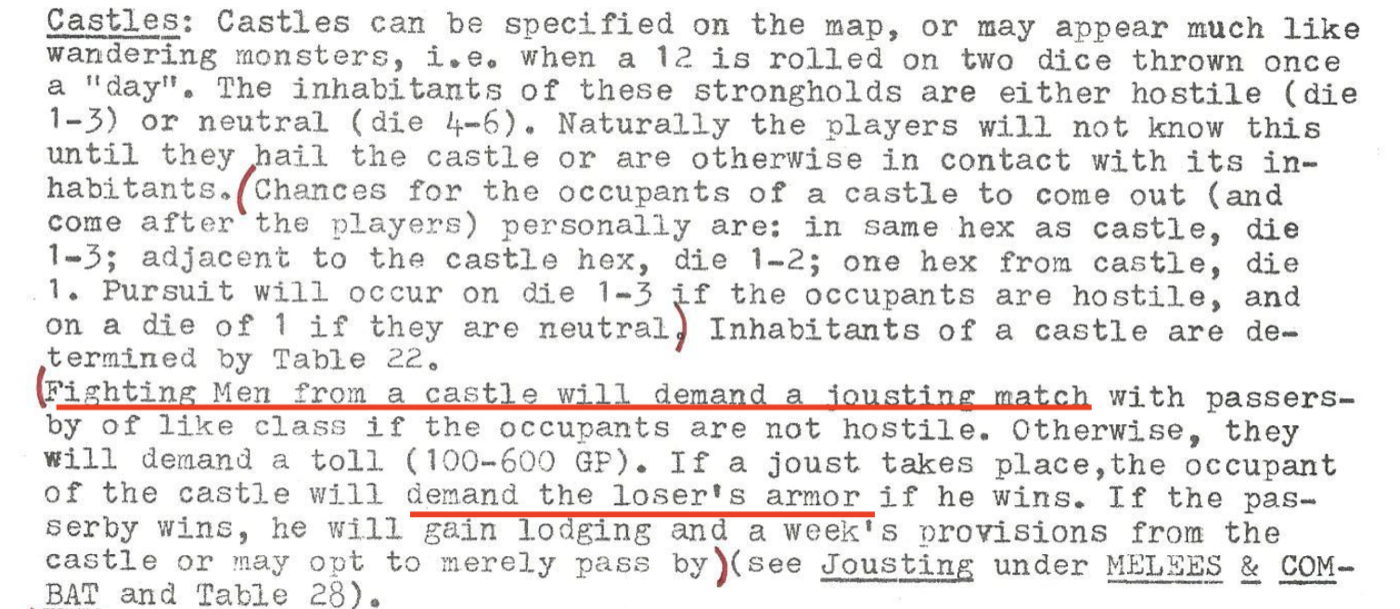
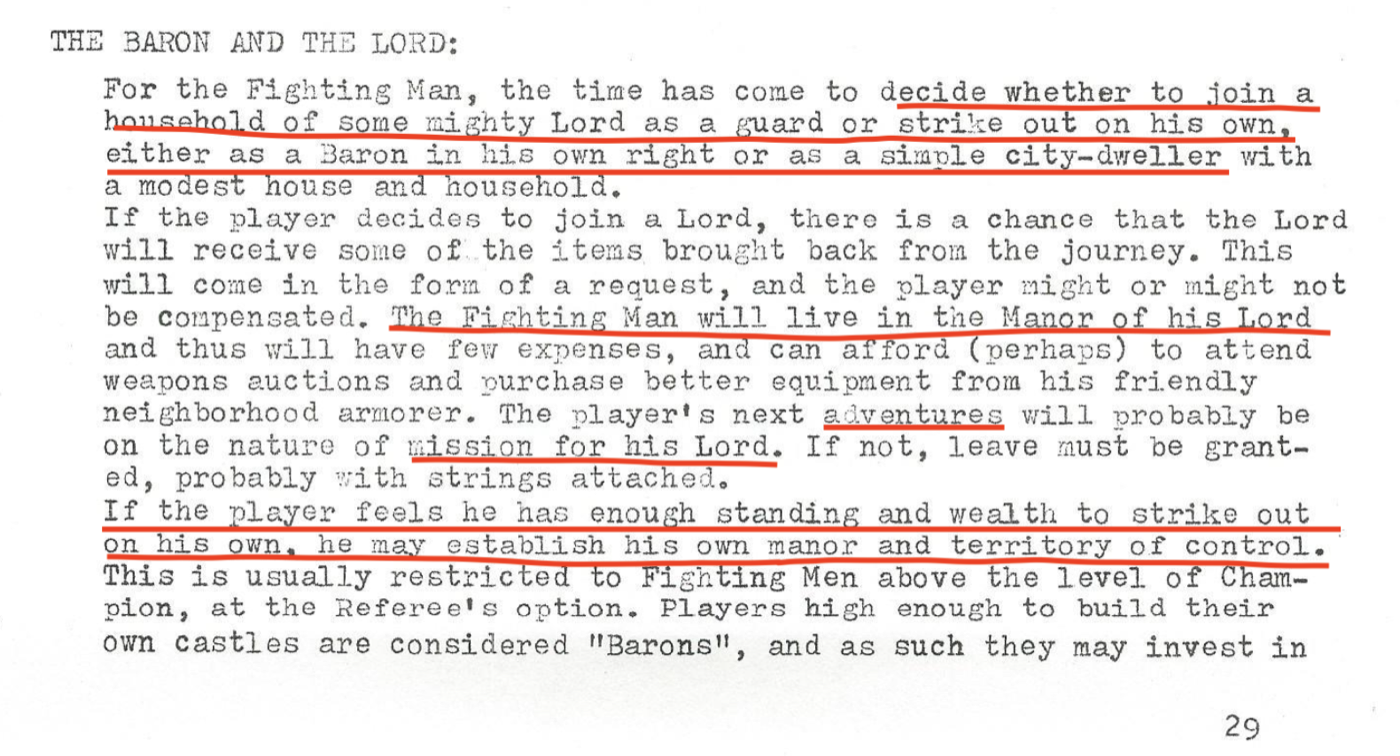
In Beyond This Point Be Dragons (BTPBD) on pages 2, 19, and 21 we find that Fighting-Men work for an “employer” and will eventually progress to become Barons, land-owners, and/or investors. Some of them (Barons) have castles and will challenge others to jousts. They often serve as guards in the household of “some mighty Lord” or “strike out on [their] own, either as a Baron in his own right or as a simple city-dweller.” Those who live in the Manor of a Lord have fewer expenses, but go on missions for the Lord. With enough standing (usually a Champion / 7th level F-M or more) and wealth the Fighting Man can establish his own “manor and territory of control.” It is also implied, by the various “monster” and “castle occupants” descriptions, that Heroes (4th level F-M) and Super-Heroes (8th level F-M) are often found with Bandits, Brigands, Patriarchs, etc.
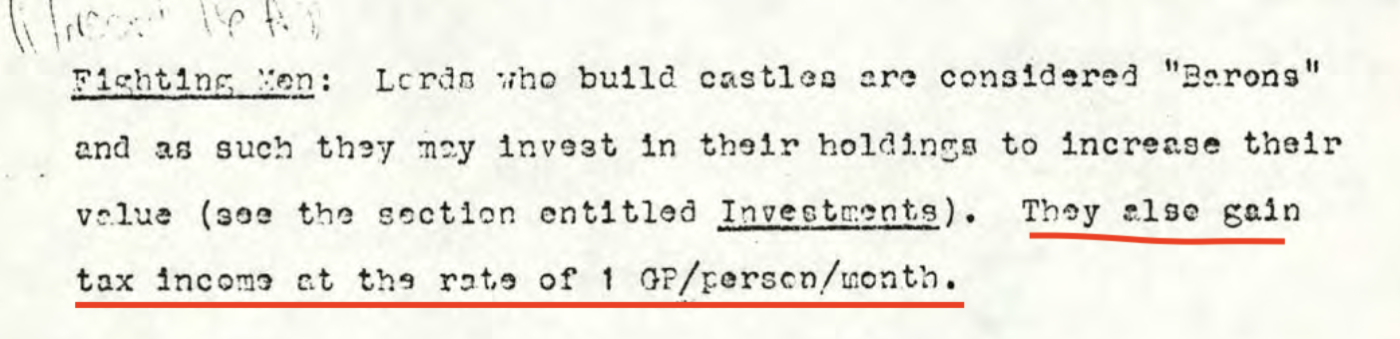
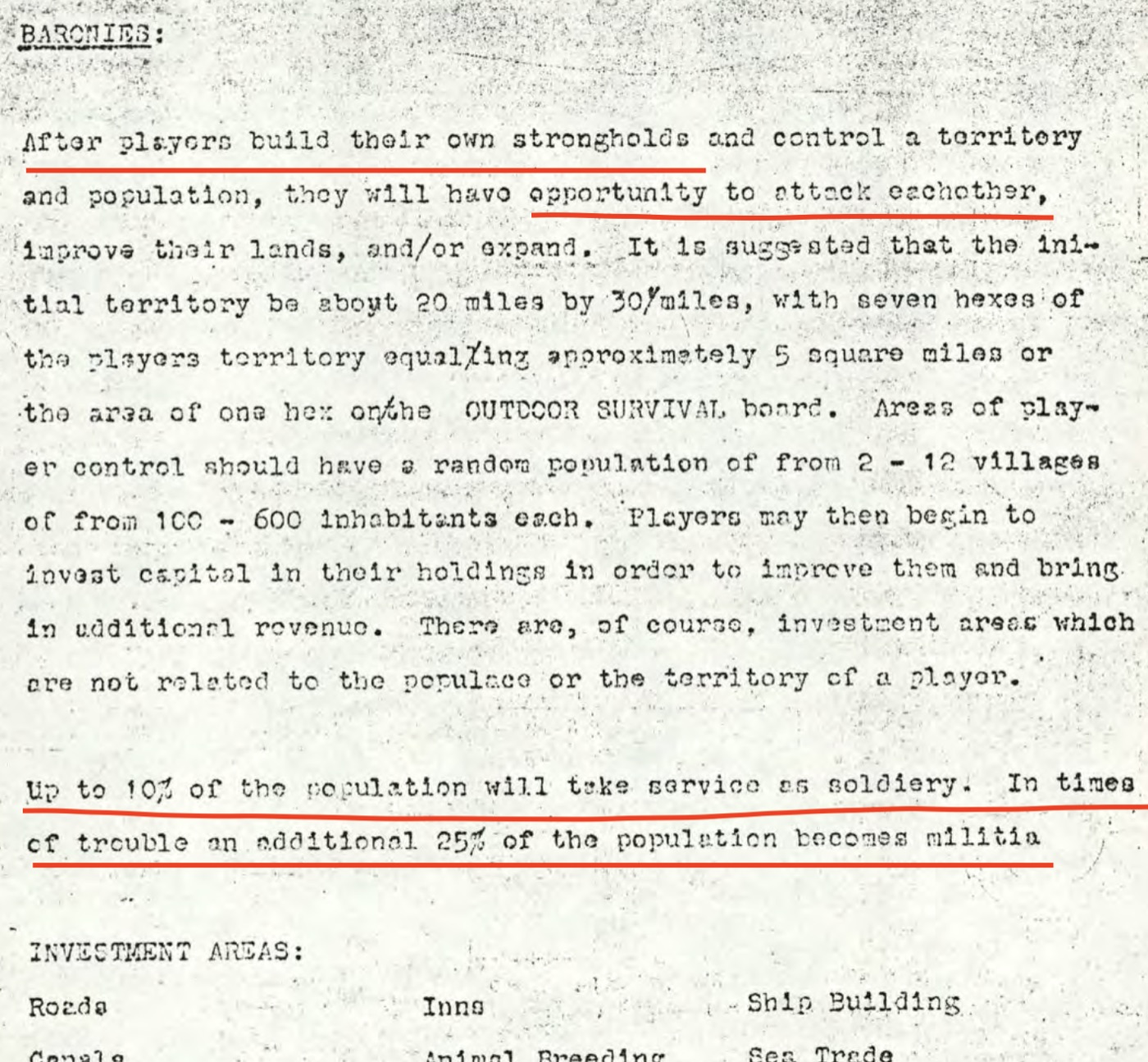
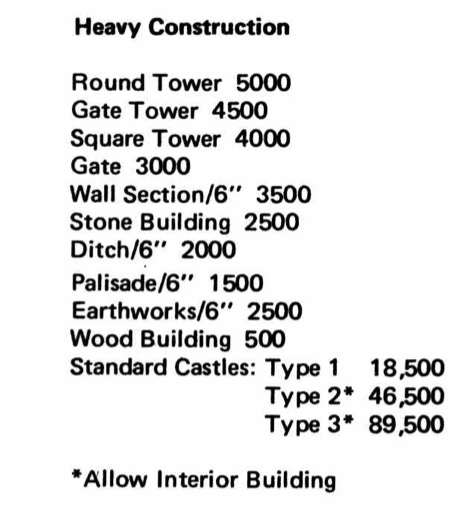
In the Arneson v. Gygax draft, we are told that “After players build their own strongholds . . . they will have the opportunity to attack one another.” Only a portion of the population can take up arms as soldiers and during “times of trouble” up to a quarter of the population can bolster defenses as militia. Barons can tax their populace and make investments. “Finally,” pp. 34 - 35 says “there is the natural rivalry among players themselves. When they attain the top rank of their various classes they must choose domains in which to build their castles and live. This will result in warfare between players, and usually such battles will provide the most exciting table top play.” Gygax goes on to outline construction costs.

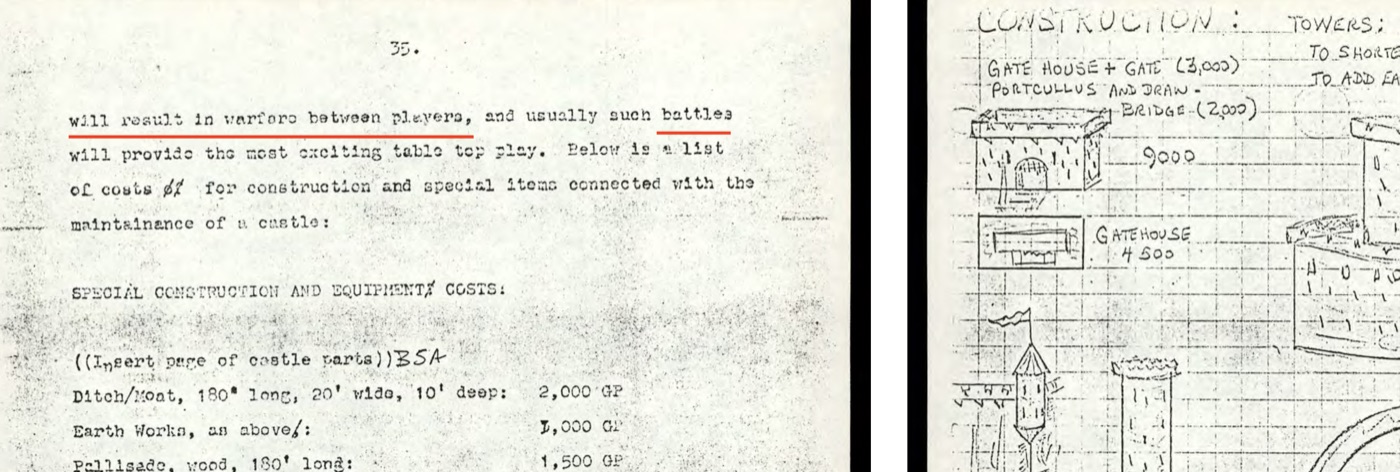
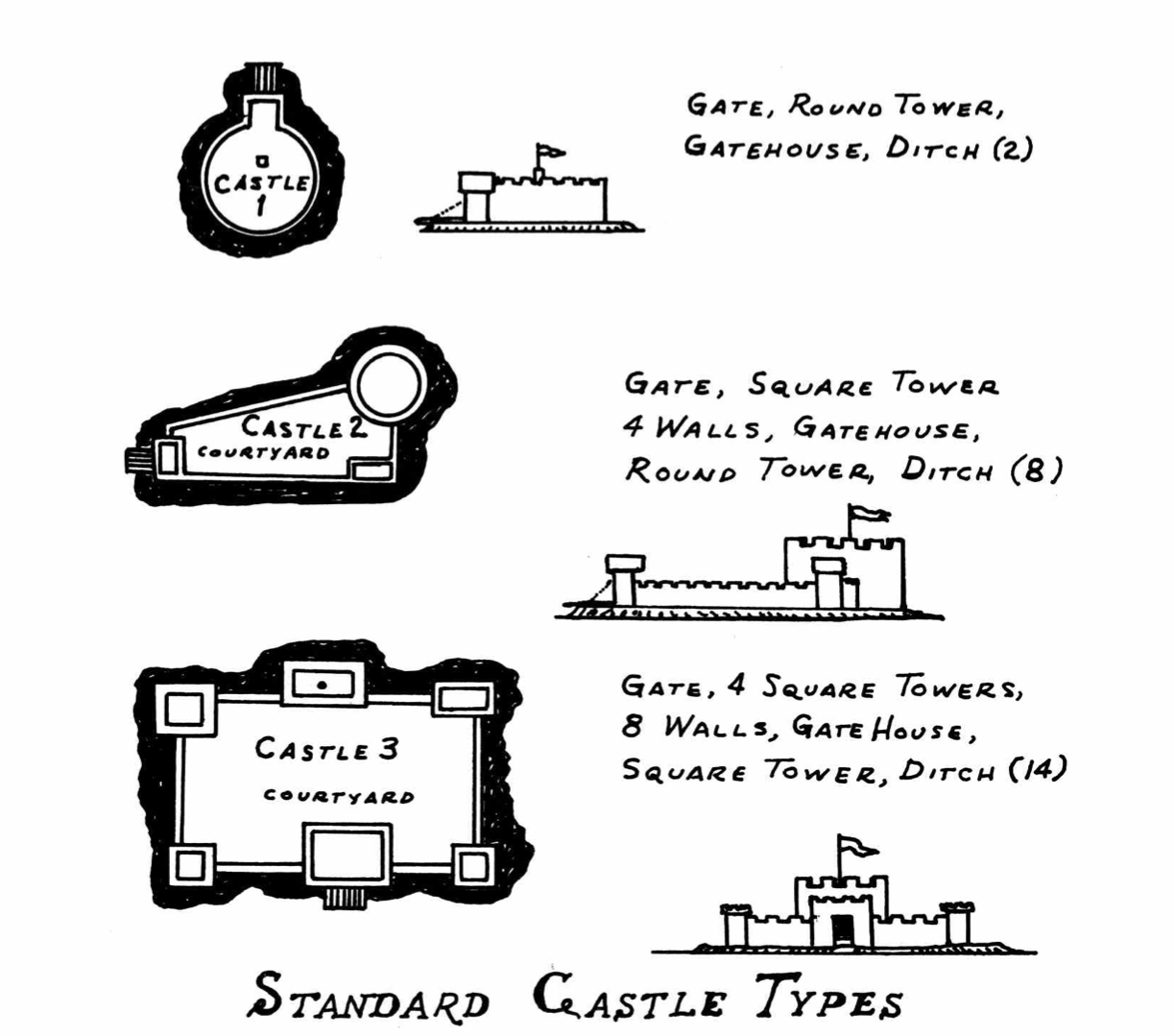
Arneson, for his part, has three different “Standard Castle Types” that can be purchased (see FFC pp. 5-6).
Does this sound like a game that was not designed for players to advance at different rates, engage in patron play, or fight with one another? Nay.
An Improvised Game Session In Lake Geneva
This information is extracted from Kent David Kelly, Hawk & Moor: The Dragon Rises (Book I), Wonderland Imprints, 2017, pp. 238-240. Also see 241-247 for more context.
“In November of 1972, Dave Arneson and David Megarry drove the 330-odd miles down to Gary’s house . . . . Gary and his players were of course veterans of the Chainmail Fantasy system, but they had never played anything like Blackmoor. Therefore, Megarry played along with the Lake Geneva players, serving to guide them through the setting and the rules. The game would be quite different from Megarry’s perspective, because the Twin Cities Blackmoor campaign involved vicious rivalries between players representing good and evil. For the purposes of this demonstration, however, the players were set up as allies in fellowship and their characters would be acting as a team.
Arneson, too, had to make some adjustments to his game mastering style. In some of the earlier Twin Cities Blackmoor sessions, many of the “big bads” such as evil sorcerers, demons, vampires and so forth had been played by players. With all of these new players now acting as a team, Arneson would need to adopt the role of all of the monsters.
These seemingly minor distinctions are interesting because collectively, they mean that Gary’s first exposure to the dungeon crawl would demonstrate an adversarial yet judicial Game Master acting to challenge the collective players. Further, that referee was playing the role of every non-player creature in the game. Gary would forever be influenced by the profound impression Arneson’s game made on him that day, and many of the precepts to be featured later in Dungeons & Dragons would be the result of this first-experienced Blackmoor game.”
In the next post, we will see how this one improvised game session may have poisoned the well in Lake Geneva. Stay tuned . . .
Originally published on Substack on July 30, 2026.