On Heraldry & Social Class in Early D&D - Part 2
Rodney Hampton
- 16 minutes read - 3207 wordsIs this the flavor that’s missing from your old school game?
When I first got my hands on a copy of Beyond This Point Be Dragons, it was world-changing. I felt like I had finally found the answers to so many questions. (Cf. D.H. Boggs, The Bufkin Copy of Beyond This Point be Dragons, January 11, 2018, available at https://www.patreon.com/HiddenInShadows). I have mentioned before that patron play was firmly embedded in these early rules. What’s more, the author(s)? of that 1973 play test draft had welded together Chainmail and familiar OD&D rules in a combat system that just begged to be played at the table. But, more importantly, this juxtaposition allowed me to see connections I had previously missed.
Jousting
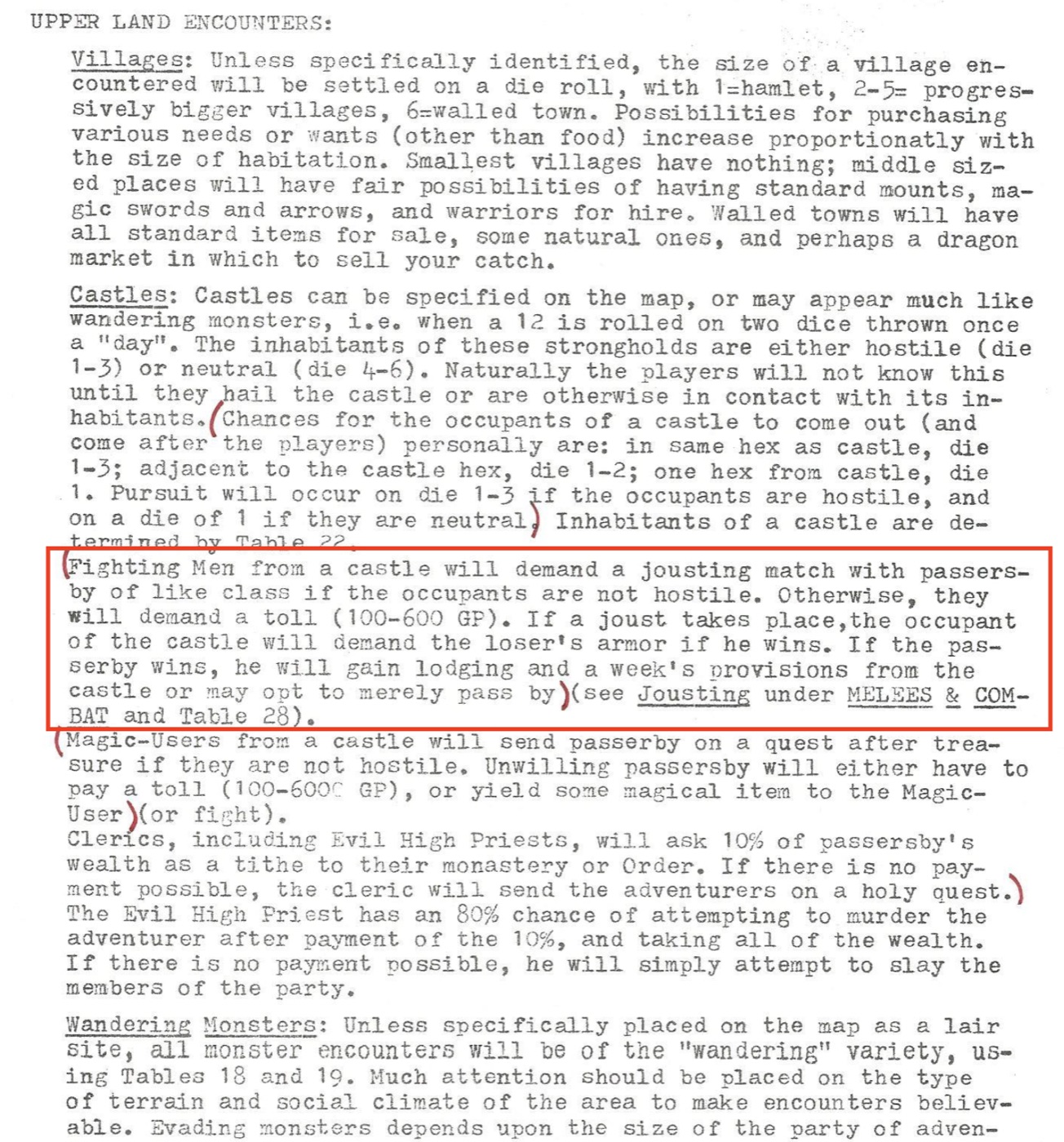
Take, for example, the jousting rules (p. 16) and jousting table (p. 25) from BTPBD. There is an explicit link to the wilderness (upper world) exploration when a player or party stumbles upon a castle run by a non-hostile Fighting-Man. That’s always a Superhero (8th level) or Lord (9th level). Jousting does not cause any damage, and both combatants have fairly similar odds of getting a winning result out of this kind of rock, paper, scissors style game.
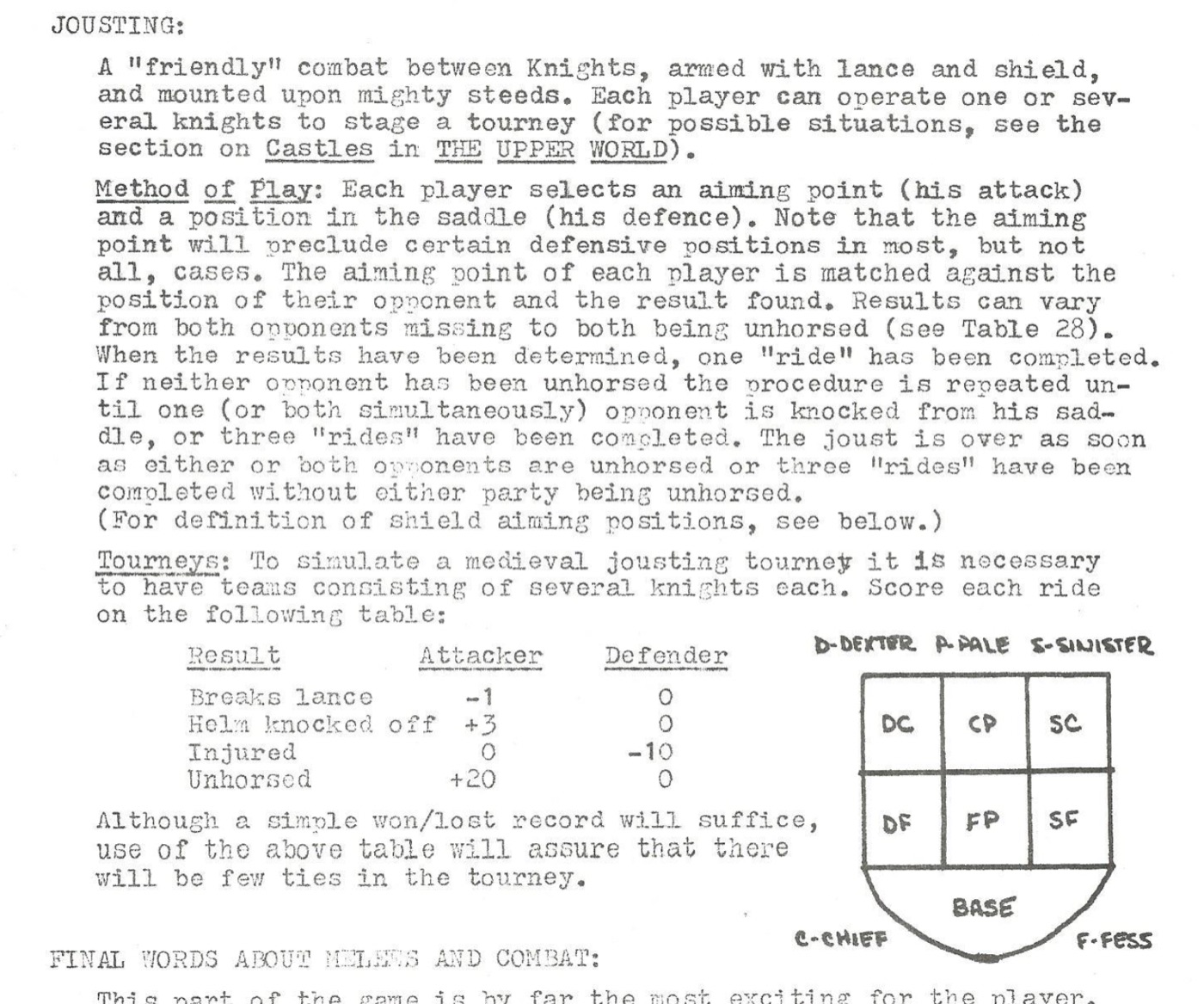
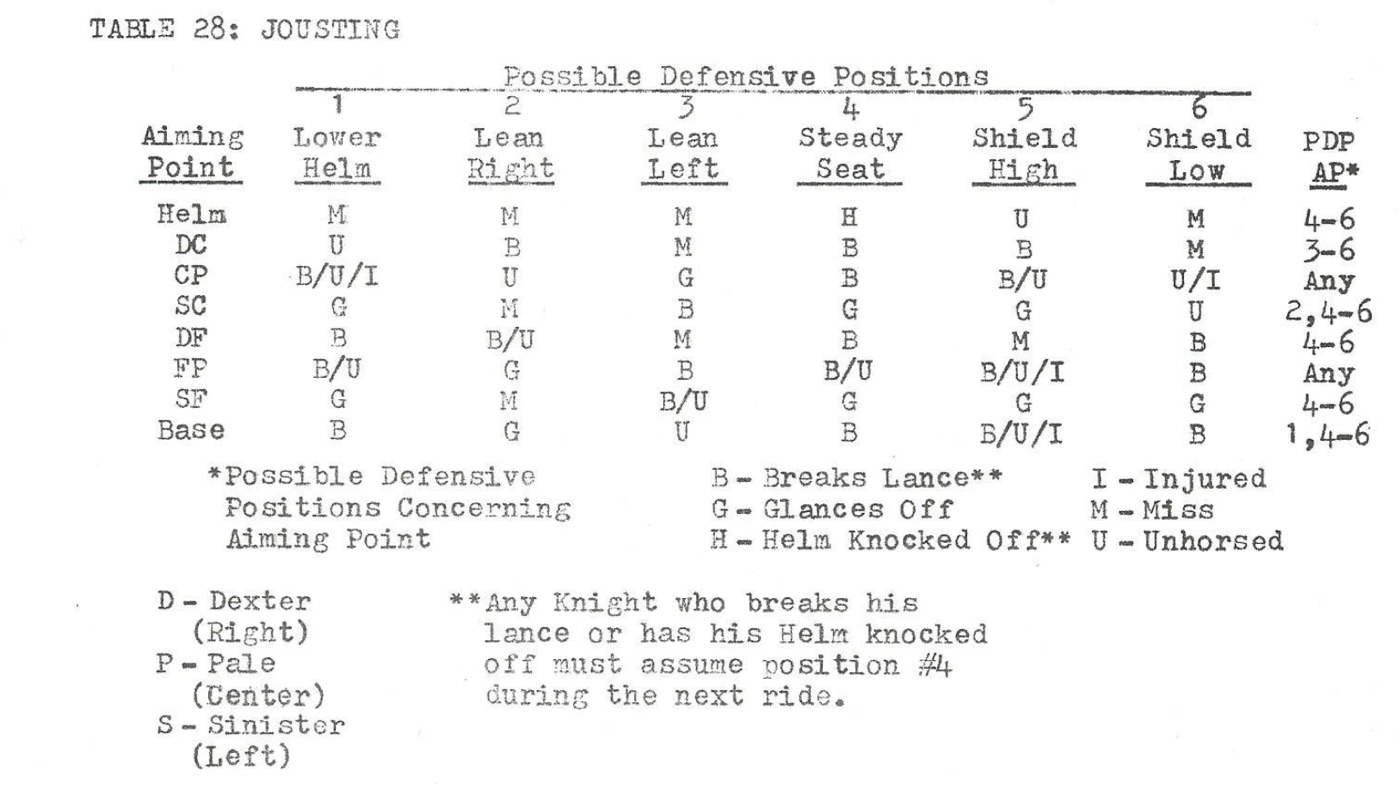
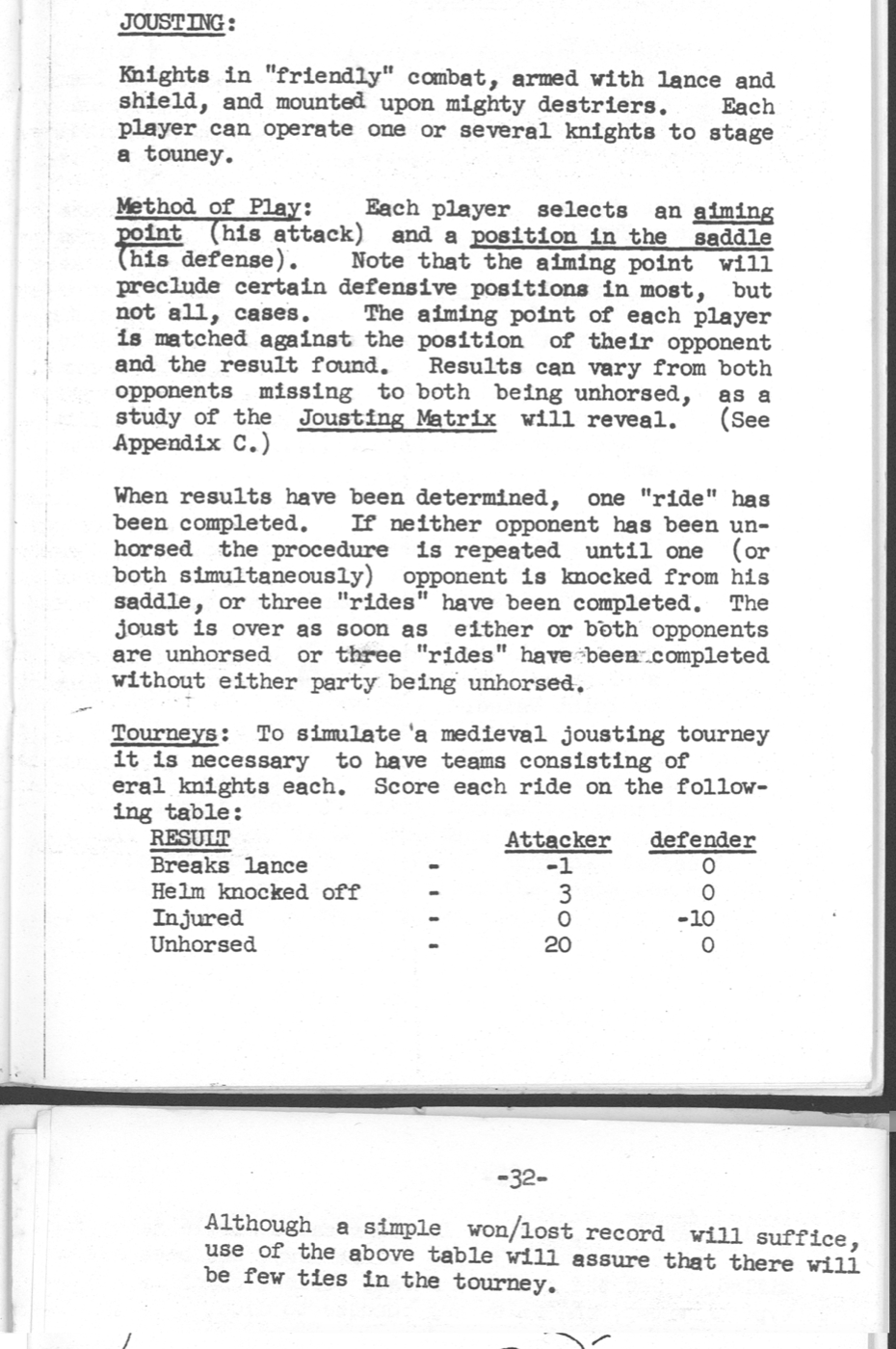
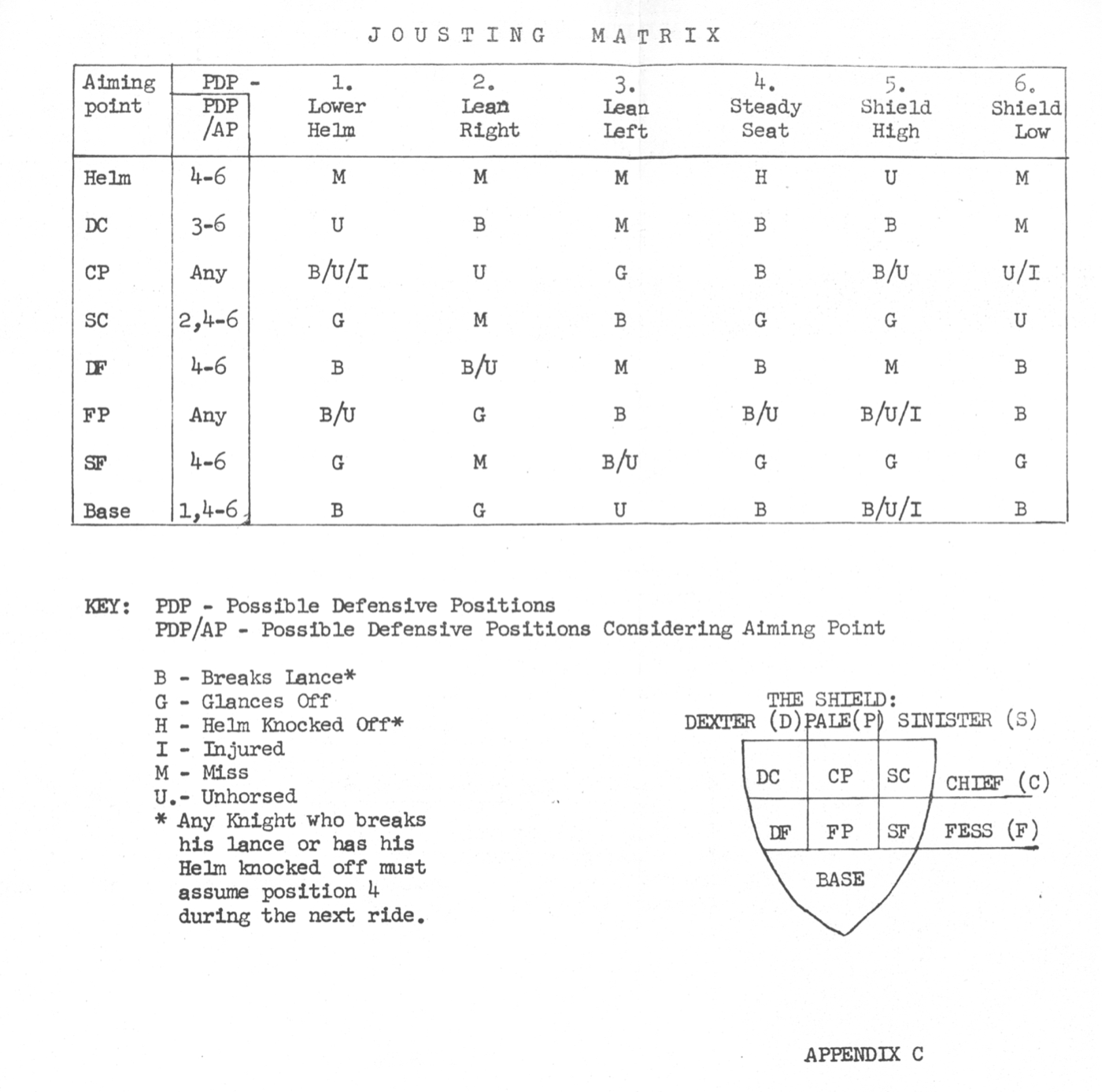
For comparison, Chainmail 1st edition states the rules on pp. 31-32 and has just as succinct a jousting table in Appendix C.
For those of you who are unfamiliar, in OD&D as players travel through the wilderness, as they enter the zone of control surrounding an occupied castle, there is a chance that the occupants will take notice of them. At that point, the class of the owner of the castle (MU, Cleric, F-M) and the alignment and the hostility all combine to determine just what demands will be made. In the case of an Evil High Priest (a Chaotic Cleric of 8th level), assume hostile intent toward Lawful and Neutral characters. (The Arneson v. Gygax draft p. 26 is even more definitive: “Evil High Priests are always hostile.”) For the non-hostile Fighting-Man, it is an opportunity for glory, as he will seek out someone of his own class with which to joust. Once again, take a look at what BTPBD says about this:
And here is the same section from the Arneson v. Gygax draft. Notice the use of Arnson’s class name of Warrior is crossed out:
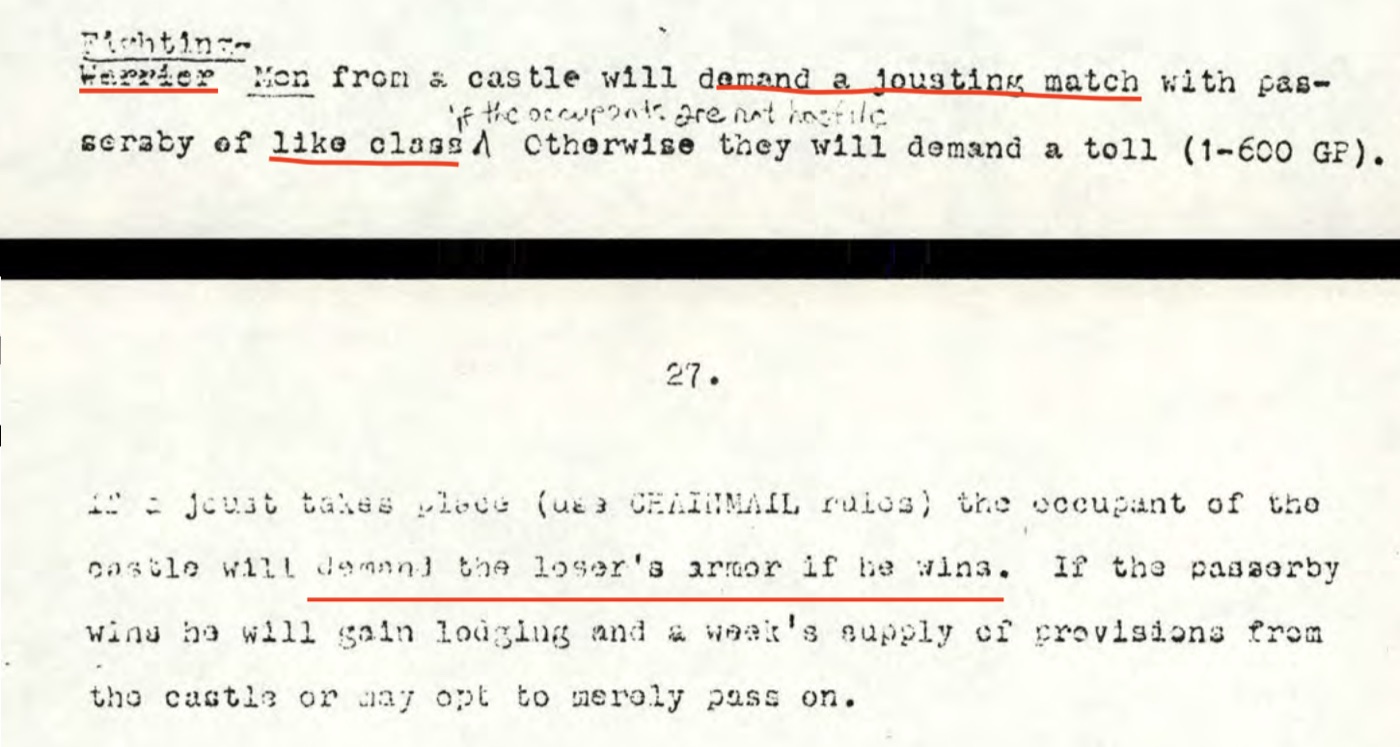
Now, you might think that this is low stakes since nobody is getting killed. And on that point, you would be wrong. Consider the prospect of a Fighting-Man who loses his armor in such a pairing. How easily can he replace these things in the middle of a jaunt across the wilderness? Also, for a party already being pursued by monsters the prospect of winning lodging in a castle for a week would be especially appealing. Likewise, a party who is out of rations would find the prospect of hospitality very welcome relief. Removing these elements from the game, as was done in B/X, BECMI, and 1st edition AD&D really changes the feeling of the implied setting. BECMI, at least, preserved the notion of a tournament in the Companion rules.
Arms & Armor
Back to the question of arms and armor. The list of equipment in OD&D is quite sparse. Who in their right mind would pay for a warhorse, when a normal horse would do? Who would carry not one, but multiple lances or purchase a (full) helm with face protection when there are no combat rules that seem to apply to such? In Arneson’s First Fantasy Campaign (FFC) there are both wooden shields and metal shields. Who would buy a metal shield when a wooden one is good enough? Quite frankly, to be able to joust at all requires having these things on hand. And without them, players are left to the discretion (and mercy) of the Referee. Should the Referee allow a joust to continue when the player’s last lance is shattered and he is being on points? I think the answer is clear. Can a player joust at all without a helm? No. Has a draft horse or a light horse been desensitized to the violence of contact expected in a joust or an oncoming lance? Absolutely not.
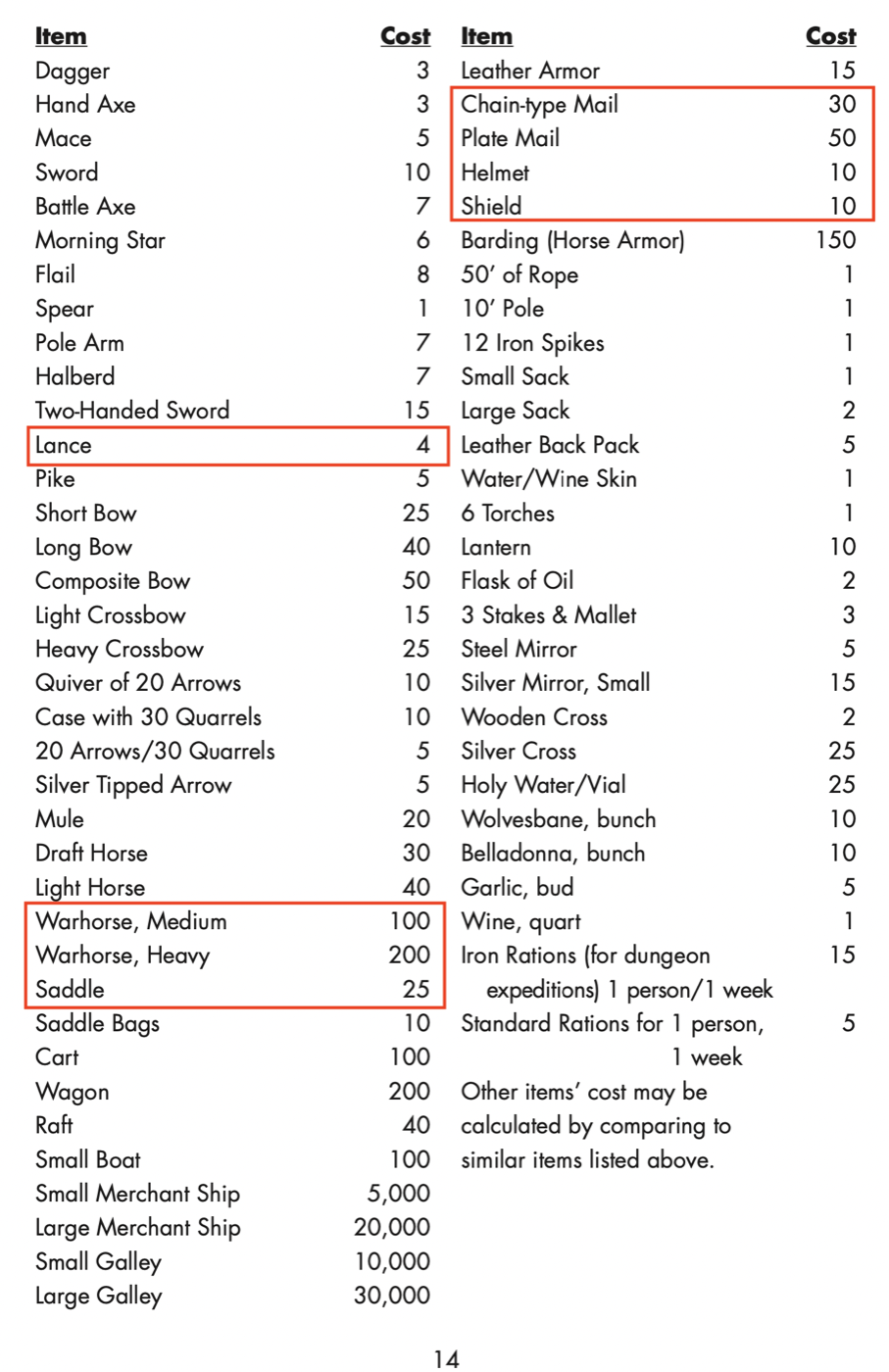
To be deprived of helm, shield, and armor is to prevent the Fighting-Man from participating in a joust. Not only that, in a medieval setting where heraldry is important, being deprived of crest and markings is to downgrown a man to be indistinguishable. He is no longer a notable. He is no longer “marked.” He is lessened until he restores these things.
One final point: In OD&D LBB#3 p. 15, notice how the hospitality is not limited to rations. The prospect of adding some heavy warhorses is quite a boon given their price of 200 gp.

Digressions on Jousting
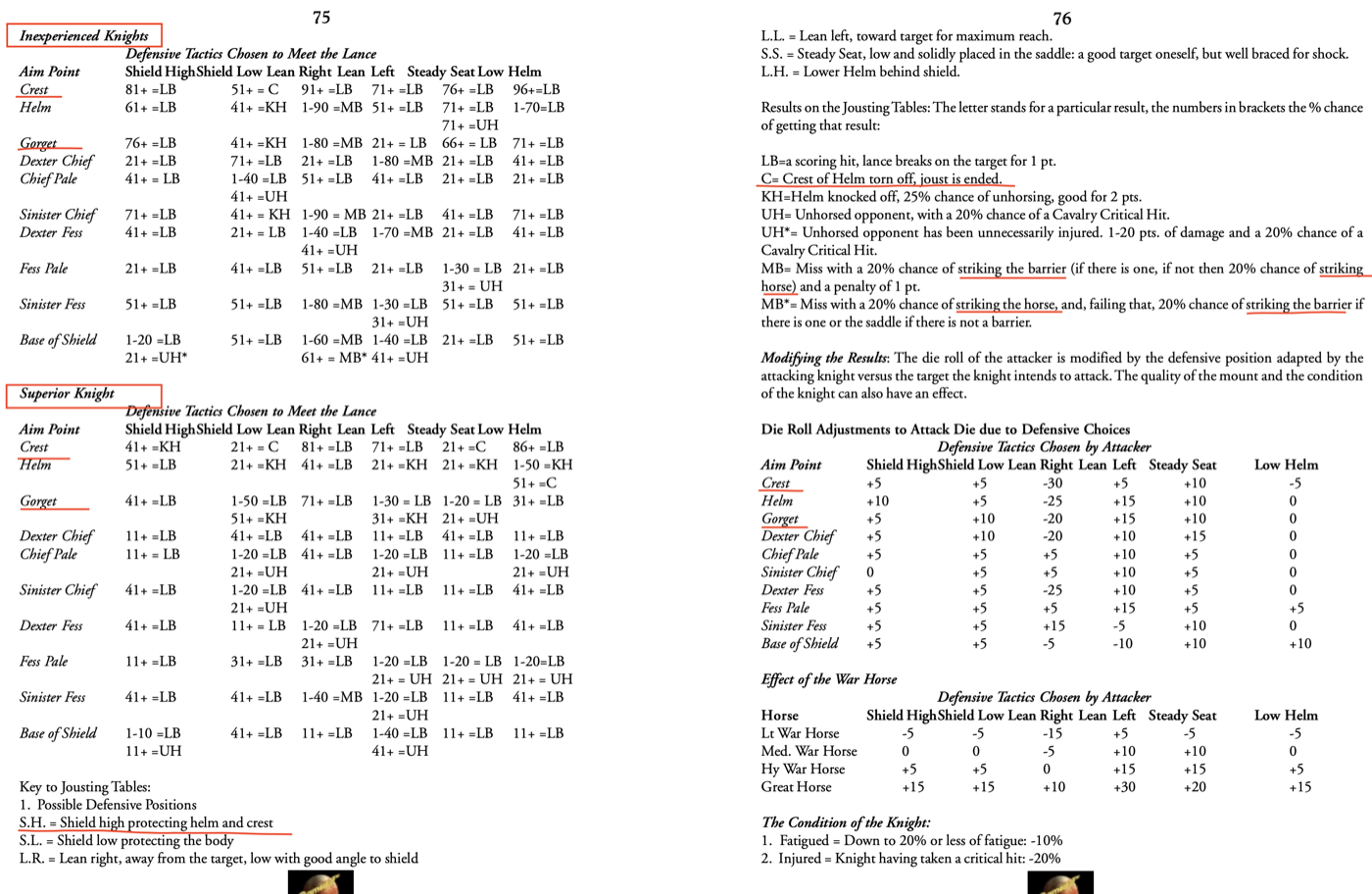
Daniel Collins (Delta) has written a scholarly article and blog post about how to improve your chances of winning Chainmail’s jousting system. Because of this, and the influence of Chivalry and Sorcery, when I wrote the jousting system for Dragons Beyond, I made sure to include some variability, a role for martial experience (i.e. the level of the Fighting-Men), along with additions to the jousting matrix for the crest and the gorget. I also simplified the scoring system for a tournament. Here is the relevant set of rules from the Chivalry & Sorcery red book pp. 75-76.
Below, I am sharing pp. 50-52 of Dragons Beyond freely, in the hope that some of you might give it a try and give me more feedback.
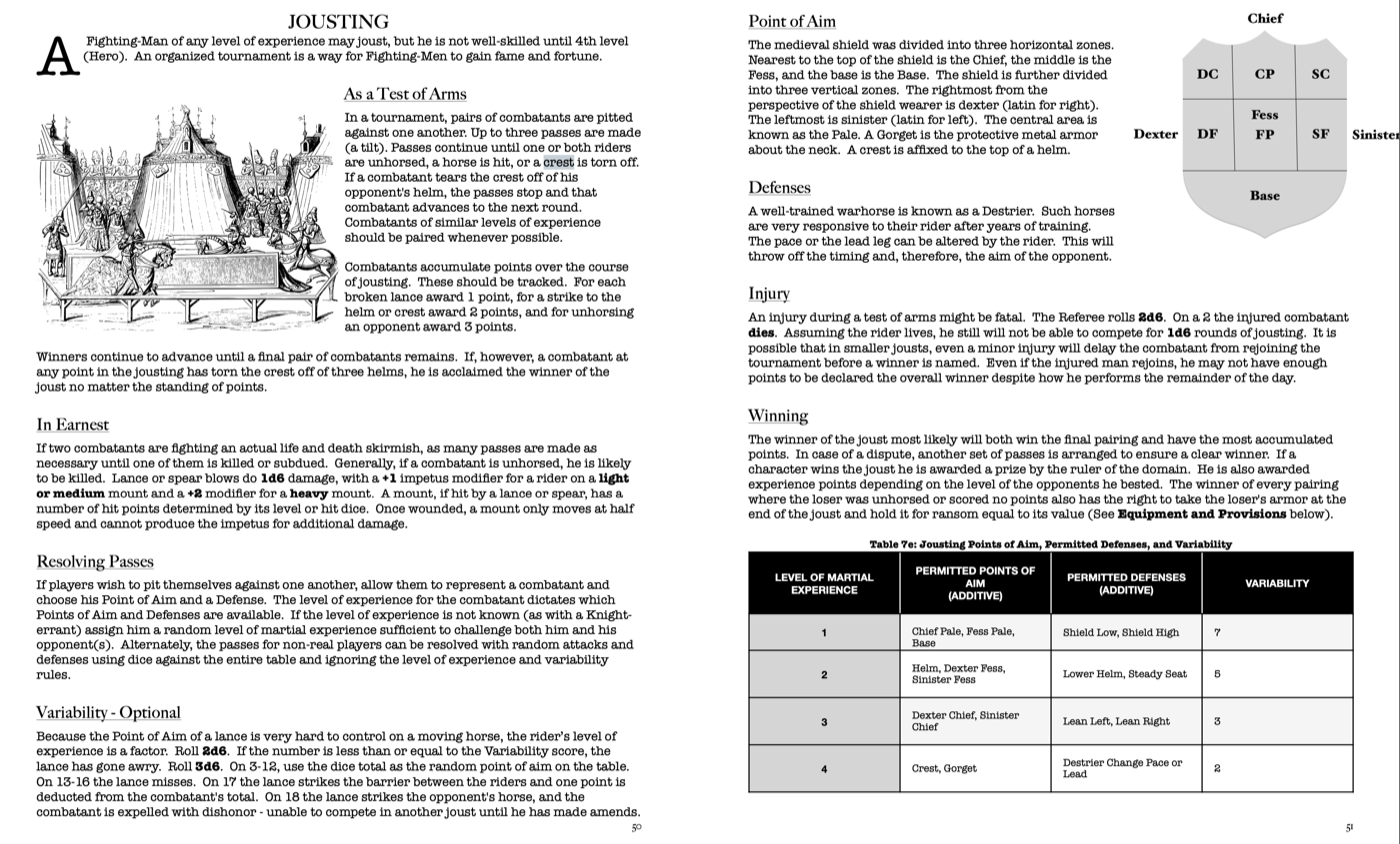
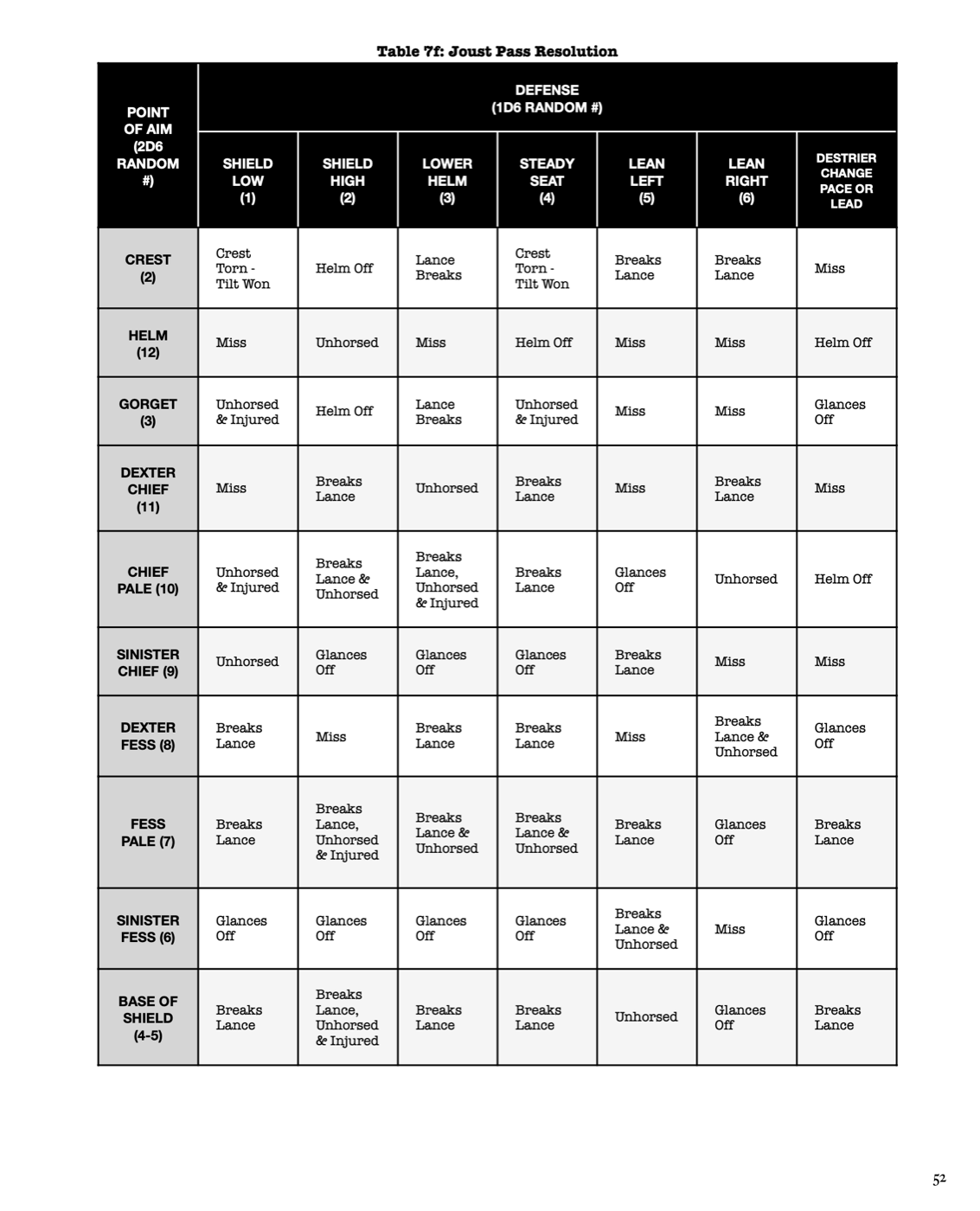
In Midwest Fantasy Wargame, I took the tack of just expanding the rules around Don Featherstone’s jousting system ever so slightly so that it could accomodate jousting in earnest versus jousting in a tournament (or during a wilderness challenge). If you want to see that system in action, check out my Tournament of Champions substack post.
Castle Occupants
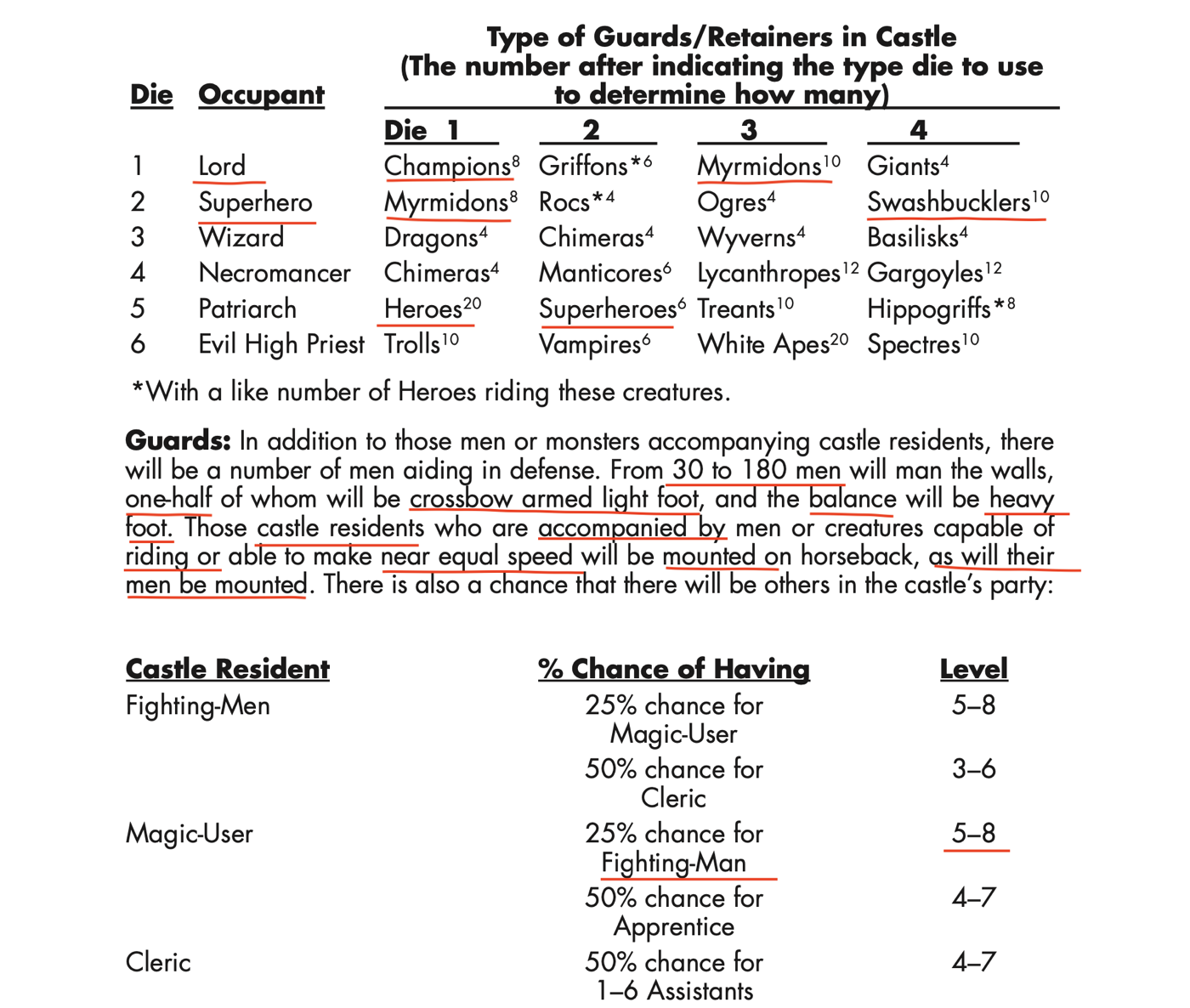
OD&D LBB#3 pp. 15-16 gives us a list of castle occupants, as well as the household guard, and potential special characters that form part of the retinue. This is all well and good, but it only implies what is more explicit in BTPBD. I have underlined things that pertain to Fighting-Men in particular. It is clear that upon reaching 4th level, a Fighting-Man is in high demand and can find employment in many different roles throughout the campaign world. This is yet another item that I have highlighted in Dragons Beyond on pp. 123-125, especially Table 12g: Individuals and Factions who recruit Fighting-Men. I am not going to duplicate that table in this blog post.
Revisiting Heraldry
In part 1 of this series, we looked at heraldry. It is worth taking a moment to look at what Chivalry & Sorcery pp. 77-78 has to say on this topic since it provides a nice segue into the next topic.
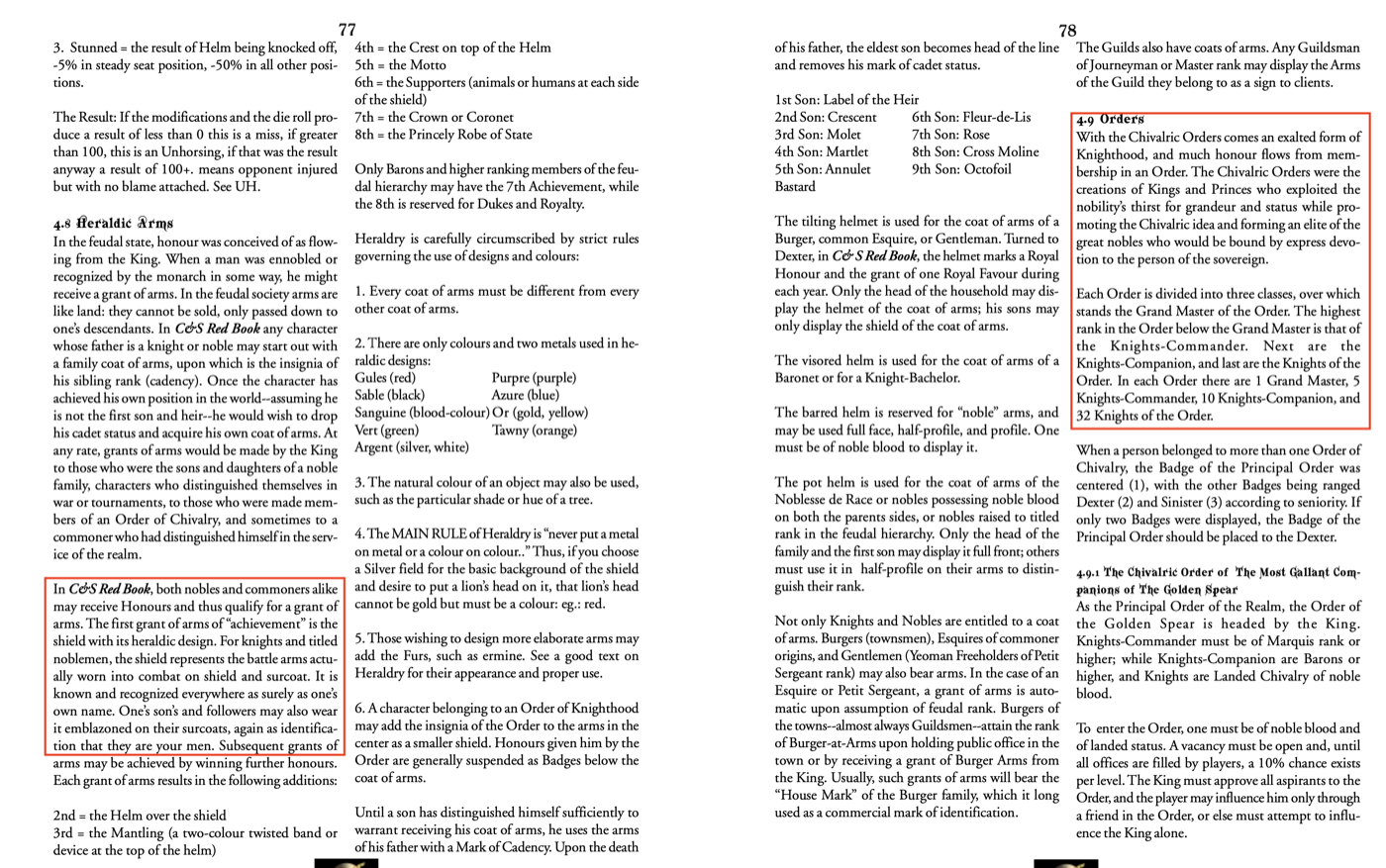
C&S allows commoners to ascend in status to receive a coat of arms when they receive a noble title such as Knight. “[T]he shield represents the battle arms actually worn into combat” and is placed on “shield and surcoat. It is known and recognized everywhere as surely as one’s own name. One’s [sons] and followers may also wear it emblazoned on their surcoats, again as identification that they are your men.”
Here are the descriptions for Fighting-Man and Cleric from p. 2 of BTPBD (the Magic-User has been edited out to save space. Here it is clear that a lower level Fighting-Man wears the blazon of the noble (or even merchant or guild) that he serves.
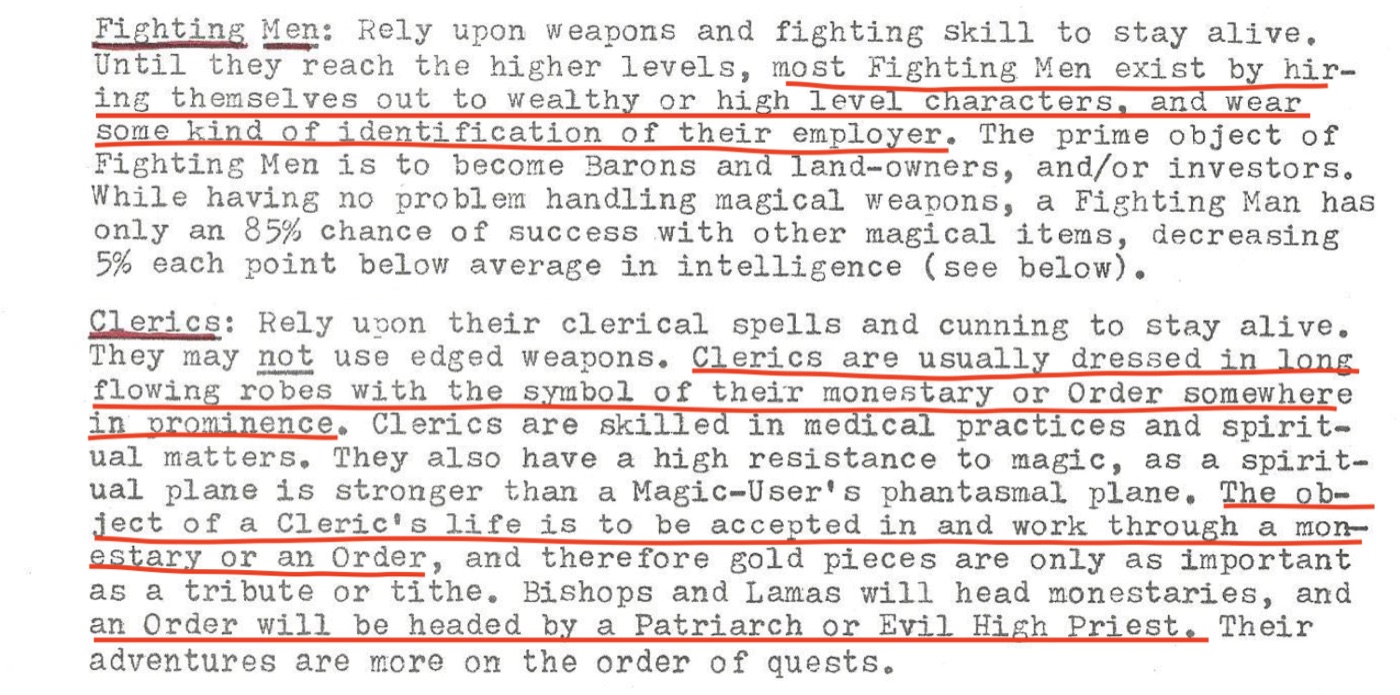
The Cleric, too, wears the symbol of his [militant] Order. These Orders actually have a bit more prominence over the ecclesiastical monasteries because they are headed by a Patriarch (level 8) whereas the monastery is led by a character or NPC (non-real player) of lower level. I have done an entire YouTube video about the evolution of the Cleric class, so I won’t go down this rabbit hole. It is interesting to see that Chivalry & Sorcery also breaks out these militant Orders separately, almost serving the same function as the social clubs we see in the game En-Garde. They are a means of achieving status and confer a higher dignity than just the noble title of Knight standing alone.
And that brings me to the next point. Levels are used as a stand in for social class, status (the pecking order within that class), and at the highest experience level can be used as a means to leverage raw land, fortifications, and investments into a noble title like “Baron.” The rules do a decent job of abstracting a core economic engine of feudal society without getting bogged down in the weeds. But even the original rules make it unclear how to accumulate higher titles and status. I am currently playing a game of En-Garde with other fellows in the Living-Urf Gaming Club. Those rules make it very clear how these things are done. But before crying in our Cheerios, let’s look at what D&D lost. I think, once again, the 1973 drafts (BTPBD and Arneson v. Gygax) are clear and we lose much of this color in OD&D. Finally, Gary finishes the job in 1st edition AD&D by separating medieval Europe’s feudal system away from the core, implied setting and leaving that to expansions like The World of Greyhawk or each DM’s own campaign. Gary also tinkers with the core economic engine.
Baronies and the Economic Engine
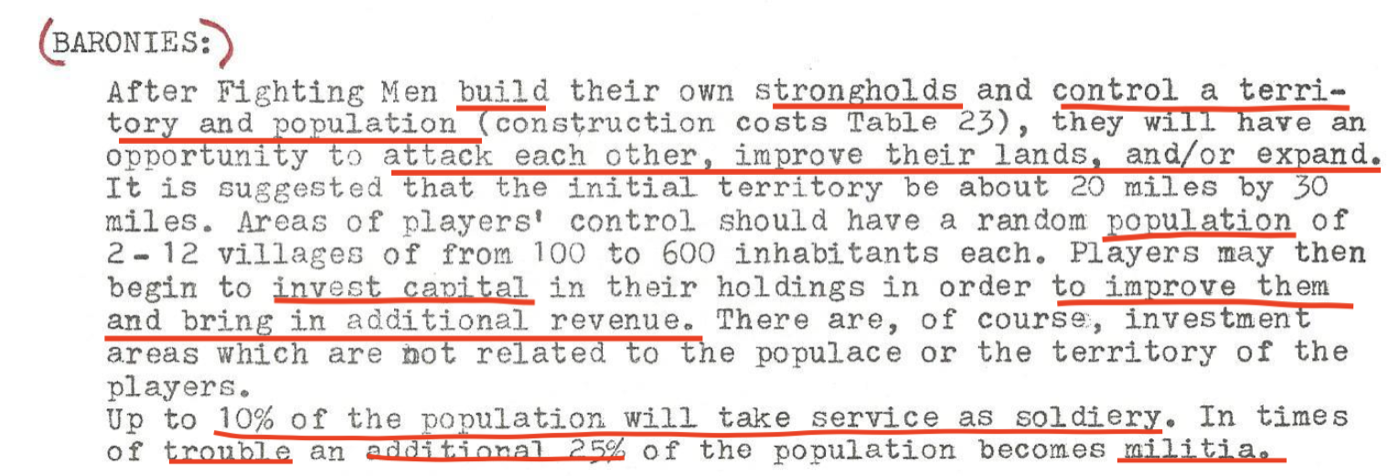
On p. 16 of BTPBD, we get a very succinct description of a Barony. A Fighting-Man must simply build a stronghold, control a territory, and collect taxes from the population.
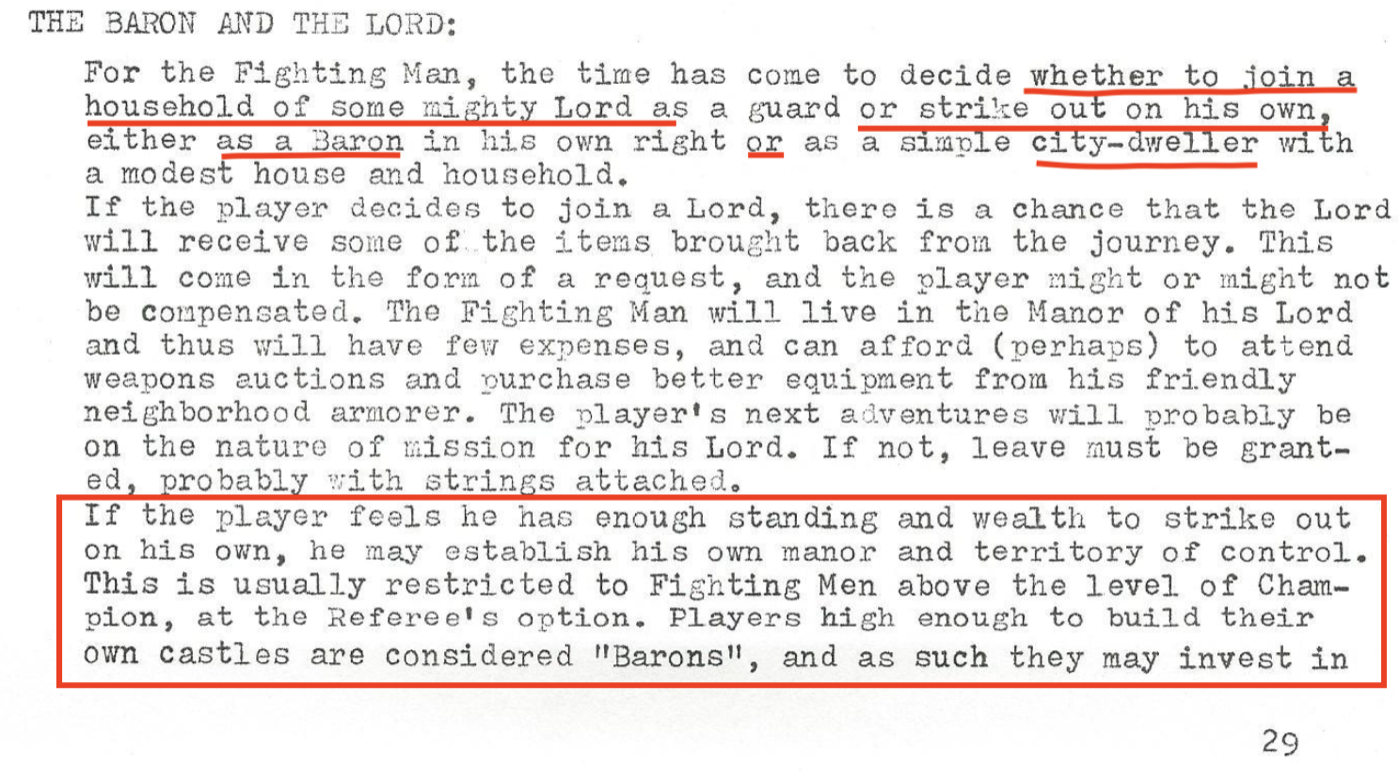
A later section titled “The Baron and the Lord” at the bottom of p. 29 we are told that striking out on one’s own is restricted (at the Referee’s option) to players of level 7 (Champion) or above. Unfortunately, the section ends abruptly and the next page(s) is/are lost to time.
In the Arneson v. Gygax draft on p. 16, instead we see that only a 9th level Fighting-Man (Lord) may become a Baron.
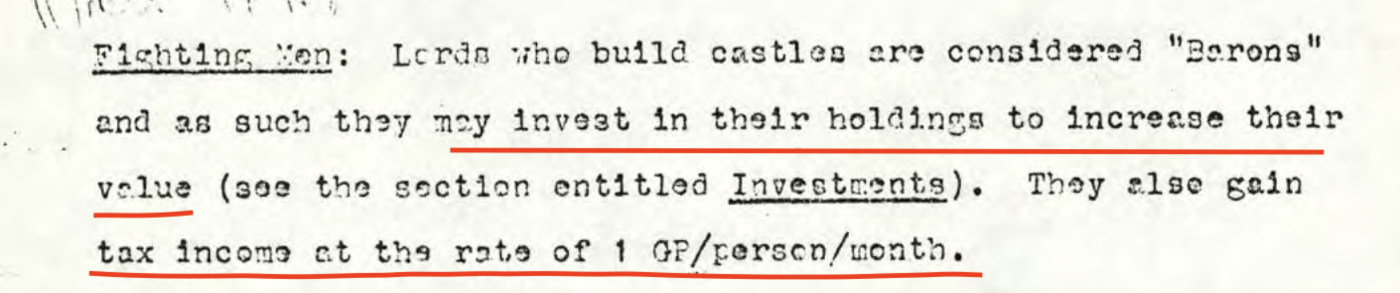
On p. 36 we see, again, how Baronies are at the heart of the economic system and finally see that each inhabitant yields 1 gp per month which is 12 gp per year. In OD&D this gets pared down to 10 gp / year (Cf. LBB#3 p. 24).
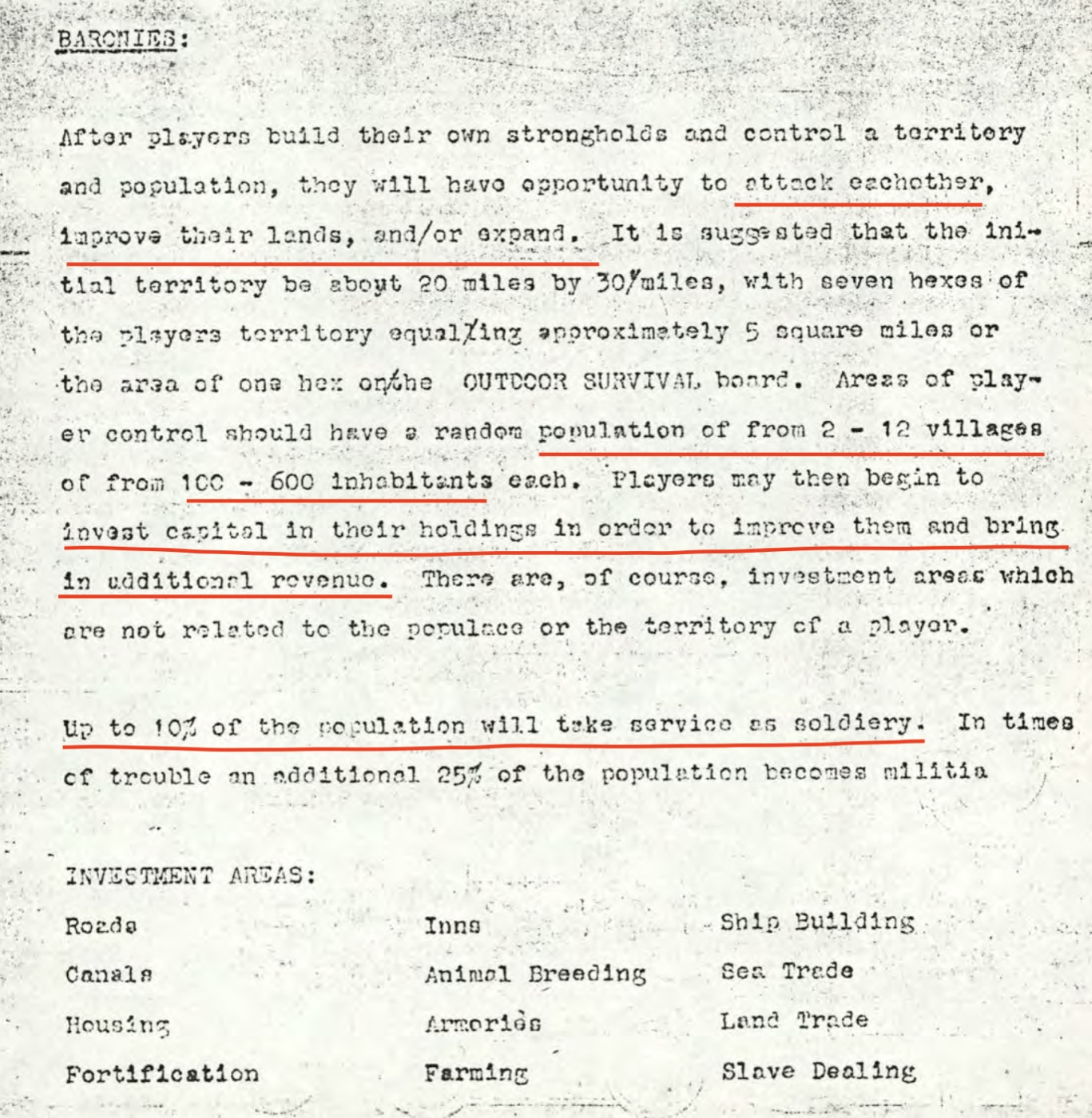
Given the size of the village populations possible, the poorest Barony would bring in 2400 gp per year (2 villages x 100 people x 1 gold x 12 months) while the largest could bring in 86,400 gp (12 x 600 x 1 x 12). That is to say it could be 36 times more lucrative and far more likely to project power. This, alone, would provide considerable motivation for an ambitious player to explore the world and set out to pluck the ripest plum. When one layers on top the player versus player aspect built into this game, it is readily apparent that the Matthew Effect might quickly appear. Jordan Peterson sums it up thusly: “To those who have everything more will be given and from those who have nothing everything will be taken.”
Notice, too, that in BTPBD there is a limiting effect upon how many troops can be mustered to act outside the Barony’s borders: 10% of the population (thus as few as 20 to as many as 720 troops). This also ensures that hiring mercenaries (much cheaper than raising native units) will come into play for less populous Baronies who hope to either expand or defend what little they have. Mercenaries, as we know from Chainmail, are notoriously fickle. However, in BTPBD they are given a loyalty score which can improve annually. Smaller Baronies are also likely to equip light or medium troops rather than try to field armored footmen or heavy horsemen. Smaller Baronies might form pacts or alliances to aid one another. But I digress again. The point I am making is that the economic and military engine set up in BTPBD and Arneson v. Gygax was not perpetuated in OD&D nor in AD&D 1st edition and was completely lost in 2nd+ edition line of rulesets.
There is always an exception. Both the B/X line and BECMI decided that the functions (strongholds, territories, nobility, tournaments, economic engine) were worth preserving, but implemented those functions in markedly different way than the 1973 drafts.
B/X and OSE
Cook Expert (1981) seems to de-couple the title of nobility (and level) from the ability to purchase a stronghold. However, the title of Baron and perhaps a land grant from another noble are necessary pre-requisites to be able to claim cleared land as a fiefdom. Investments (another digression) allow the Baron to increase the number of inhabitants and thus increase the tax base. The rules and economics are straightforward enough, but when adventurers travel through inhabited areas, the exploration rules detailing how to stumble upon castles and inhabitations are missing.
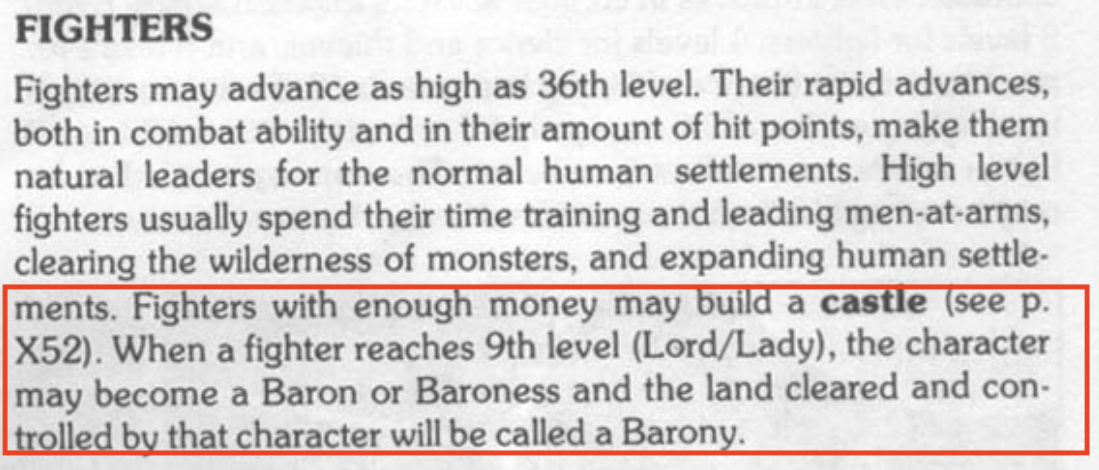
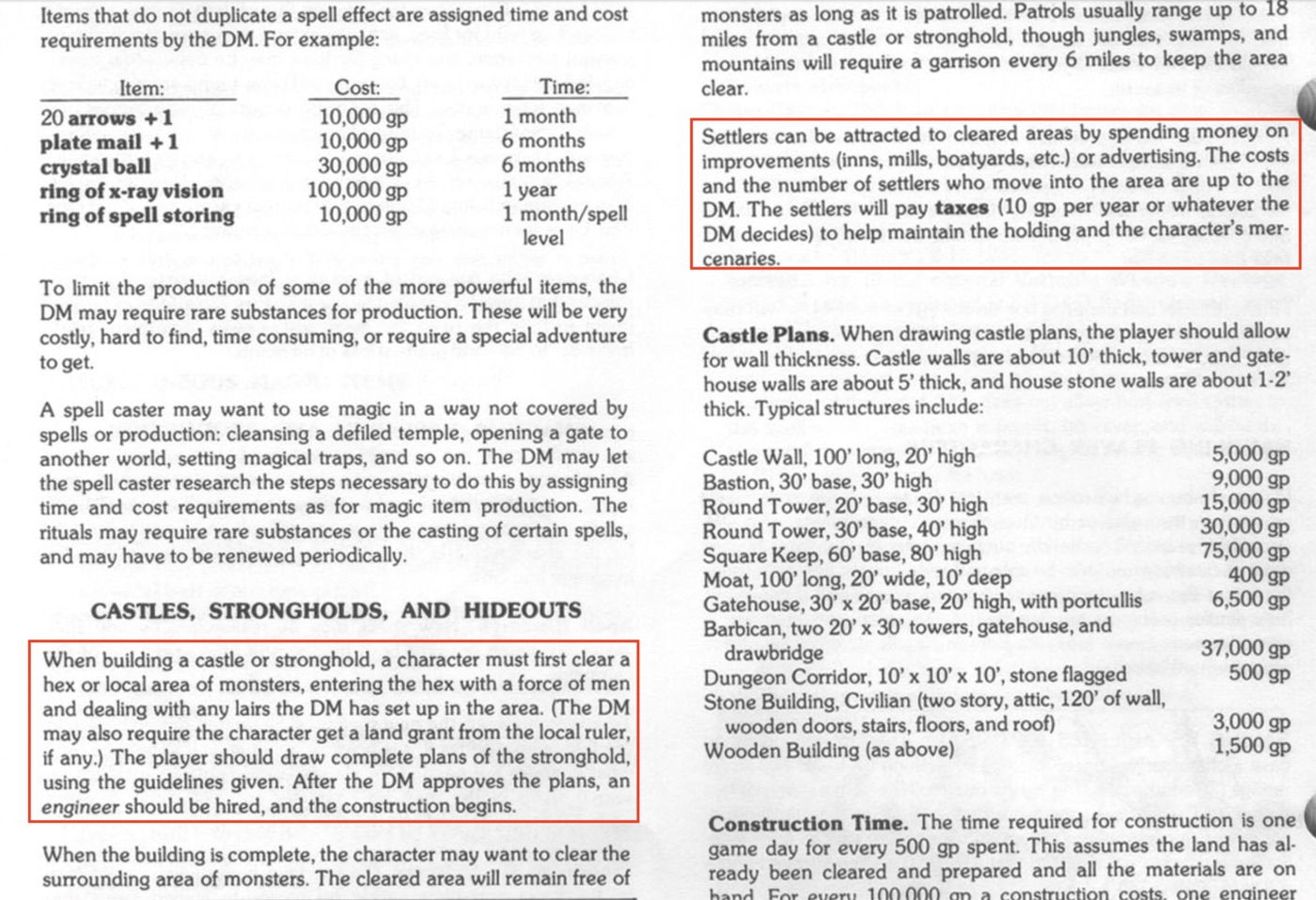
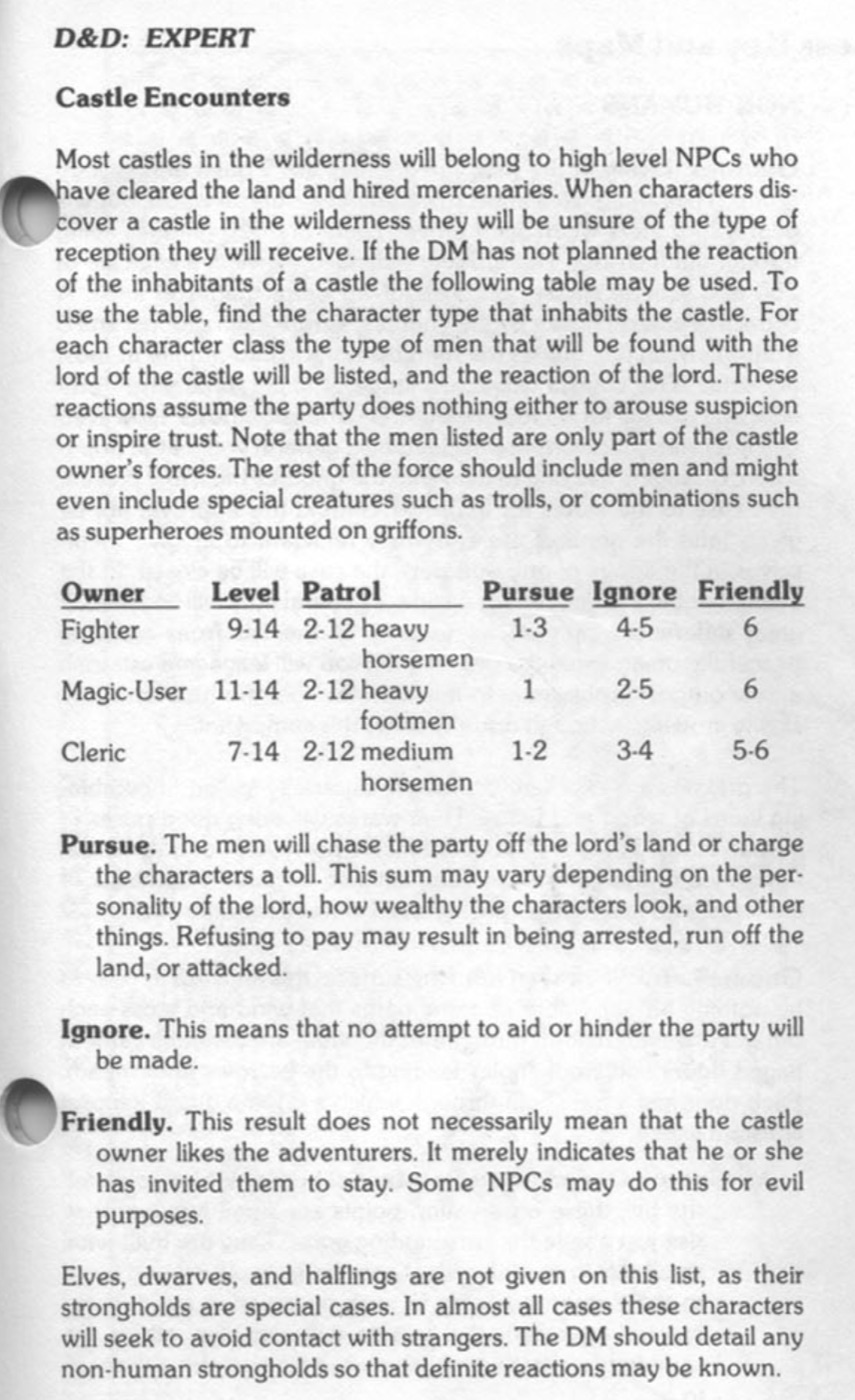
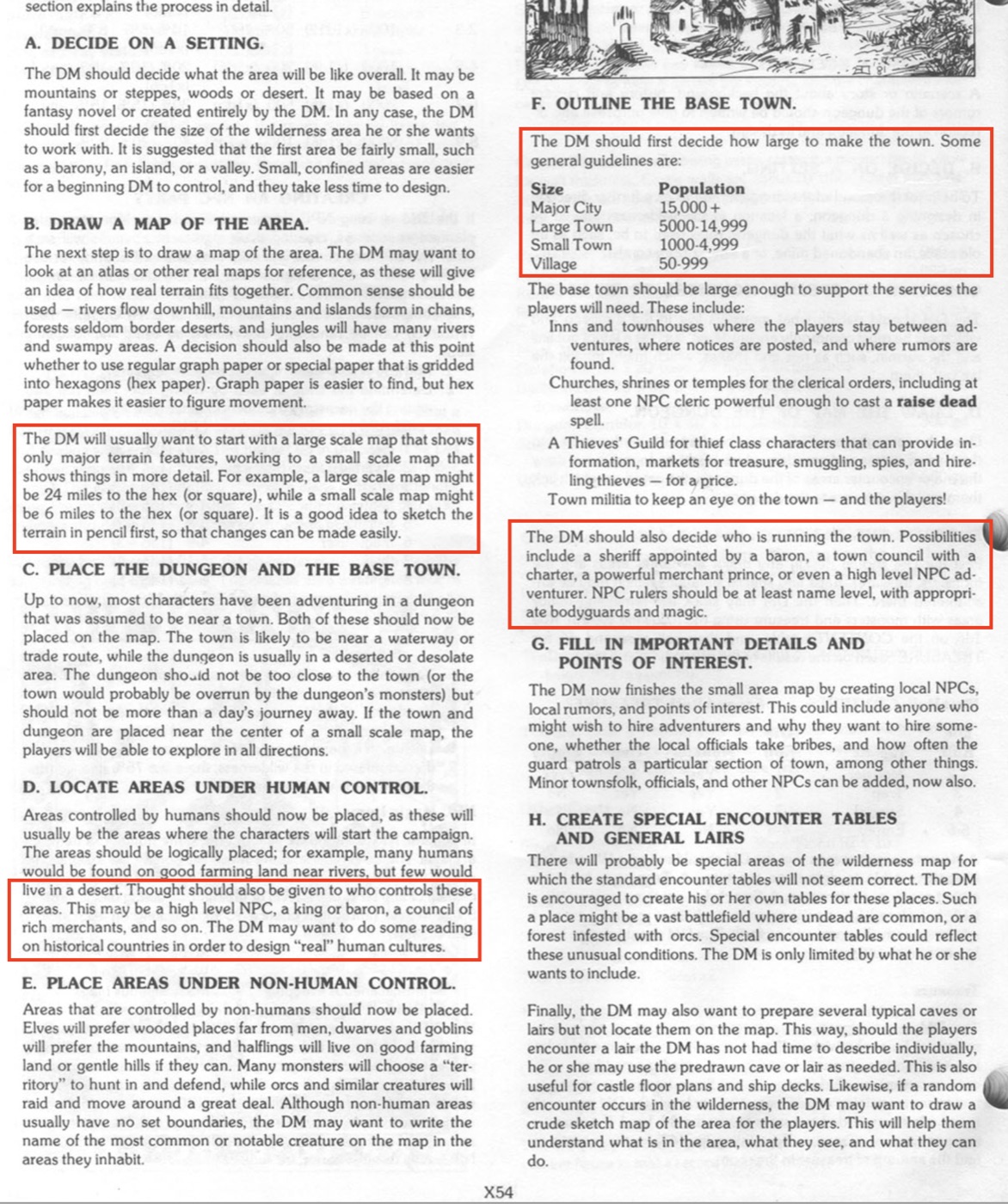
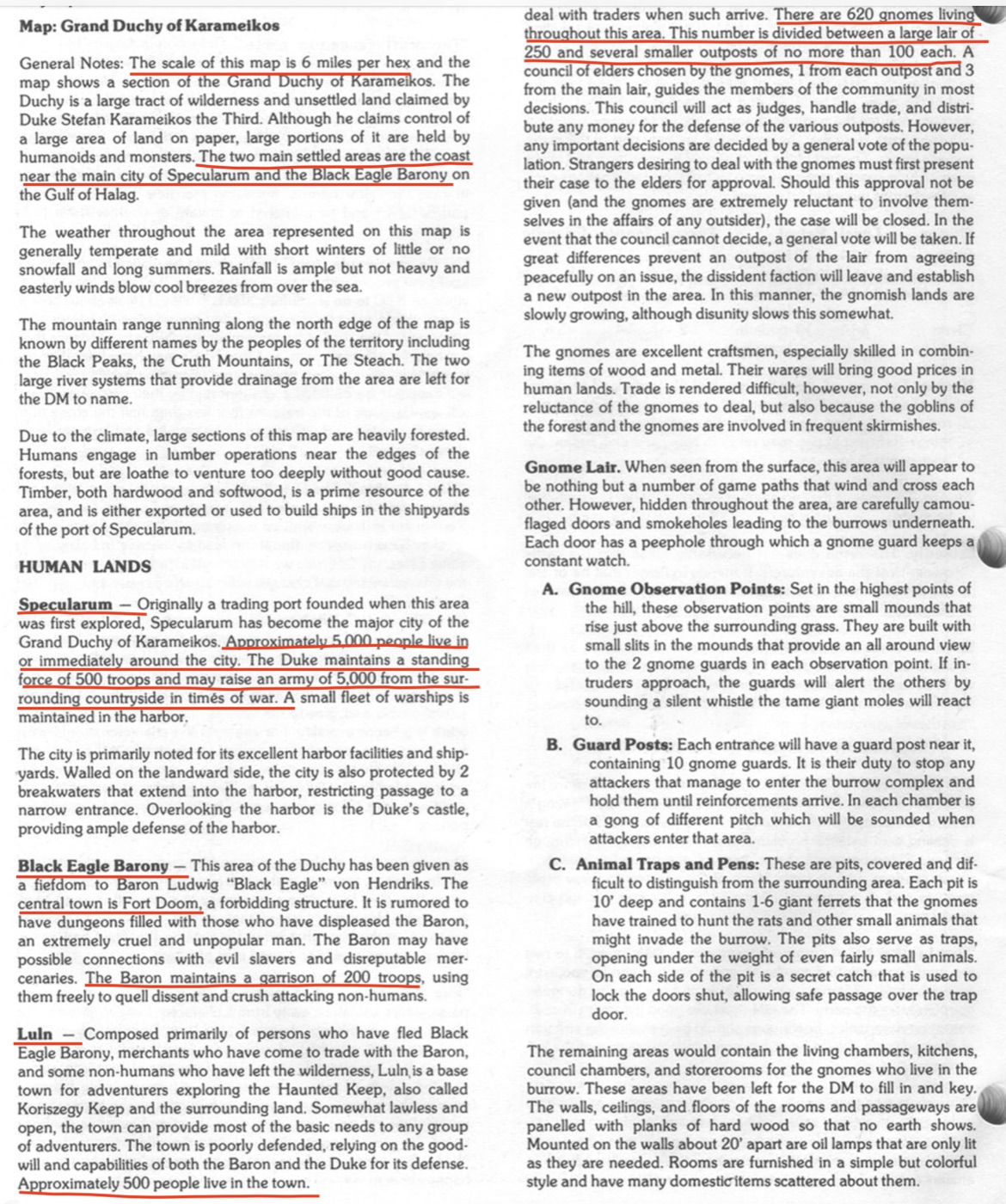
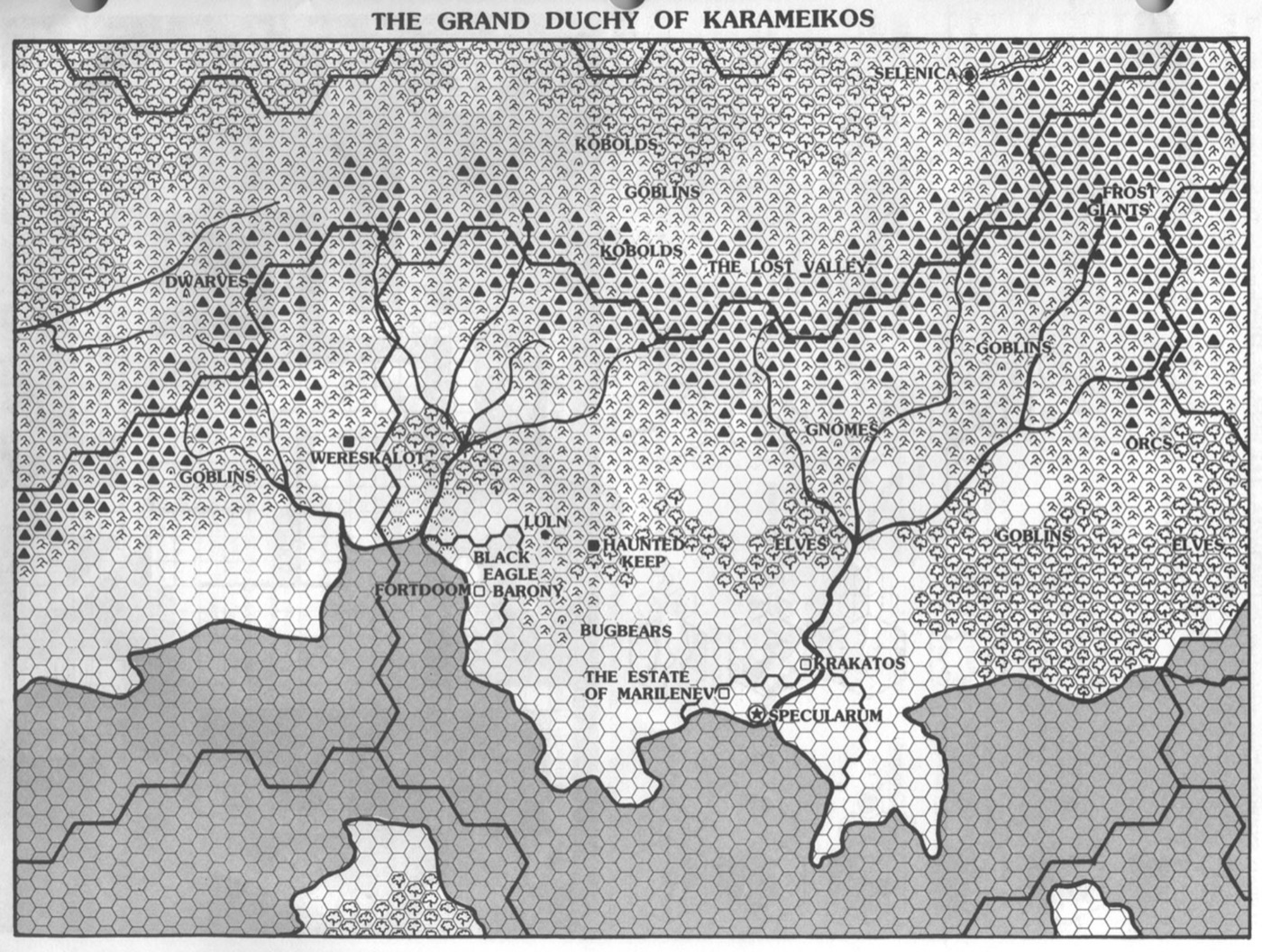
Likewise, there are no rules to determine the population of existing inhabitations. There is guidance for the DM to create a base “town” and what size inhabitations might exist in the implied setting. But the best guidance is provided with the sample Grand Duchy of Karameikos. This Dukedom has a subsidiary Barony located within it. Reading this, it is interesting that the number of troops the Duke has at his disposal (500) is 10% of the population of the capital city. This tracks with the 1973 draft rules. The Duke can also raise milita/levies in time of war. The map is on a 6-mile per hex scale and shows a massive territory most of which is overrun by unfriendly monsters at the borders. A small demi-human population of Gnomes is also described in some detail. The Expert Rules place a lot of discretion and work on the back of the DM. The concepts of player versus player, faction leaders and followers, and true domain play with warfare are missing. And, instead of Chainmail, on p. X25 the rules recommend Swords & Spells for mass battles. Although Lance Combat is described on X25, jousting for honor or sport is not mentioned at all.
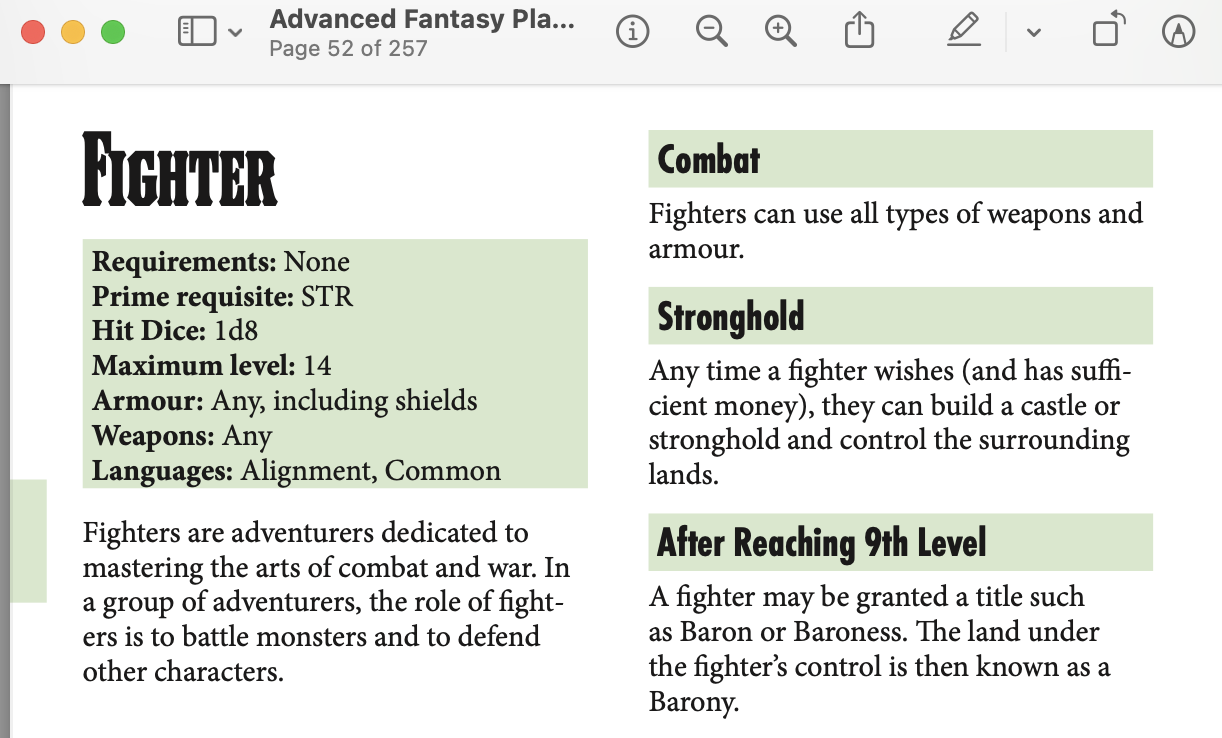
Interestingly, Old School Essentials (OSE), in the Advanced Players Tome makes it very clear that any Fighter can own a stronghold at any level of experience. But because of the very succinct nature of OSE, none of the implications from the Duchy of Karameikos were preserved. The instructions on campaign creation are likewise pared down. On the bright side, the rules for clearing the land and gathering taxes from settlers are still present. But few will understand how or why these things matter. In a world that lacks true player versus player, there is no drive to engage in domain level play.
BECMI
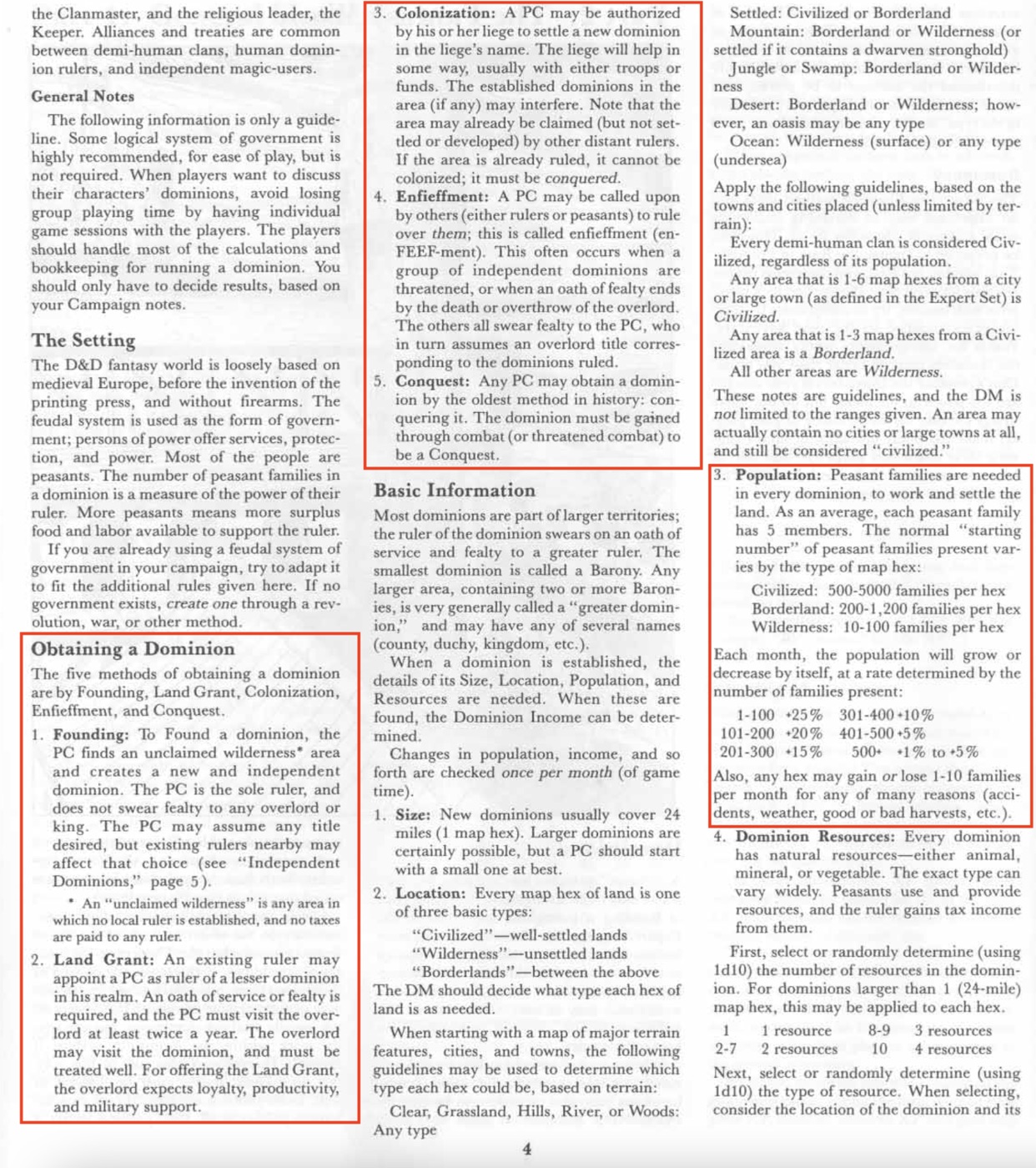
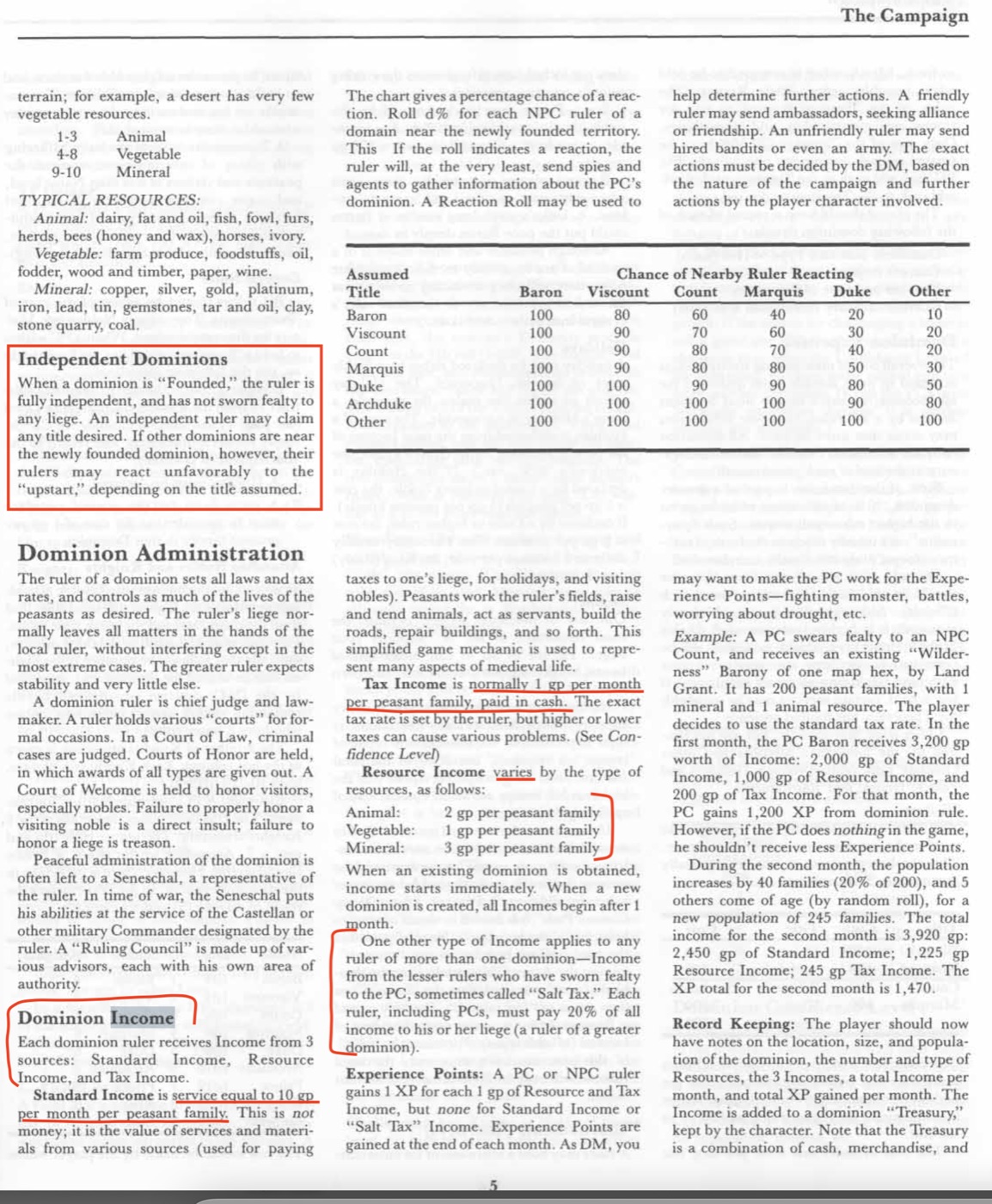
The Companion Rules released in 1984 restored many elements of domain play. Two screenshots from the DM’s Guide pp. 4-5 are shown below. In some ways, this was the first attempt to restore many things that were present in Arenson’s Blackmoor campaign (as recorded in FFC) and were missing for many years. Domain events are back! Jousting and tournaments are restored. Mass combat gets its own system. And, the rules specify with great clarity the difference between civilized areas, borderlands, and wilderness and how one can go about establishing a domain. The economic engine is not only restored, it gets a little added complexity. In short, the BECMI line (as consolidated in the Rules Cyclopedia) has a lot to offer us. I would always caution readers to start with the original books however since the Rules Cyclopedia does have some changes from the boxed sets for B, E, and C.
FFC
Speaking of FFC, much of what we know about the military and economic engine must be reversed engineered. I admit, I have not yet tackled this beast. Different domains have different economies and specialities, so their price sheets and military manifests differ and must be analyzed independently to work backward toward commonalities. The investment system is the most detailed of any ruleset I have mentioned (you can see the list of investments below). The trade system is complex, especially when lumber, roads, and shipping are considered. This is the kind of thing I had originally started doing in 2022 before getting side-tracked. Someday, I will publish Entitled: Companion Rules for OSR and Wargaming Campaigns as I have been promising. In the meantime, here are two small snippets from FFC pp. 5 and 6 that show us quite a lot of complexity embedded in these rules in Arenson’s clipped prose.


AD&D 1st Edition
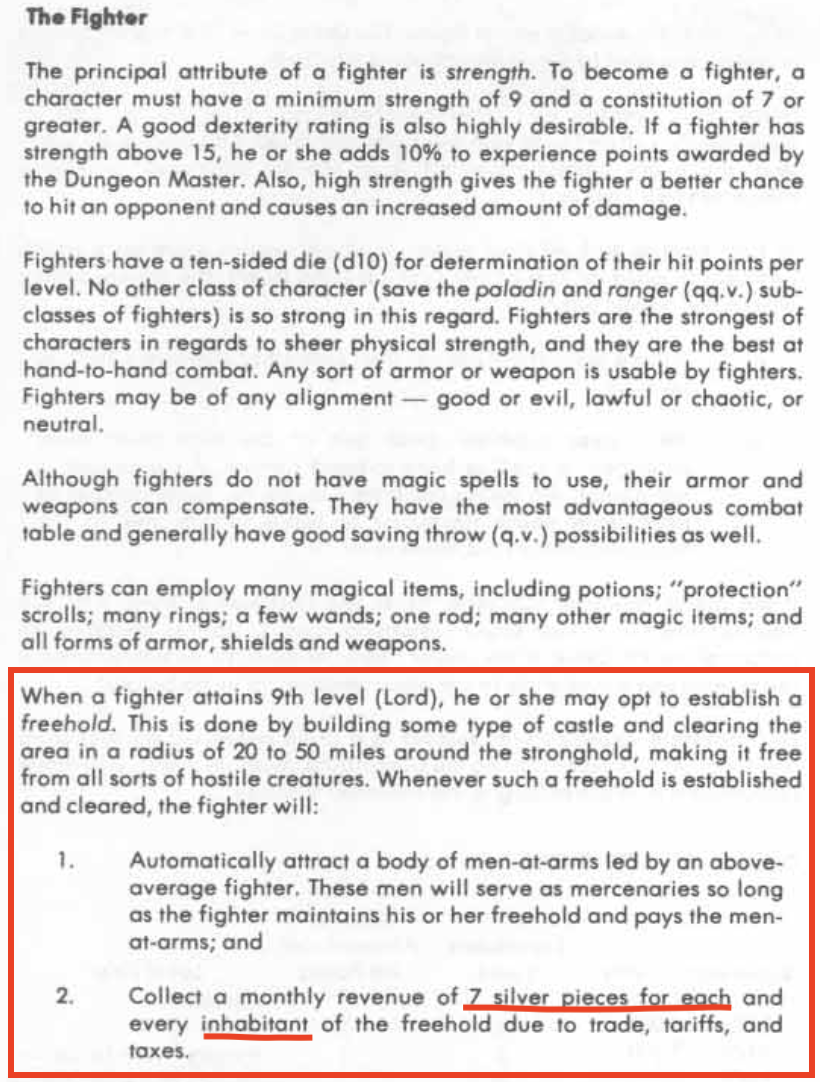
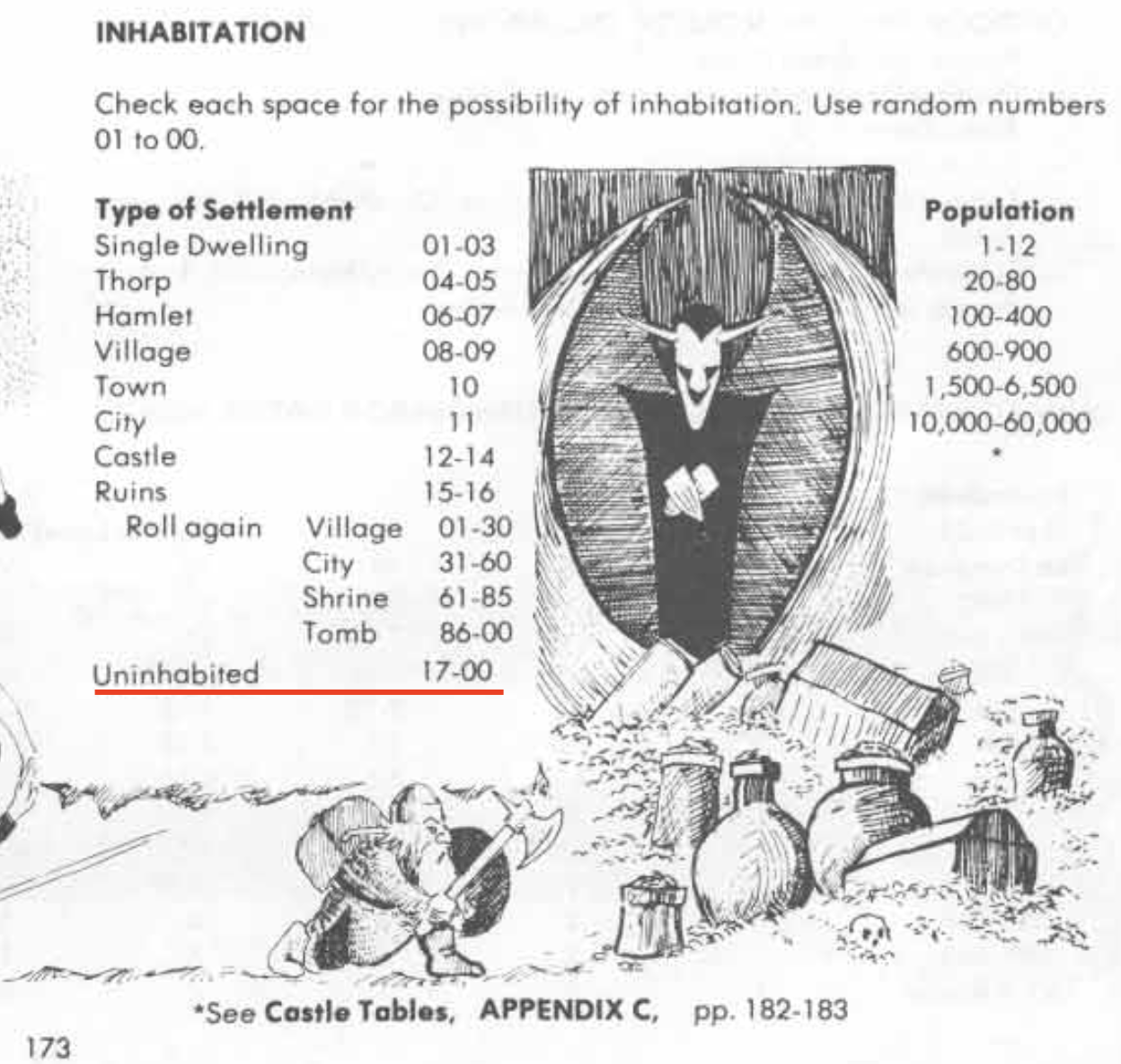
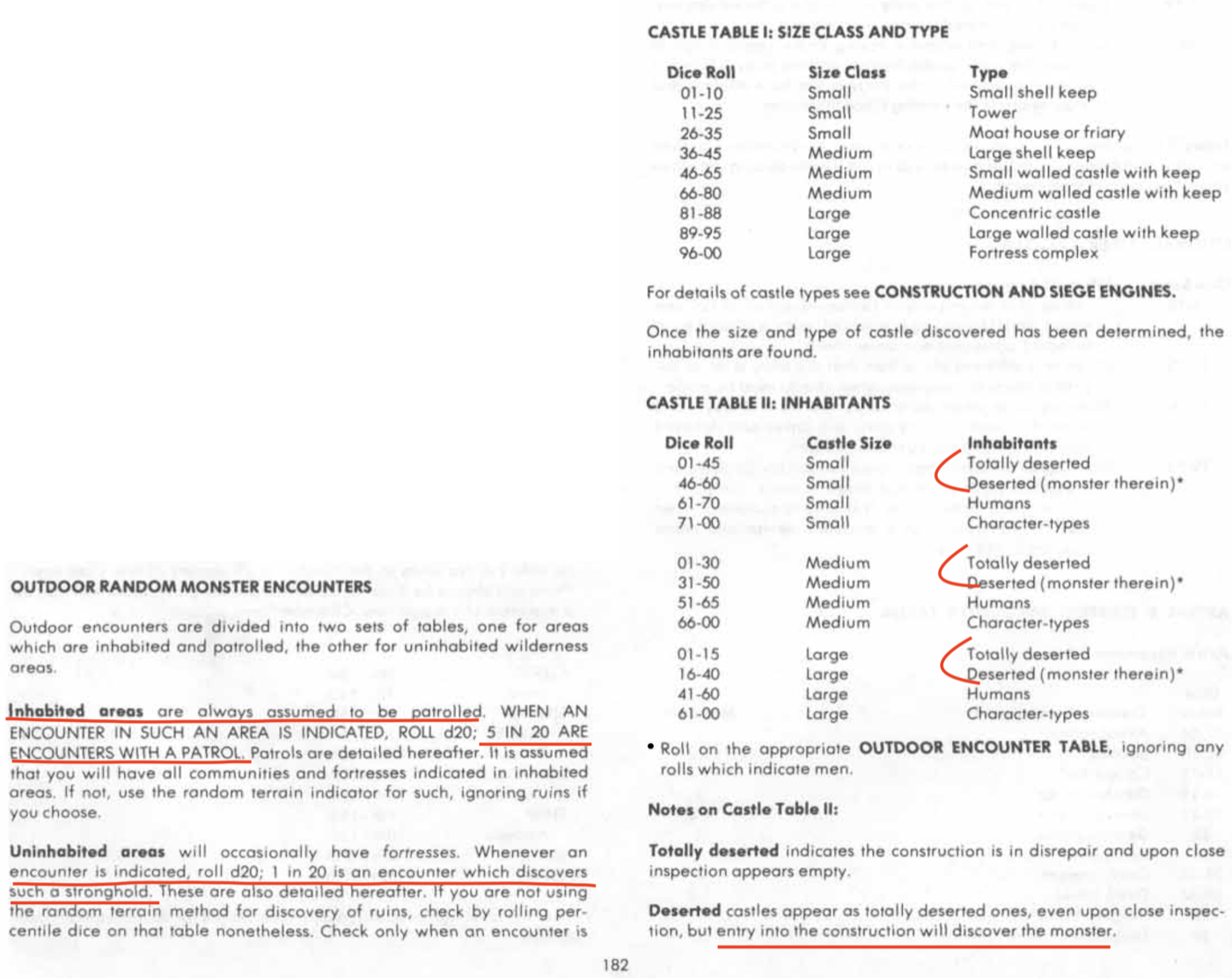
The economic engine is considerably scaled down. For each inhabitant, the Baron brings in 7 silver pieces per month. This is the equivalent of 2.5 arrows per month, or 30 arrows per year. In the 1973 draft rules, the 1 gp / inhabitant income per month compared to 5 gp for a quiver of 20 arrows equates to an equivalent income of 48 arrows per year. This is 1.6 times more. It is beyond me to make further comparisons. Just be aware that there is considerably less income per inhabitant. What’s worse, there are far fewer inhabitants. The hex clearing procedure is quite complex. The only silver lining is the likelihood to stumble upon a deserted castle that can immediately be put into use. The rules are not crystal clear whether the encounter rolls are made every 1 mile or whether they are made every 5 miles, but assuming 5 miles is true, the implied setting is an almost desolate, ruined world. This is not the impression one gets from reading the modules or when using the World of Greyhawk supplement.
Interim Conclusion
I have covered a lot of ground and perhaps some things have gotten lost in the weeds. Most campaigns, even amongst old school players, are missing a number of things that were present in Arneson’s early Blackmoor campaign, and to a lesser extent in Gygax’s Greyhawk campaign. These include:
- A loose coupling of titles of nobility and levels of character experience
- Patron Play (one player on top of a Faction with one or more players subordinate)
- Player versus Player (most often realized as Faction versus Faction but sometimes even occurring at the adventuring party or even individual adventurer tiers of play). Much skullduggery (including the use of diplomacy, scrying, poisons, and assassins) is assumed by the rules but not explicitly stated or encouraged.
- Jousting, Heraldry, and equipment that amplified the “character” of the Factions operating within the world
- An economic engine tied to the population. Investments, settlements/colonies, and trade are all tied together in this bundle.
- A means to discover inhabitations, monster lairs, and castles (and Factions) in the Wilderness
- Strongholds and mass combat using miniatures
- Social Class and status
I truly believe that adding these elements back into play can add both excitement and meaningful flavor into your campaign. Ultimately, reviving the play-style from this era is a clubhouse effort. This style of play requires something more than mudcore-dungeon delves by soloists or by the get-along gang.
In part 3, I will conclude by looking at Social Class.
On Heraldry & Social Class in Early D&D: Part 1 · Part 2 · Part 3
Originally published on Substack on May 15, 2026.