The Carrier Wave for Dungeons & Dragons
Rodney Hampton
- 6 minutes read - 1154 wordsOur Hobby Owes a Lot to the Diplomacy Game
1954 - 1966
In 1961 and in 1971, Games Research, Inc. published Diplomacy. The creator, Allan B. Calhamer, had received his undergraduate degree from Harvard and was enrolled in Harvard Law when he designed the game. In 1954 he self published 500 copies that sold out. Then he licensed it to Games Research, Inc. Later, Avalon Hill acquired the company and, with it, the rights to Diplomacy. Although Calhamer never finished law school, his game is still actively played today.
In 1966, a Diplomacy enthusiast named John Koning created DipCon (Diplomacy Convention) and hosted it in his house in Youngstown, Ohio. In 1969, he again hosted DipCon II at his house. By 1971, Rod Walker enters the picture and by the time of DipCon VI (1973) and DipCon VII (1974) we find Len Lakofka organizing the event in Chicago. Finally, in 1977 DipCon X is held in Lake Geneva side by side with GenCon. (See Diplomacy World #55, Summer 1989, p. 10 for more details). But I’m getting ahead of myself.
1969
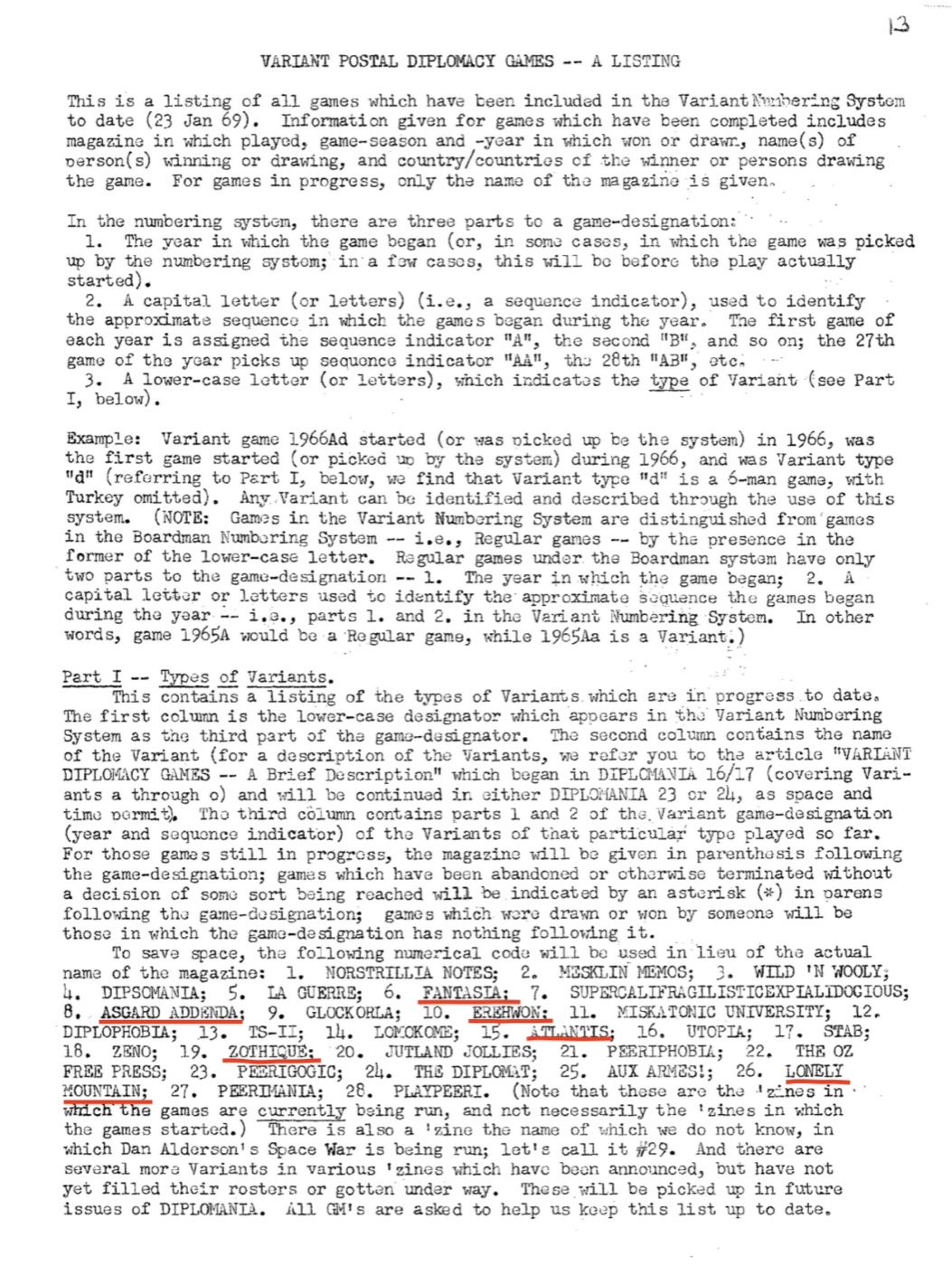
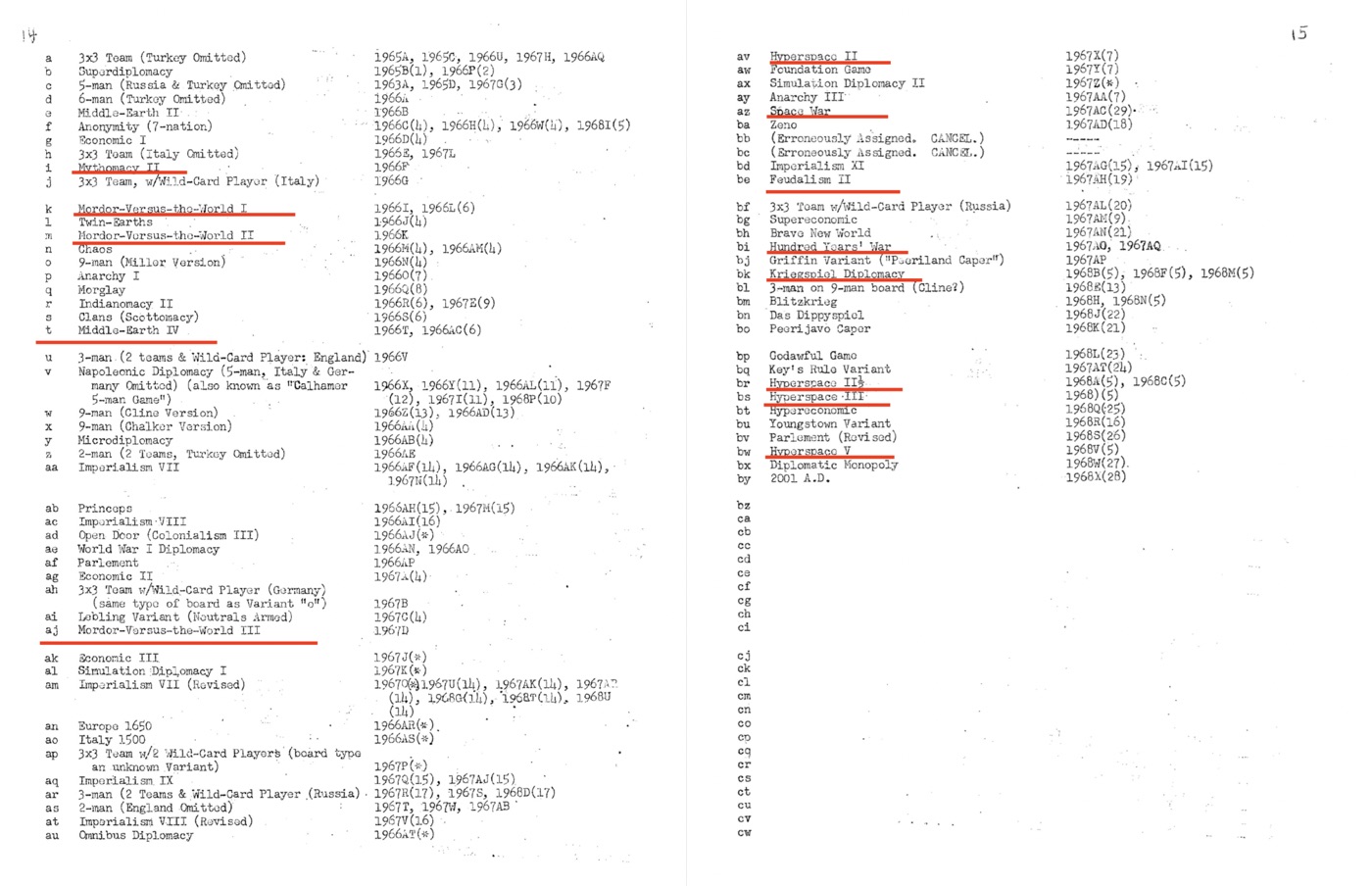
By 1969 there were already many Diplomacy oriented fan-zines and play by mail games in operation. In Diplomania #22, we see a lot of very interesting activity around Diplomacy variants. There are several fantastic settings, a medieval setting (HYW period), as well as a smattering of Sci-Fi. It is important to remember that Ace Books published an unauthorized, “pirated” paperback edition of The Lord of the Rings in the United States in 1965. Meanwhile, the original Star Trek television series premiered on NBC on September 8, 1966. All of this was fodder for the imagination, and it showed up first in the Diplomacy fanbase.
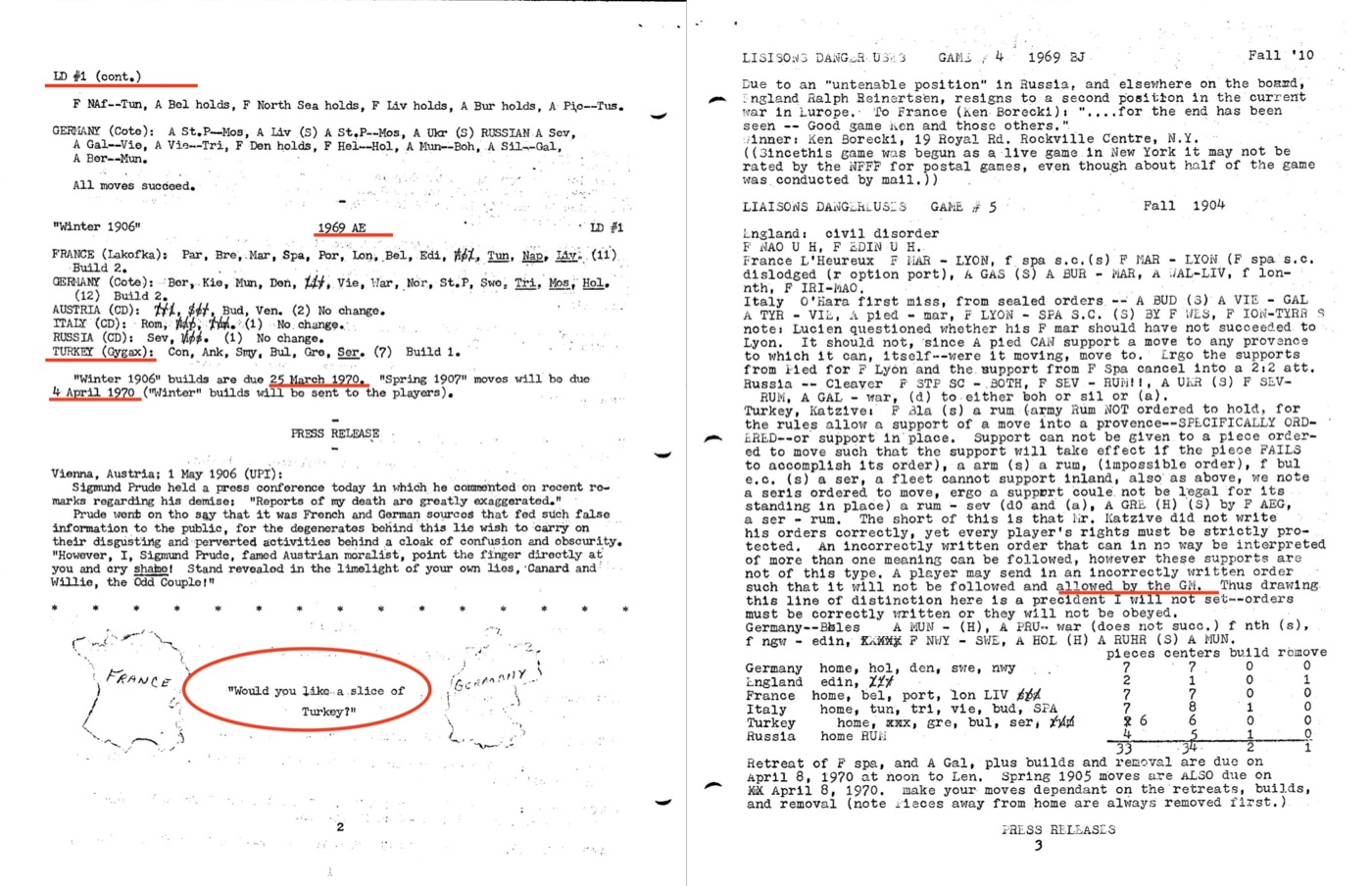
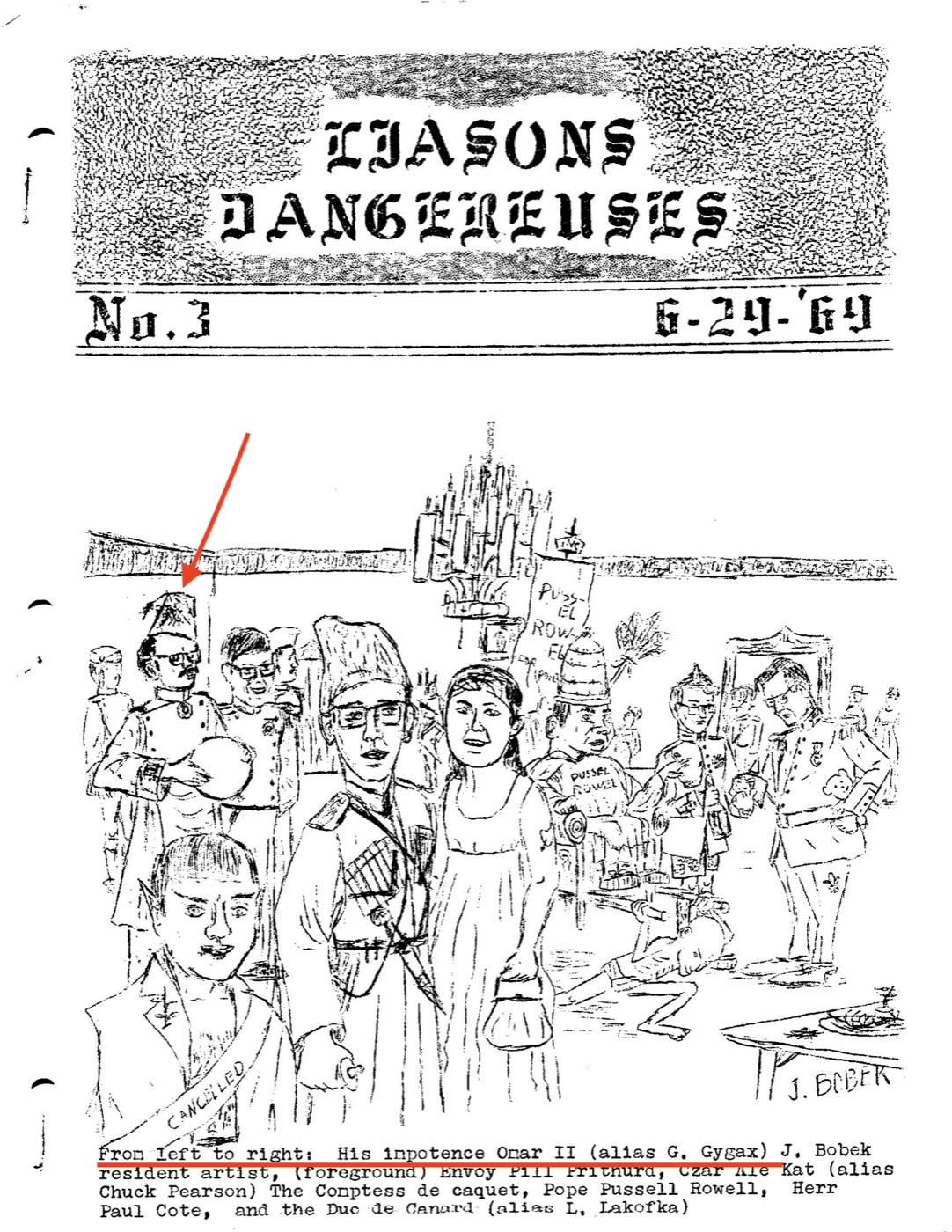
Also, in 1969 the first issues of Liasons Dangereuses appear. This is the -zine produced by Len Lakofka. In the very first issue, we see that Gary Gygax is running Turkey in the same game that Lakofka is running France. Furthermore there is a reference to the “GM” or Gamesmaster on the page opposite. Incredible! By issue #3 we see a hand drawn picture of Gary Gygax who is playing Omar II. In other words, Gygax is playing a character in a larger campaign. We kind of knew this kind of thing was going on from various interviews and murmurings around the internet, but to see it in print from ‘69 still packs a punch.
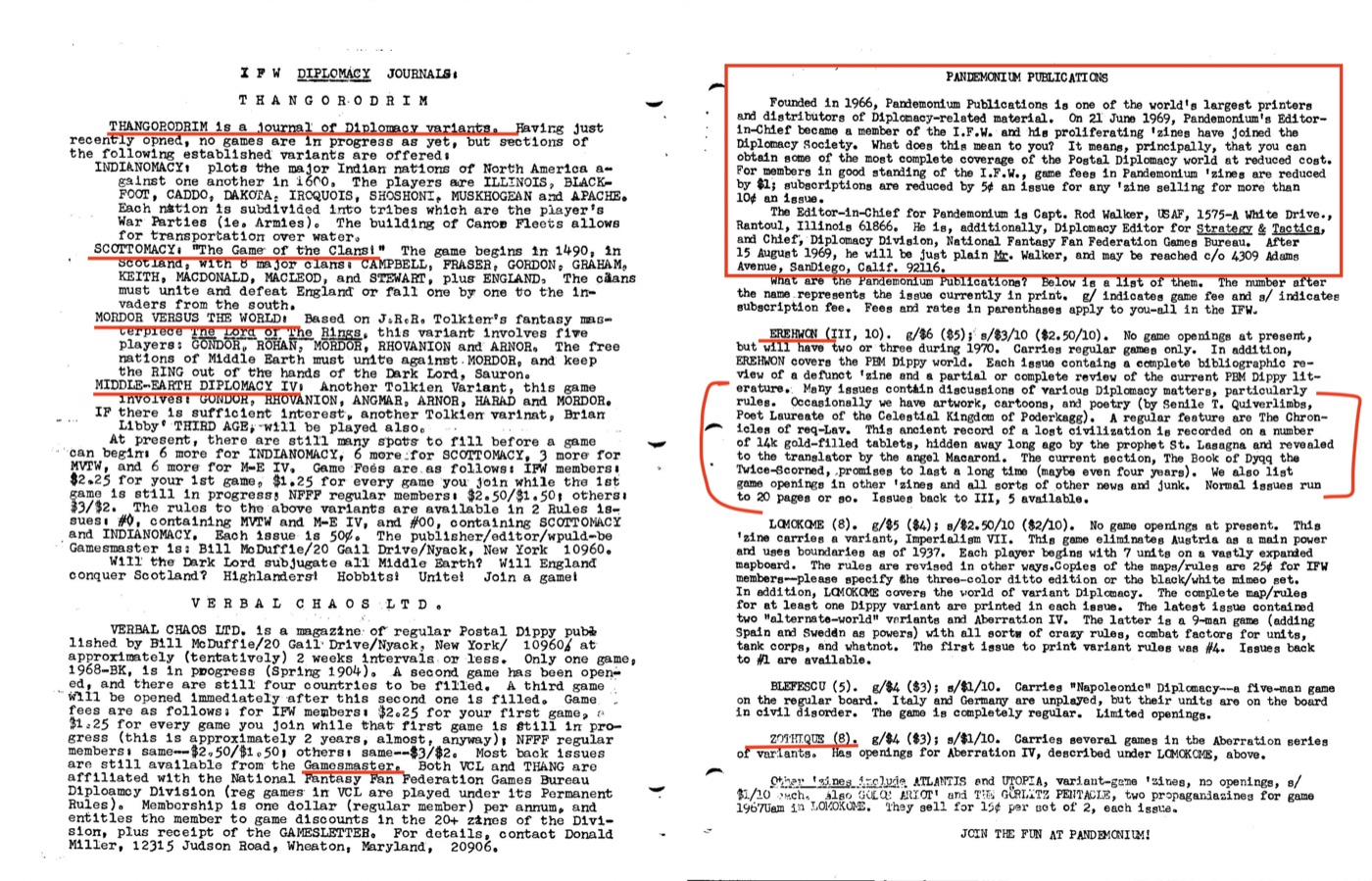
Issue 3 also adds a reference to Thangorodrim (where Gygax publishes his series of blurbs about Dragons of different colors). It connects together Rod Walker with the International Federation of Wargamers (IFW). Furthermore it shows us that Erehwon is a fantastic land based, loosely, on the beliefs of the Latter Day Saints. Zothique is most likely based on Clark Ashton Smith’s works.
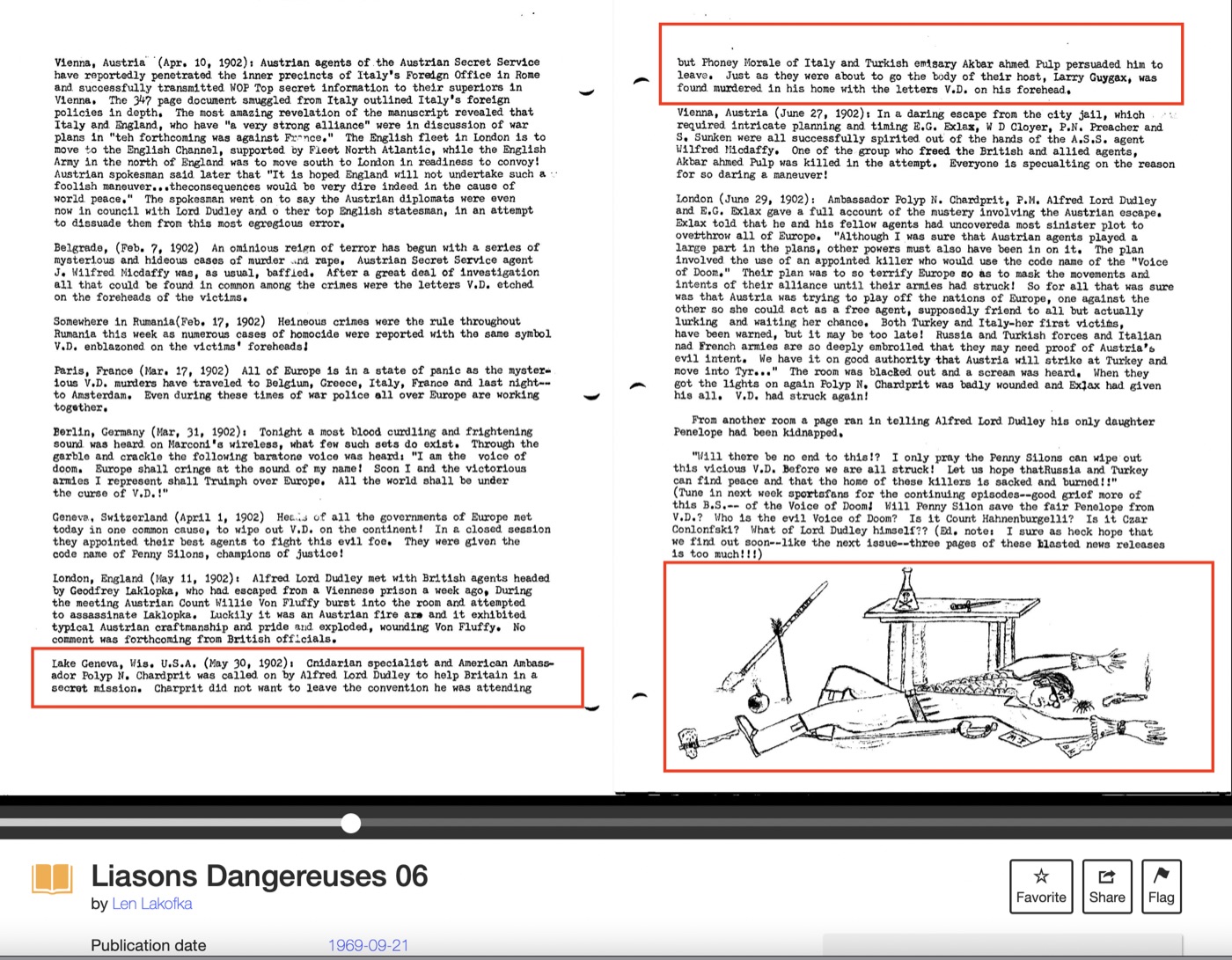
By Issue 6 we see yet more artwork depicting the death of “Larry Guygax” from foul play with “V.D.” which is inscribed on his forehead. Was this a relative of Gary or just another persona? Either way, the picture is quite rich in detail showing a number of weapons, a flask of poison, a spider, and other clues. Yet again, this shows a level of identification with “character” immersed in an imaginary setting that far predates D&D and arose almost concurrent with the Braunstein games in the Twin Cities (December 1967 onward). In some ways, the rise of role-playing in a historical or fantastic setting seems to be something of an inevitable result of this much competitive gaming (inclusive of miniature wargames and Diplomacy).
1970
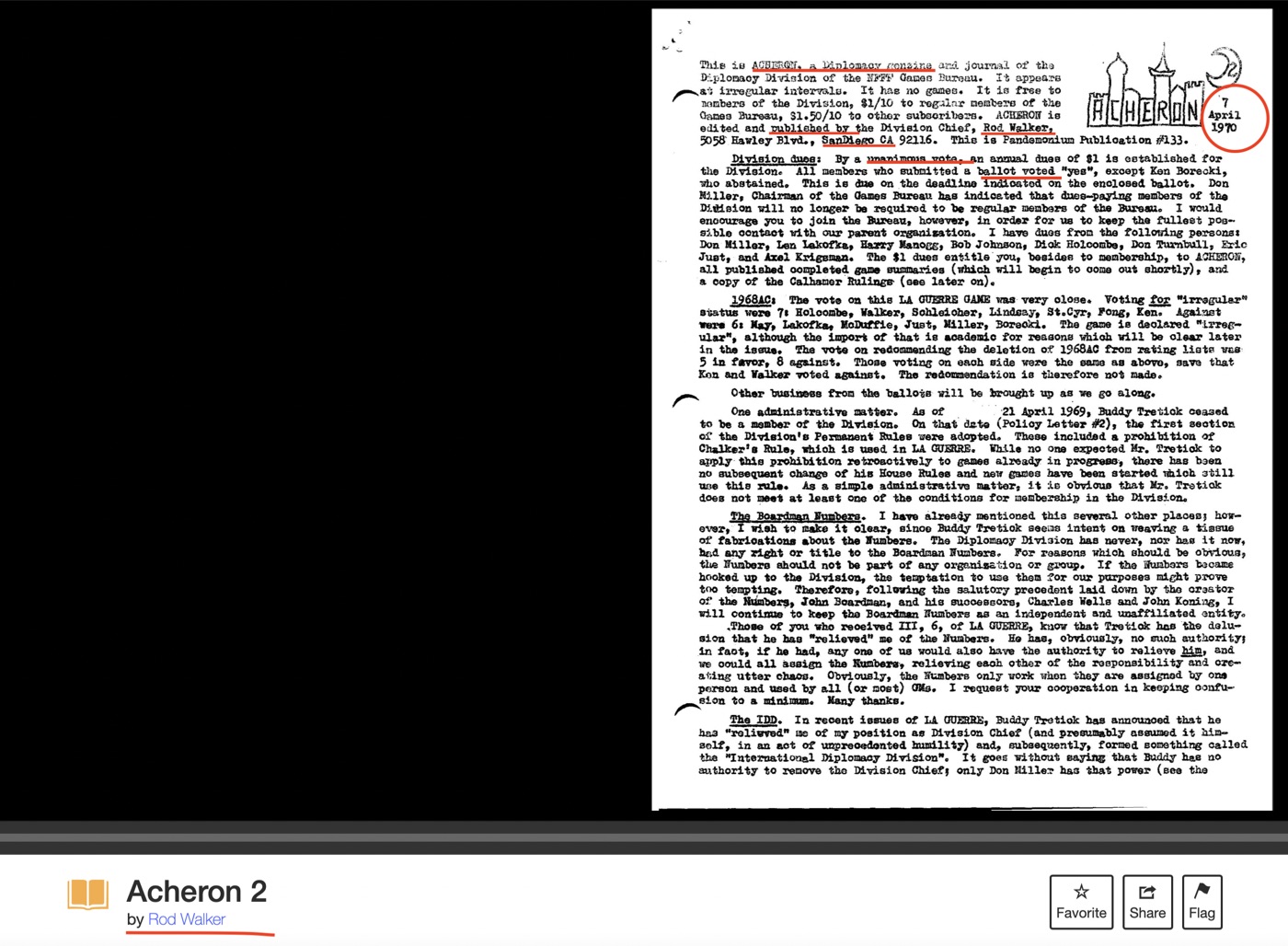
In Aceron #2 (7 April 1970) Rod Walker’s name pops up again. But what is most interesting is that there are obviously gaming clubs, associated fanzines, membership dues or subscription fees, and voting mechanisms all taking shape simultaneously. The know-how required to replicate these foundational elements is being distributed all across the United States through interlocking mailing lists at this point with certain figures like Rod Walker, Gygax, Lakofka, and others as the connecting glue.
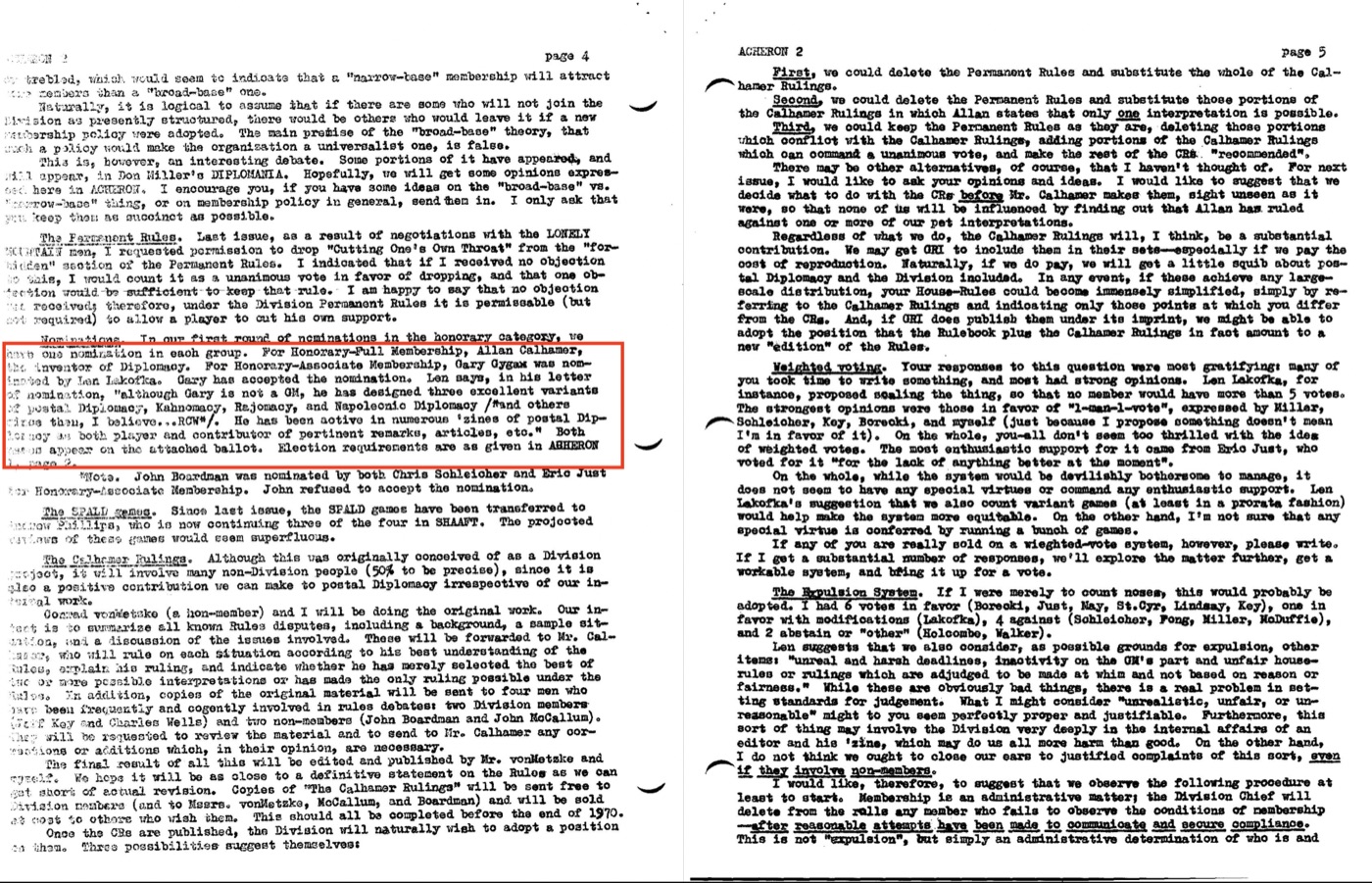
Side note: What fun it must have been to play in Gygax’s Khanomancy or Rajomancy games?
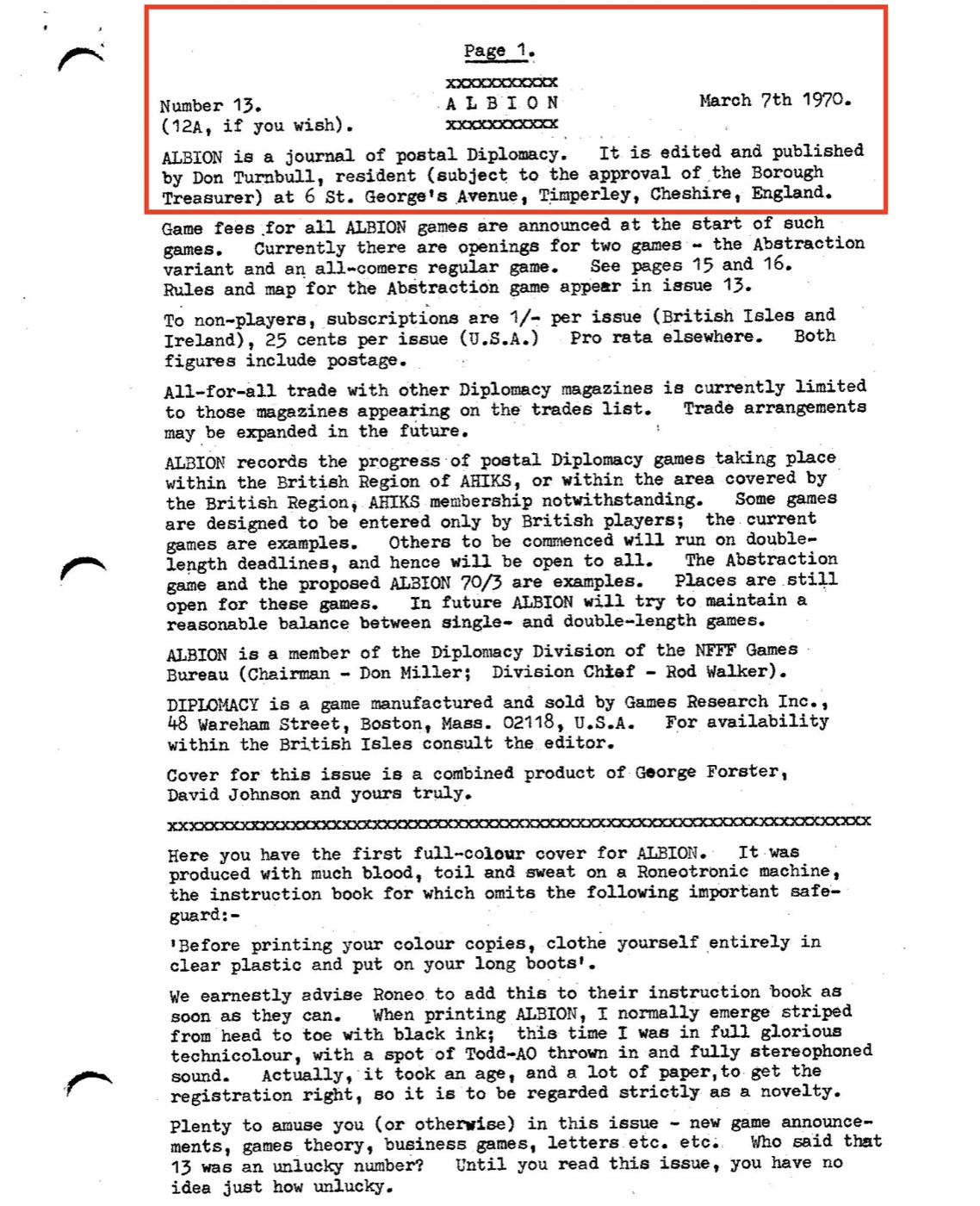
But this wasn’t just happening in America. In Albion #13 from March 7, 1970 we see that Don Turnbull (the future head of TSR UK Ltd) is also part of the same setup in Britain. According to wikipedia, he started this -zine in July 1969.
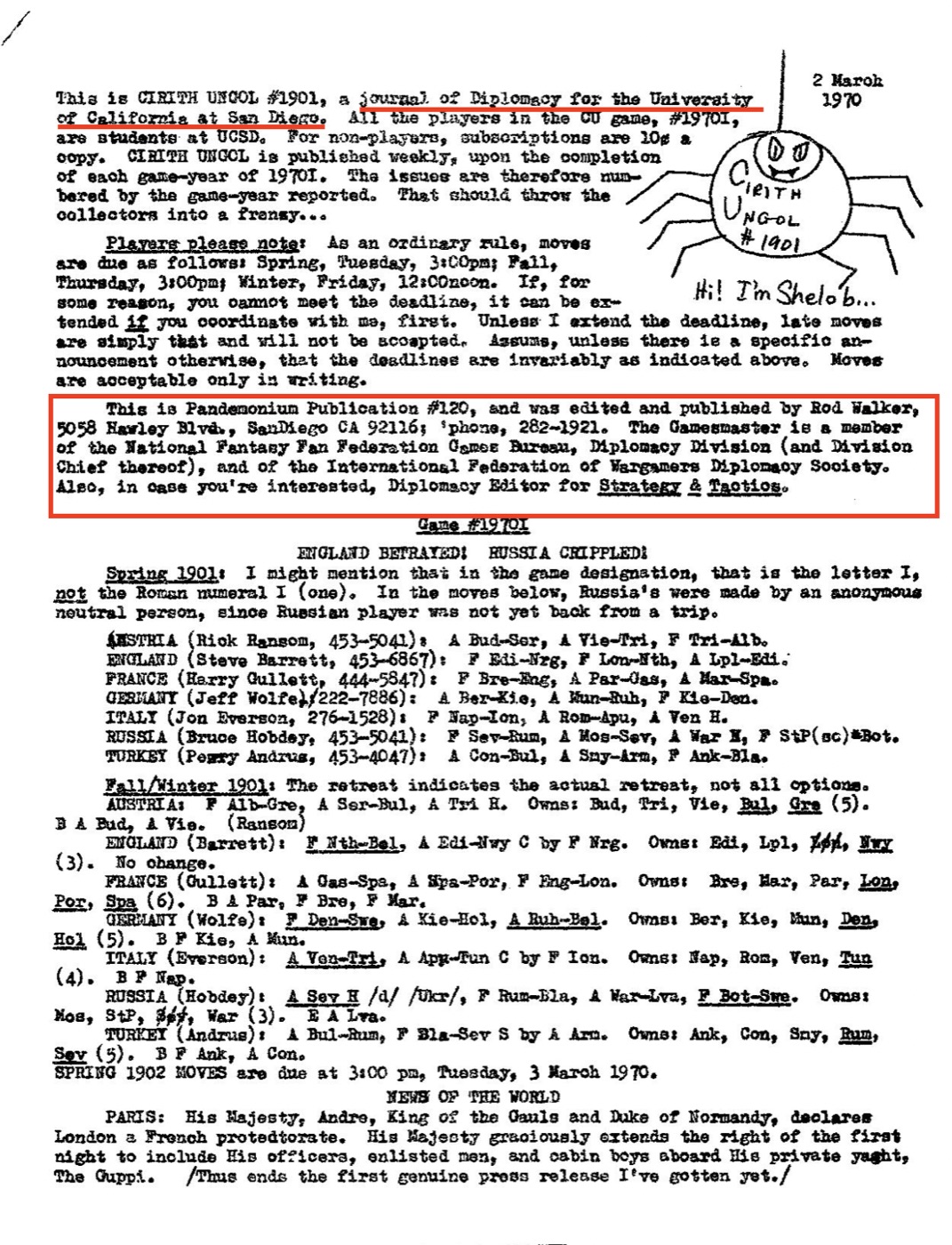
In another Diplomacy -zine, Cirith Ungol, we see that Rod Walker has moved to San Diego. By reading his own blurb you can see he is also plugged in to Strategy & Tactics magazine which Jim Dunnigan (of SPI fame) bought sometime before September of 1969. SPI would later be bought out by TSR. But for now, it was the main “hex and chit” wargame competitor to Avalon Hill.
1971
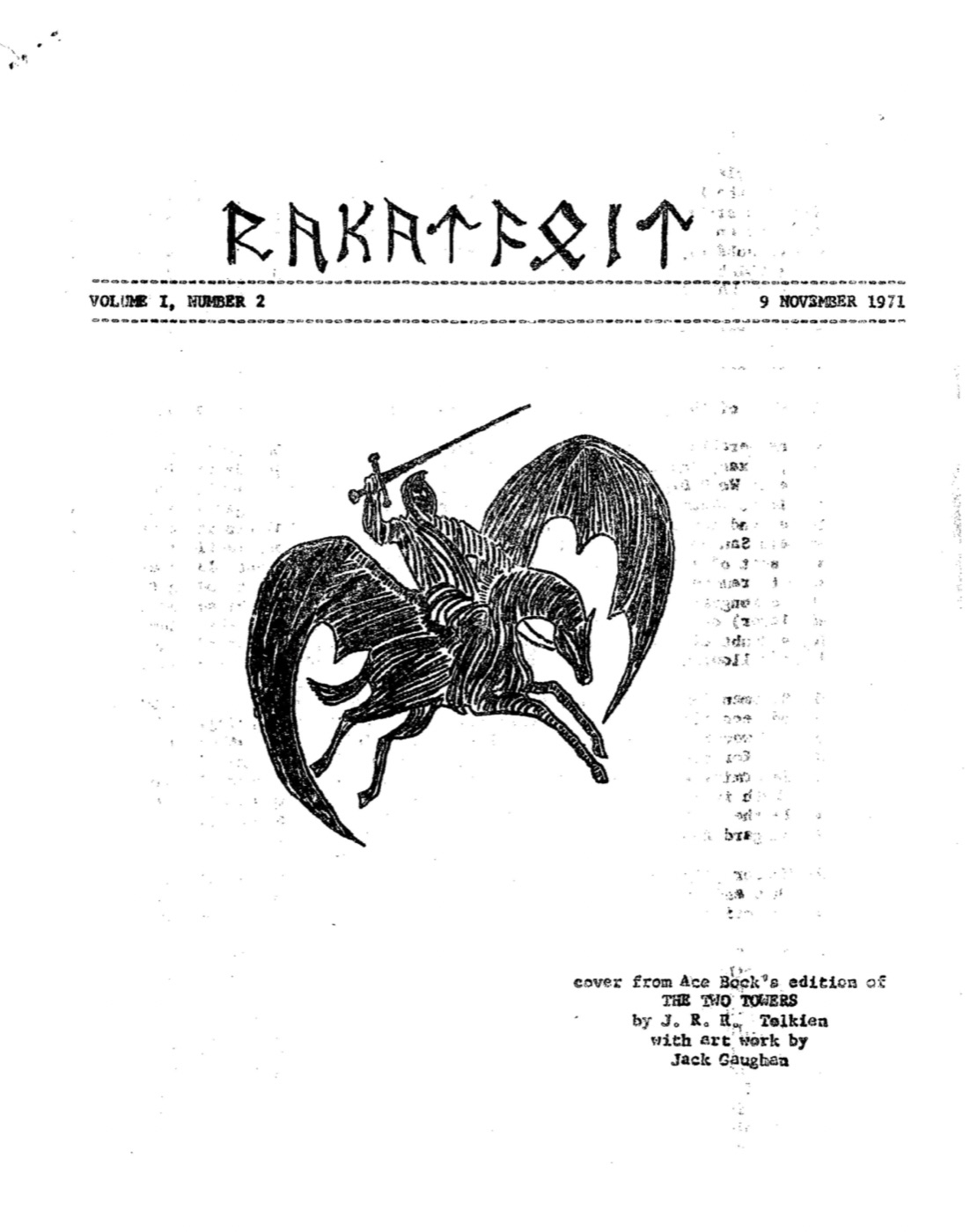
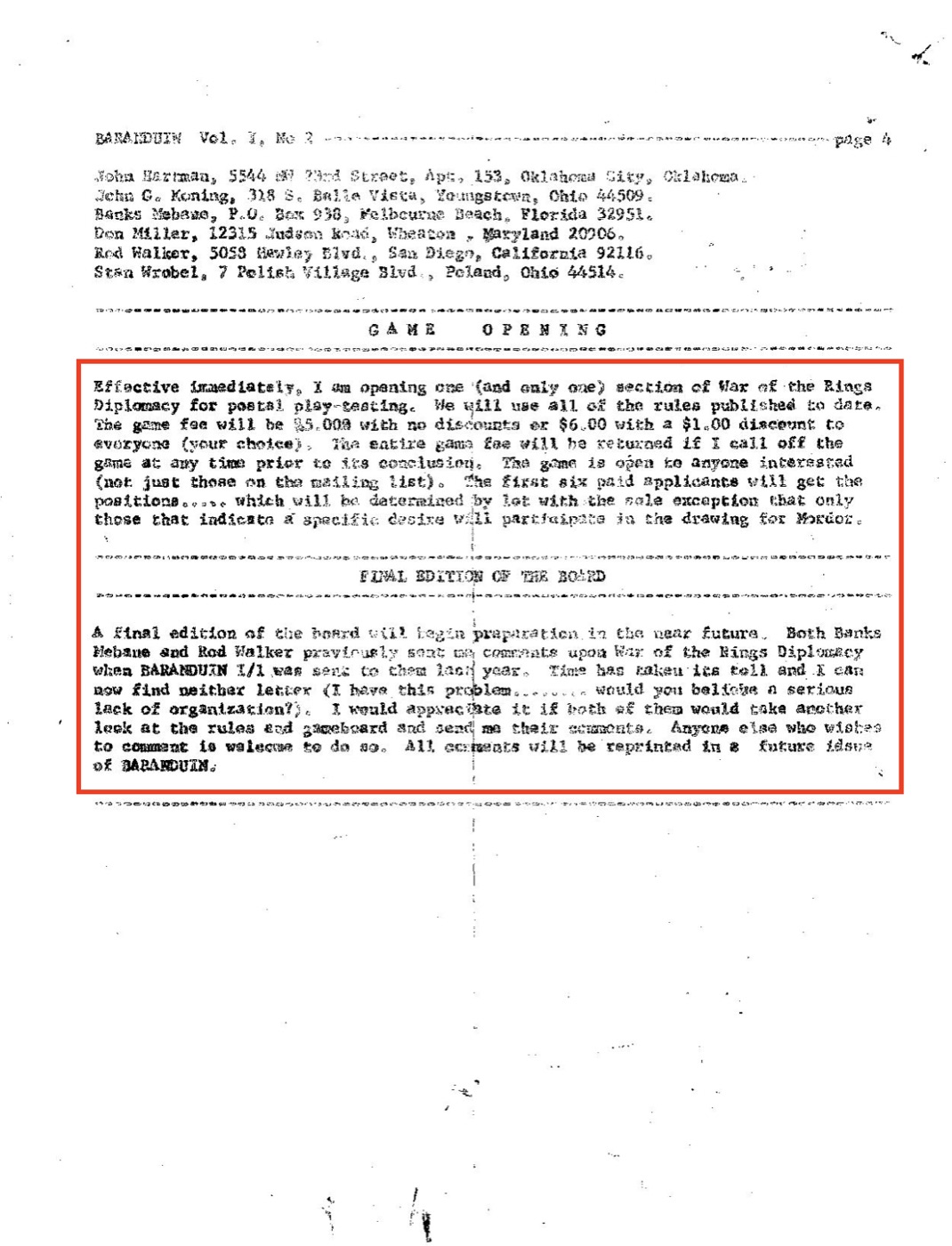
Just to emphasize the point, here’s yet another -zine (Baranduin Vol 1, No 2 from 9 November 1971) where Rod Walker is involved. As an added bonus, the cover picture is from the very rare (nowadays) Ace “Two Towers” book.
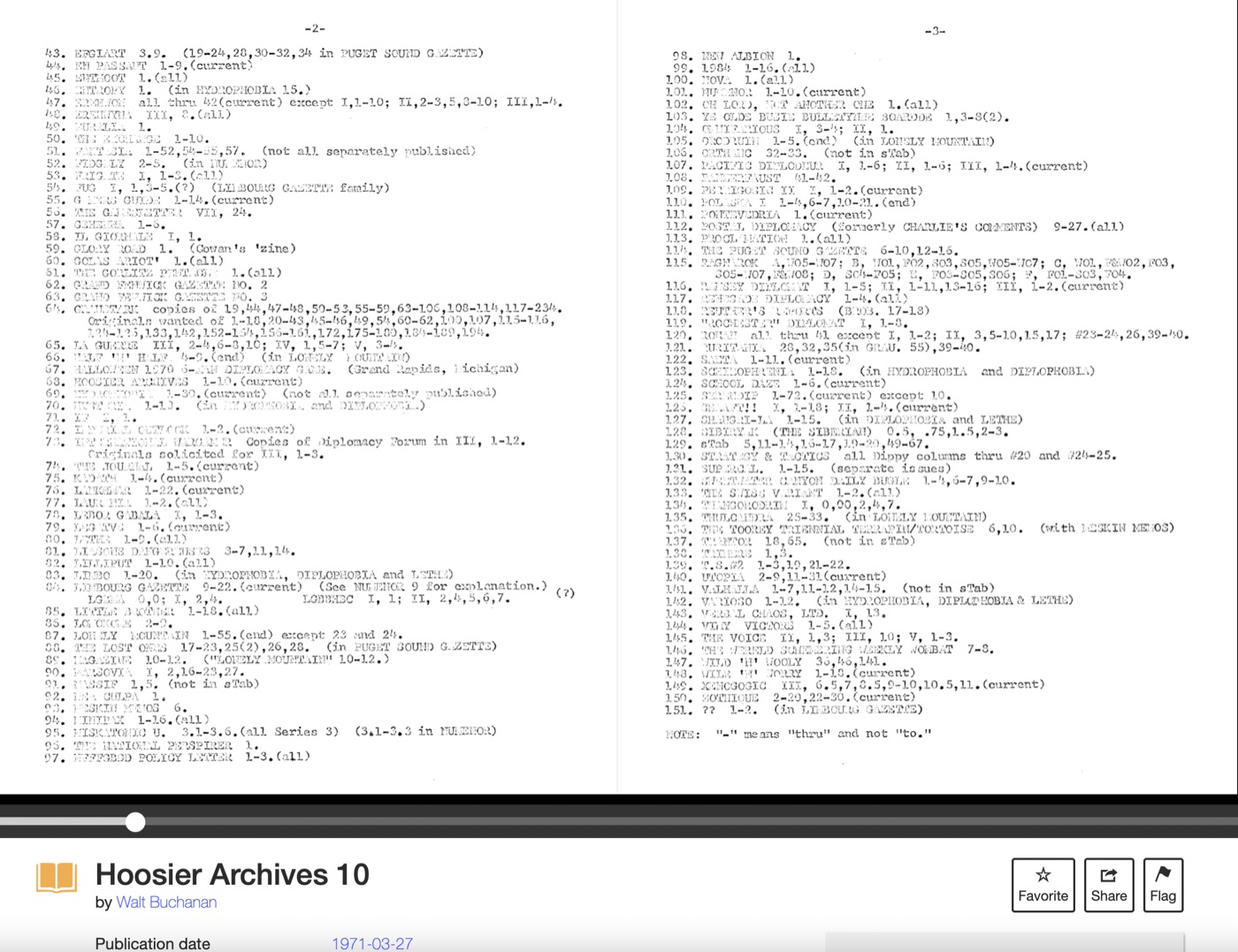
It’s been a while since I captured this screenshot, but the Hoosier Archives #10 from 27 March 1971 appears to list 151 active Diplomacy -zines.
1975
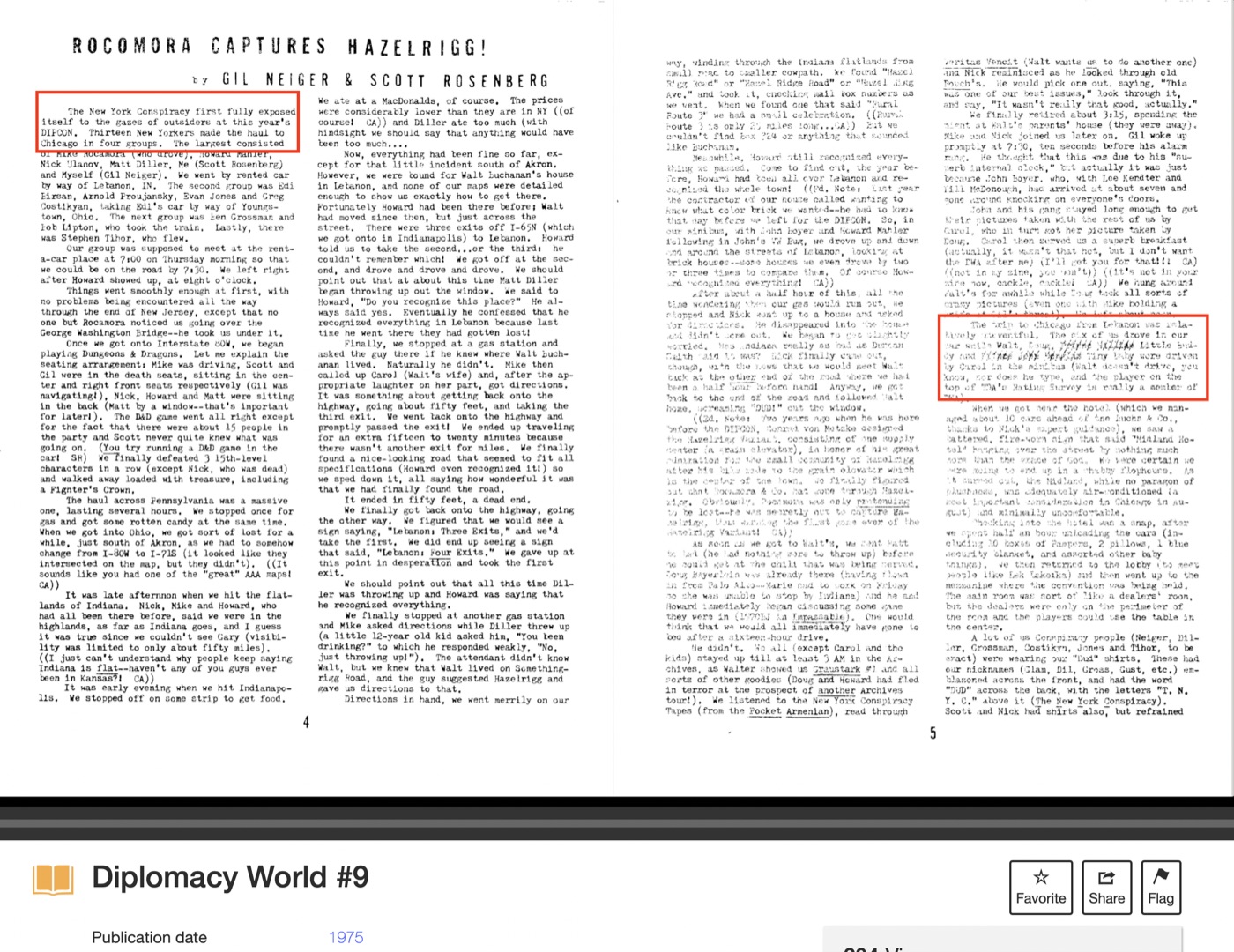
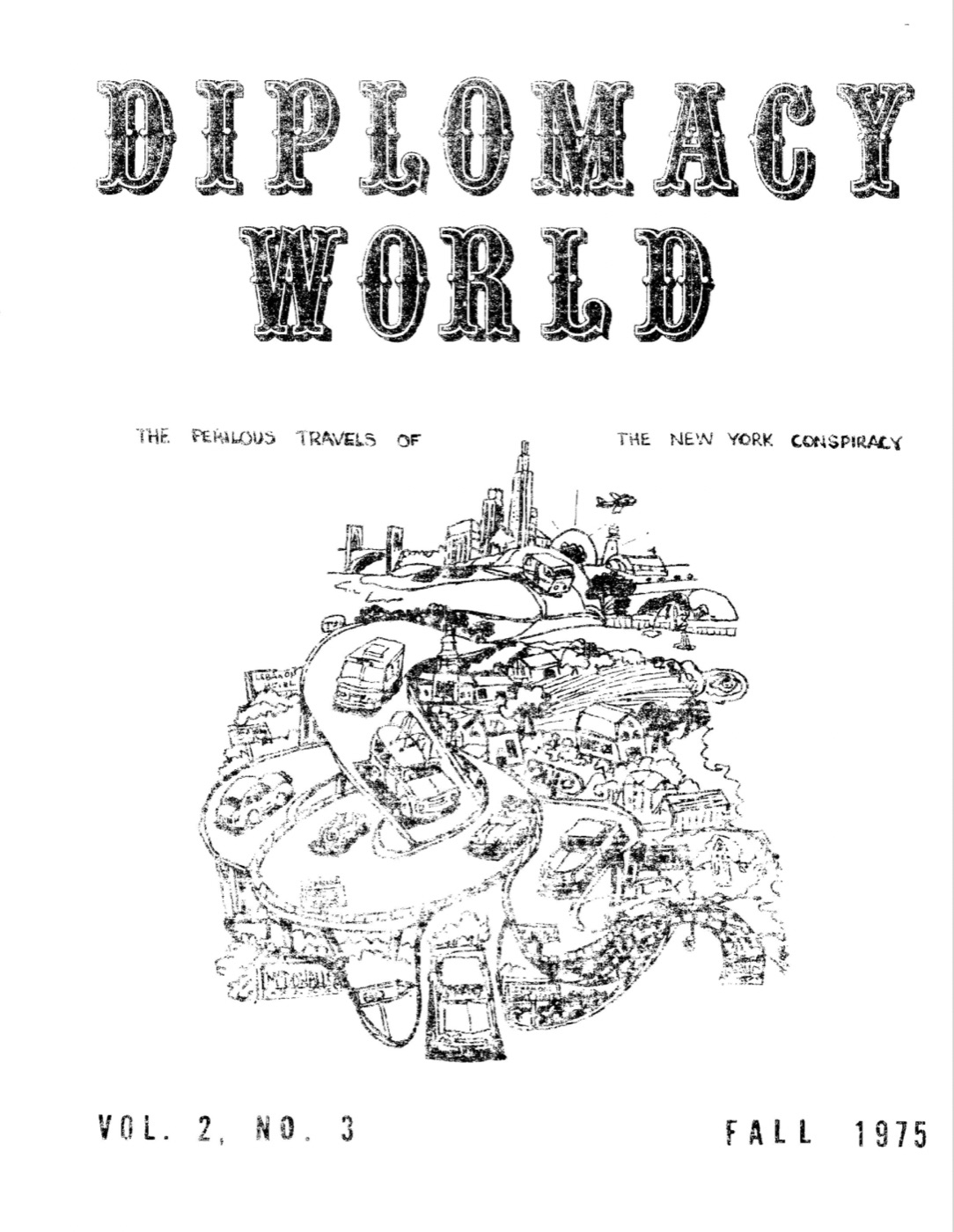
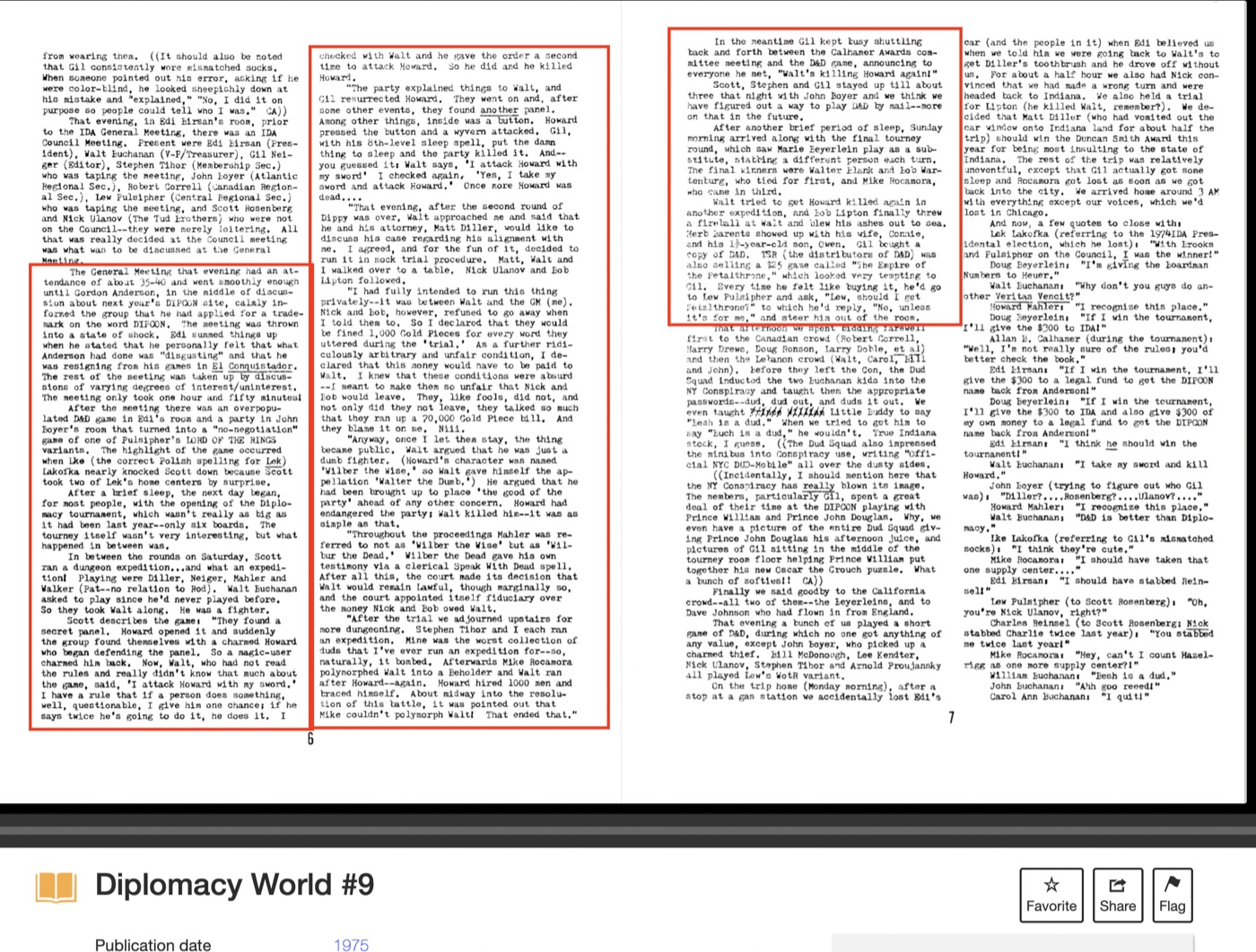
Everything up to this point has been prologue. In the wake of OD&D’s publication in early 1974, the game achieved some modest success. But what happened in 1975 was that the connective tissue put in place by fans of Diplomacy literally became ground zero for the propagation of D&D throughout the country. Take, for example, this article in Diplomacy World #9 (Vol 2 No 3, pp. 1, 6 - 7, Fall 1975) wherein New Yorkers head to DipCon in Chicago. Len Lakofka is there. So is Lew Pulsipher. Lew was running some kind of Lord of the Rings game at the convention. Later we see him pop up in The Dragon #3 October 1976 with the first of many contributions. Other kids at that DipCon carried D&D back to California.
Oh, and Len Lakofka? Through the summer through the early winter of 1975 Len spends many pages in Liasons Dangereuses describing his own unique OD&D + CHAINMAIL variant. Tim Kask speaks about it in the final issue of The Strategic Review and publishes Lakofka’s work in a condensed set of pages in The Dragon issue #1. More on that later (there are many eyes on this as I write this substack post).
Conclusion
There is so much more material buried in the Diplomacy -zine world that will show the propagation of D&D in detail that would make a history nerd like me blush. But sufficed to say that this is my working theory about why D&D took off so rapidly throughout the country and spawned its own set of -zines and variants. It was bound to do so because it was just riding on top of the carrier wave laid down by all those crazy Diplomacy fans.
Originally published on Substack on February 16, 2026.