More on Arneson's Combat System
Rodney Hampton
- 4 minutes read - 807 wordsPulling together a few more bits of evidence and conjecture
Loving Chainmail
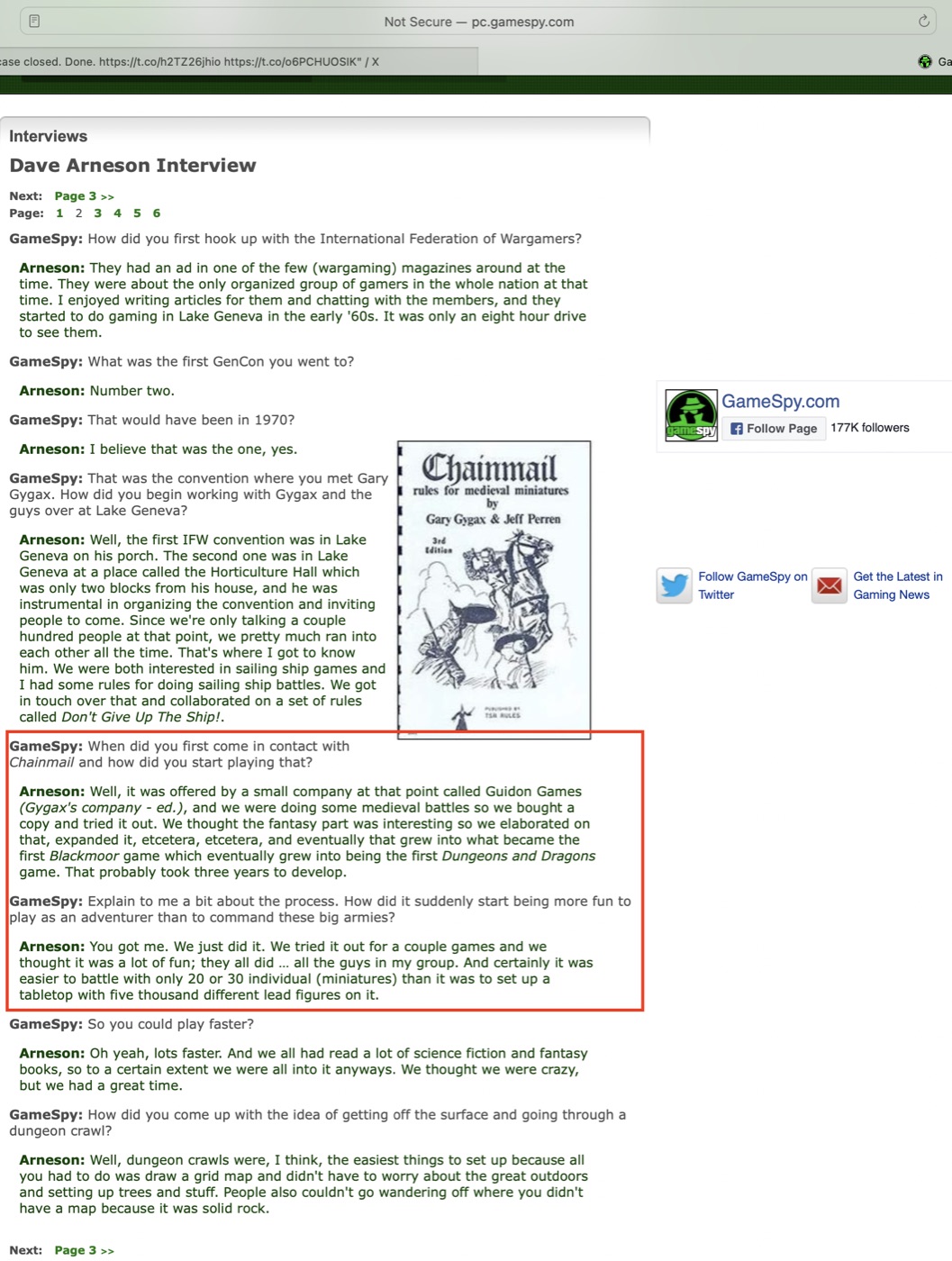
Dave Arneson, in an interview with GameSpy, describes getting his hands on Chainmail 1st edition (published March, 1971). His players loved it because it led to much faster combat resolution than Strategos-style wargaming. However, when applied in the dungeon context, it proved less satisfying. Read on.
Abandoning Chainmail
There is quite a bit on the Secrets of Blackmoor blog that validate my suspicions about the early combat system used by Arneson after he abandoned Chainmail’s Appendix E: Fantasy Combat Table. This happened after Bob Meyer’s infamous battle with the troll under the bridge (Saturday, April 17, 1971 per Corner of the Table Top Vol 3, Issue 4). Assuming Meyer was playing a Hero, he would have needed a 9 to drive it back and a 10 to kill it. The Troll, on the other hand, only needed an 8 to drive the Hero back and a 9 or better to kill him which is what happened.
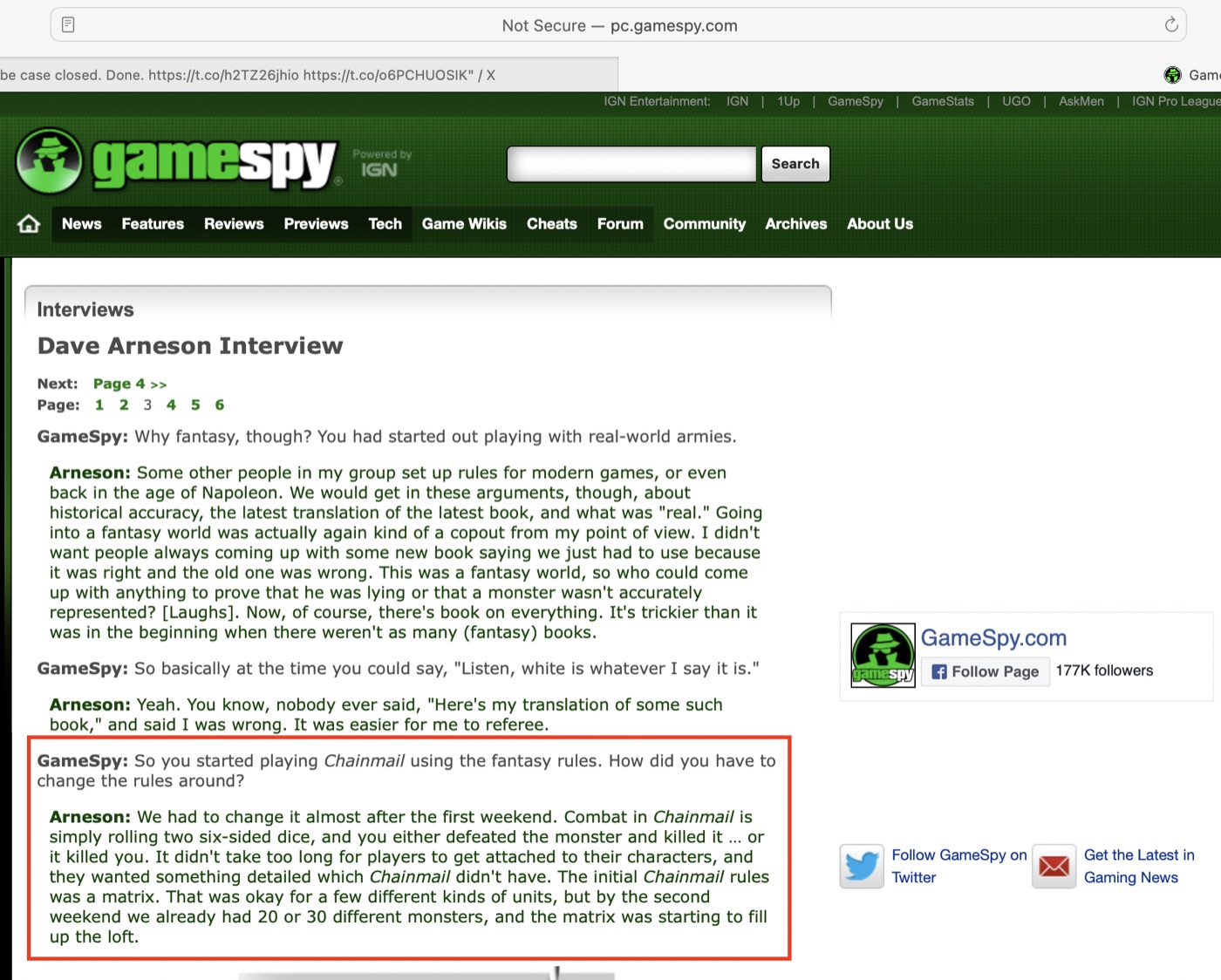
The interesting thing is that Arneson is telling us what we knew from looking at the 1973 draft from the Arneson v. Gygax lawsuit. The alternative combat system was necessary to develop because the matrix for fantasy combat was just going to keep expanding and it was already unmanageable by the 24th or 25th of April.
Weapon Proficiency / Combat Capability / Attack Value
Under Fair Use, I’m reproducing these two sets of “character sheets” from David Megarry. Note that that they show multiple weapons with a 2d6 generated stat for proficiency or attack value. [Footnote: On 22 April, 1971 Arneson had implemented the Spanish Royals character sheet with numerous attributes. Later, we see every weapon listed on character sheets in the Twin Cities. We looked at 2 of these in my earlier blog post.]
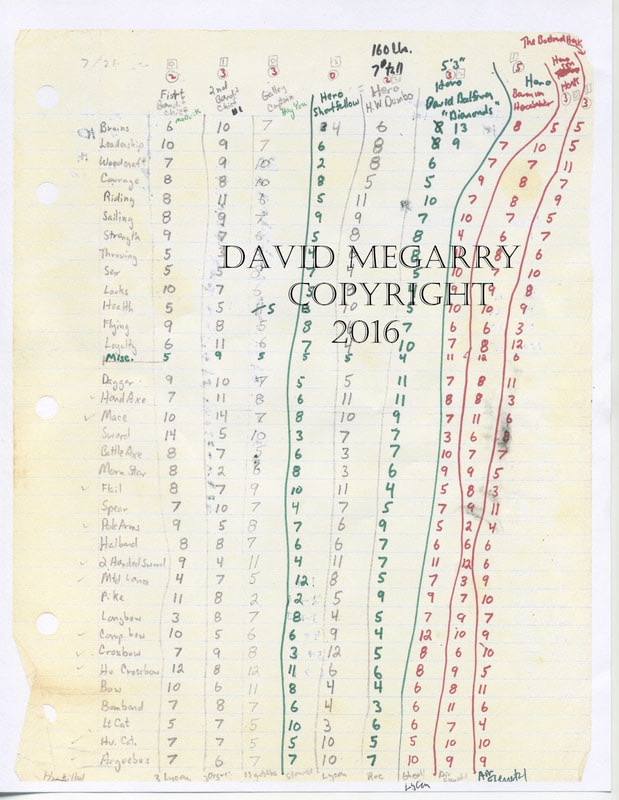
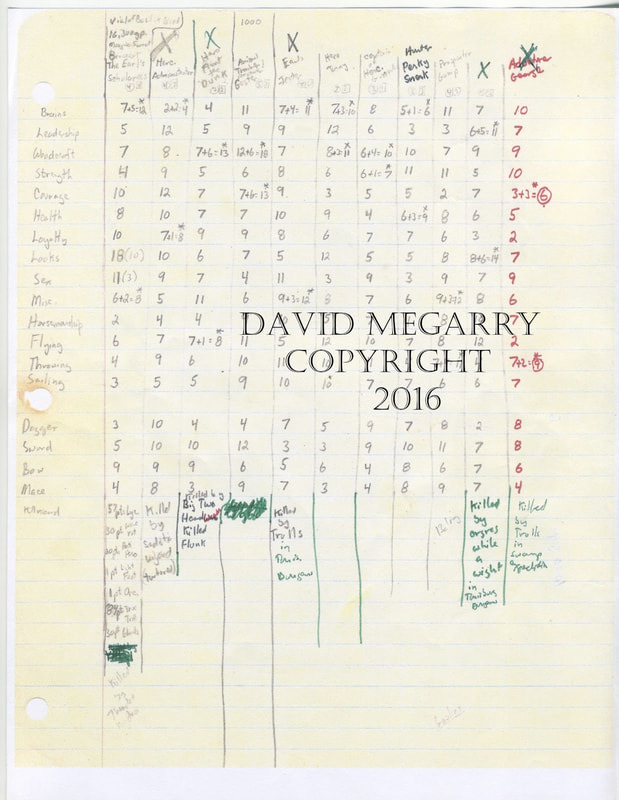
According to Google Gemini, the average of all of these stats is 7.07.
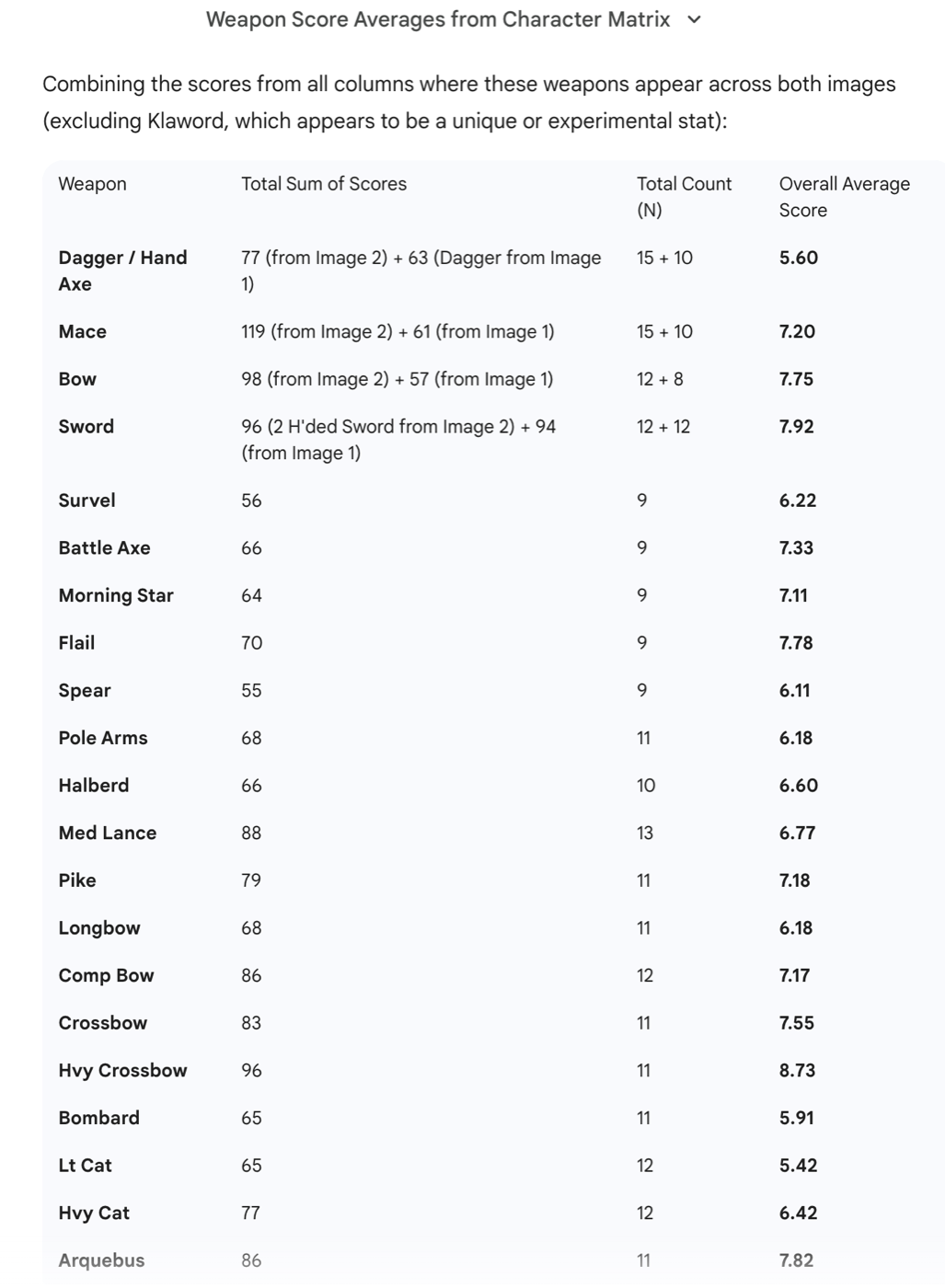
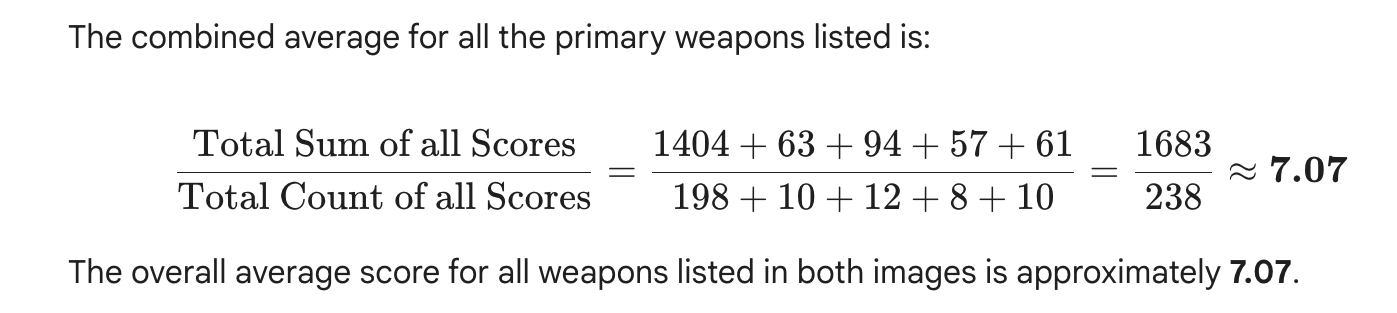
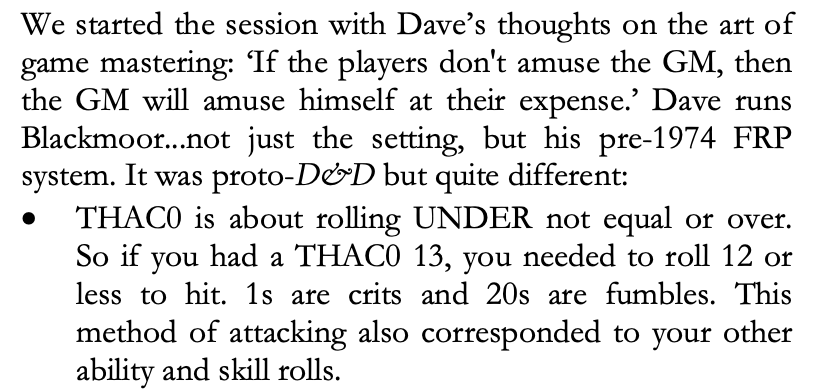
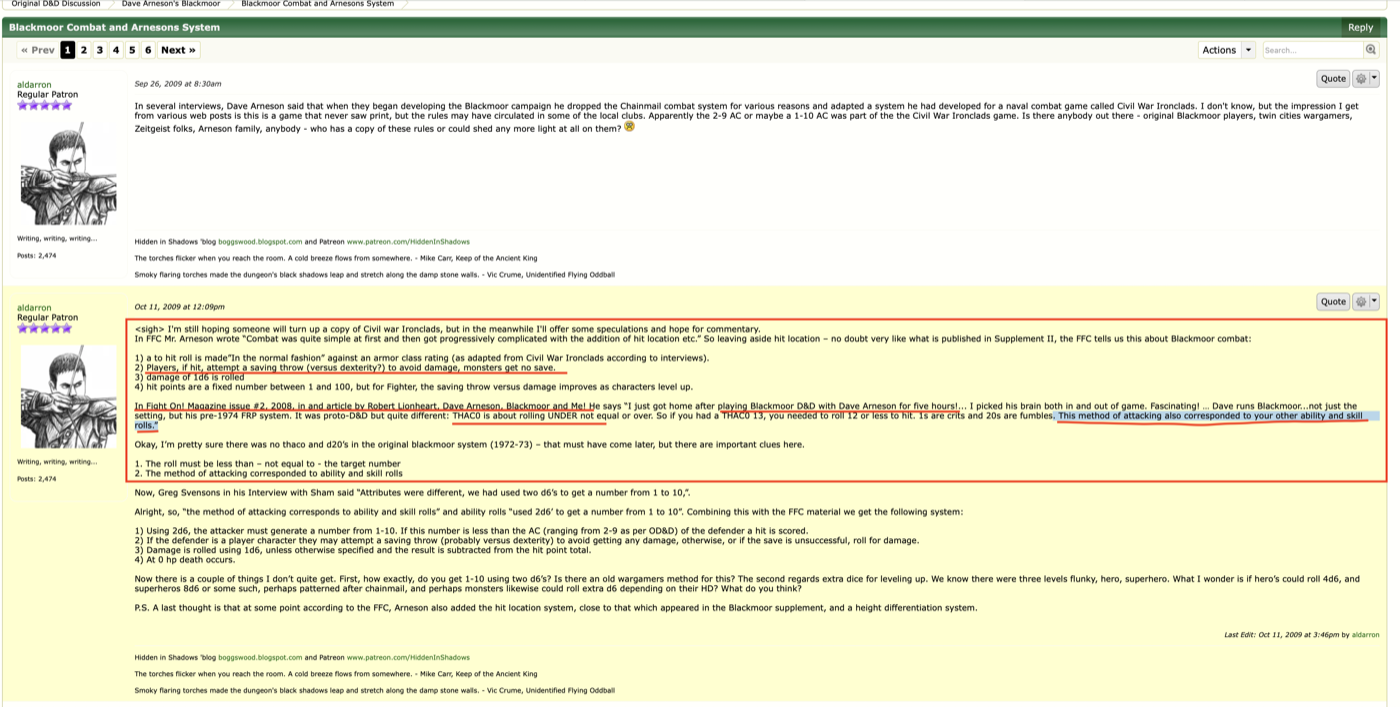
Someone, who actually documented spending 5 hours playing with Dave Arneson, describes a roll under system similar to ability checks. See Robert Lionheart, Dave Arneson, Blackmoor and Me!, Fight On! Magazine, Issue #2, 2008, pp. 62-64, available at https://www.drivethrurpg.com/en/product/475110/fight-on-2-summer-2008-pdf-version. Here is the relevant paragraph:
Luck of the Irish
This concept of 1s as crits and 20s as fumbles corresponds to the “Luck of the Irish” concept we saw in Adventures in Fantasy and is a carryover from Charles Totten’s Strategos.
Defensive Saving Throw
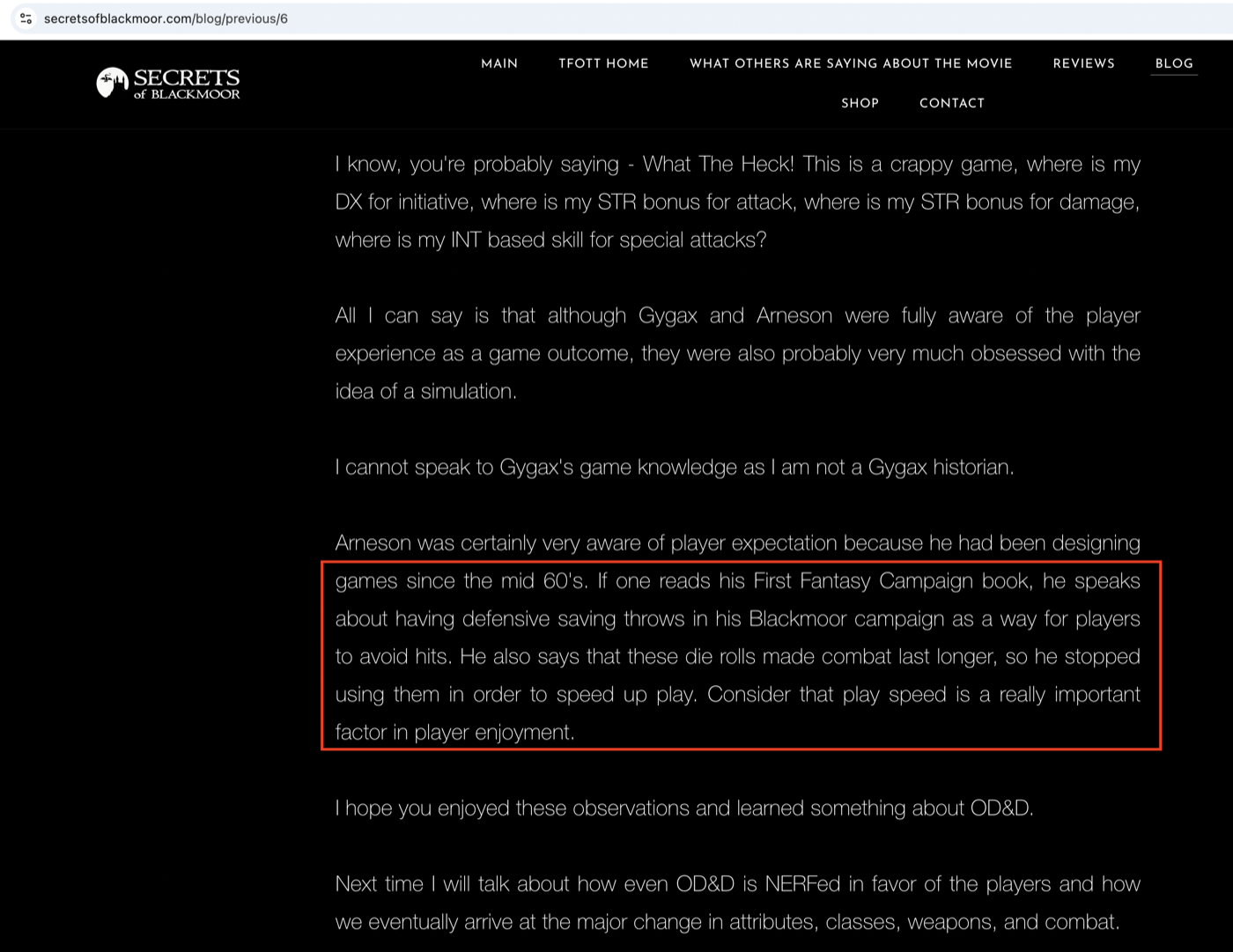
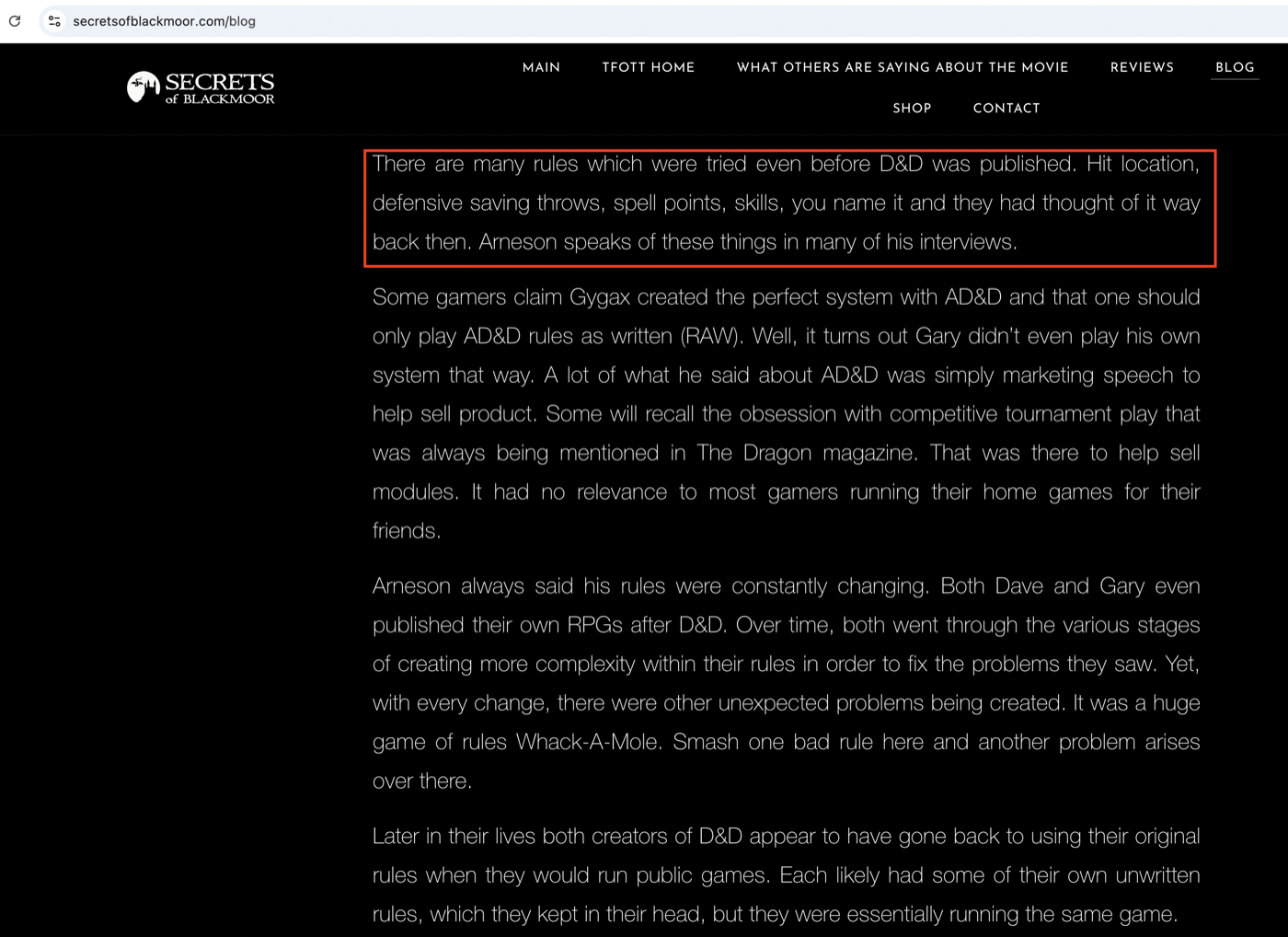
There are numerous references to the use of a defensive saving throw in the early days. This was apparently abandoned because it generated too many dice rolls. In the earliest delves in to Blackmoor, numerous men at arms and an overabundance of Orcs certainly would have led to this conclusion. (See Greg Svenson’s account of his first delve for more details). Nevertheless, I stand by my contention that the mechanic was related to the armor worn. The Secrets of Blackmoor blog agrees with this, though it would be much better if they had cited or shown their sources for this information (with the exception of the interview with Arneson in Space Gamer, Issue 21, January - February 1979, pp. 5-7. Worth reading to find out that Arneson continued to prefer miniatures over theater of the mind).
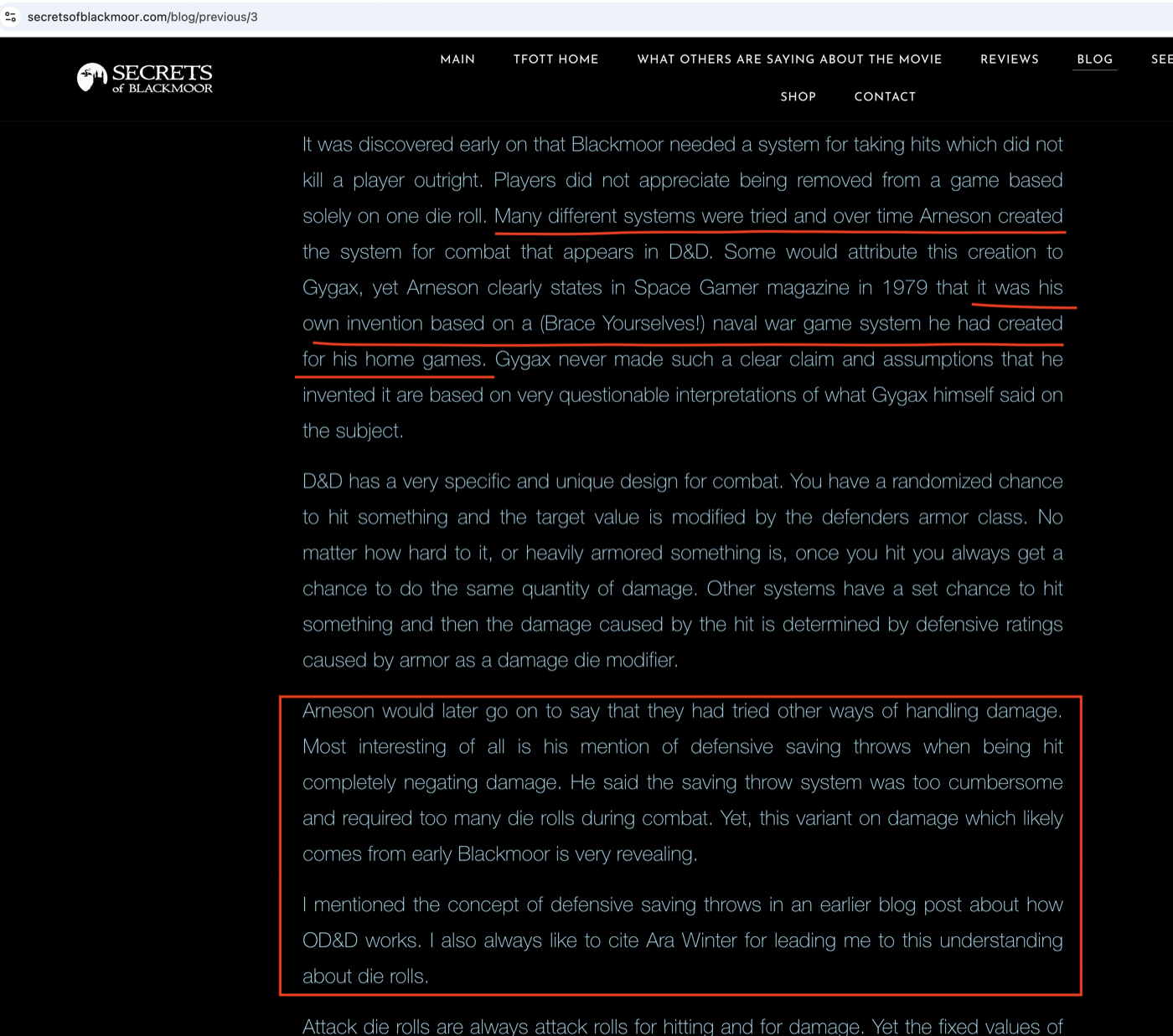
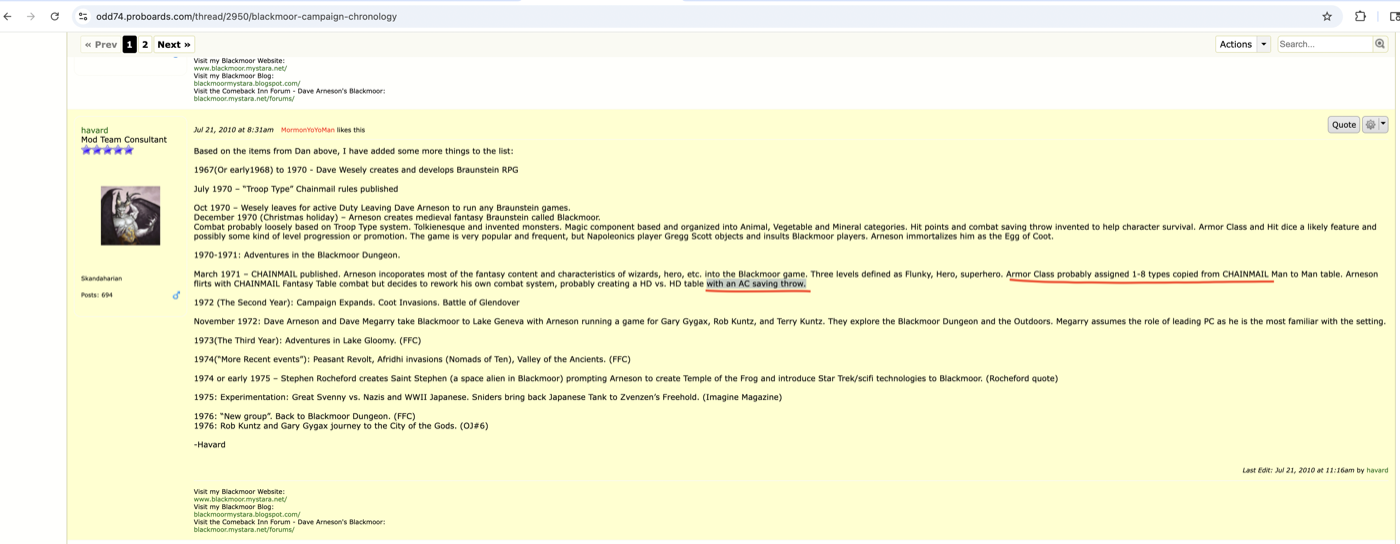
I am not the first person to come to these conclusions either. I have found others have trod these paths.
Interposing a Shield
Based on my interview last week with one person who was in more than one dungeon adventure in the early days, there seemed to be no need to roll to use your shield and all shields were, essentially, the same with no differentiation between wicker, wood, metal. All shields were assumed to be metal like a knight in armor.
Hit Location
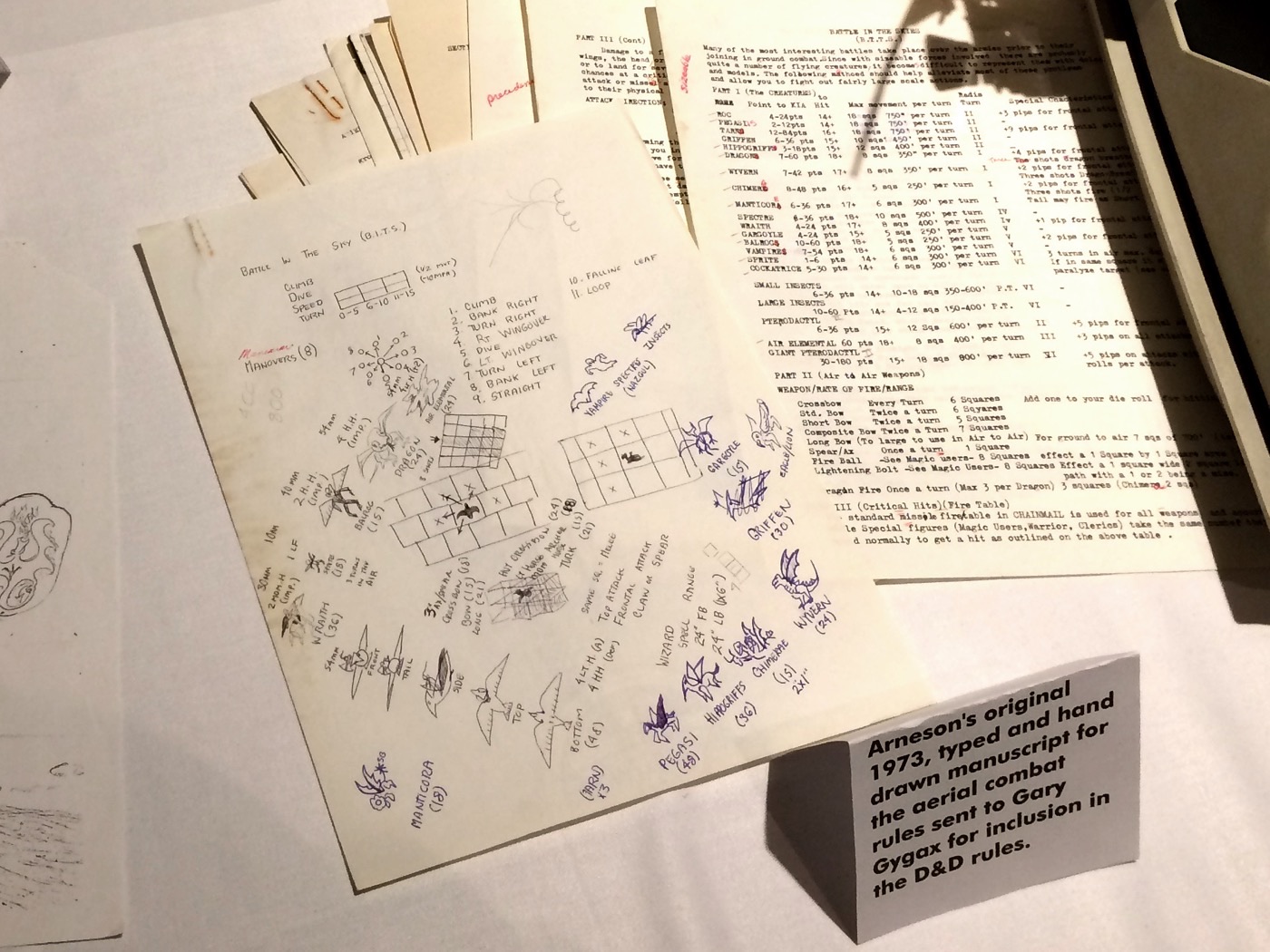
As was already known, Gygax rejected the materials Arneson provided regarding aerial and naval warfare for OD&D. Thanks to the Secrets of Blackmoor blog we can see a “bit” of Arneson’s aerial warfare system. It has an innovative way of handling impulses for creatures traveling at various speeds. Battle in the Skies (B.I.T.S.) shows us that Arneson had to have internalized a lot of material to crank out something so compact. (See https://www.secretsofblackmoor.com/blog/battle-in-the-skies-relative-movement for full details). We also catch a tantalizing glance at the corner of a single page of BITS that talks about vulnerable points like wings. Mention is made of critical hits. Although there is a system for hit locations in the Blackmoor Supplement, I interviewed yet another Twin Cities gamer last week who confirmed that what Tim Kask “edited” into existence is not Arneson’s system. Until the Secrets of Blackmoor gang can be convinced to openly publish these materials, we will never understand the fullness of Arneson’s genius. (See Delta’s article https://deltasdnd.blogspot.com/2020/08/arnesons-battle-in-skies.html and Reddit https://www.reddit.com/r/odnd/comments/c1w241/bits_aerial_combat_rules_for_dd_dave_arneson_1973/ and a few more hi-res images at https://www.kickstarter.com/projects/secretsofblackmoor/secrets-of-blackmoor-the-true-history-of-dungeons/posts/2375901)
More to come soon.
Originally published on Substack on December 10, 2025.