Morale Checks in Early Blackmoor
Rodney Hampton
- 3 minutes read - 615 wordsYes, characters checked morale too!
In Blackmoor, there was originally a stat known as Guts (or Courage). In Midwest Fantasy Wargame, “Guts are representative of courage, morale, or the ability to endure mental or physical stress.” Throughout the rules, I make it clear that Morale or Gut Checks may be required in some instances.
By the time the 1973 draft of OD&D (known as Beyond This Point Be Dragons) has come around, there is a different stat: Ego. In Dragons Beyond, I describe Ego as “the measure of loyalty and self-interest. It influences how well a player can give or take orders; the reaction to a real or perceived insult; and the likelihood that the player will risk his life for his liege, religious Order, Guild or Fellowship.” (A screenshot of BTPBD’s definition is below).

I further state that Ego may optionally be checked when a character is subjected to a mounted charge. Furthermore, under “Loyalty and Morale” I wrote that “A player may optionally decide to let the dice decide his character’s actions in battle, using his own judgement about how steady his character is under fire. The player can use a character’s Ego score to apply a modifier to the roll.”
But why did I do this? I did it because I assumed the game designer (Dave Arneson) intended that a stat must have a purpose. I had faith that these stats (Guts, Ego) were related to morale. Morale is one of the major subsystems in both Strategos and in CHAINMAIL (and WRG, and Tony Bath’s medieval rules, etc.). This morning, I found another very interesting thing in a play report from May 25 [1972?] I’ve read through a few times. In it, we see an expedition into Blackmoor’s dungeons by Dave Wesely (playing a Super Hero). We see that Mellow the Halfling (played by Rick ‘Mel’ Johnson) has made a morale roll that failed and now he is required to rout away from the action. However, this seems to only be a temporary situation taking place in “turn” 2 and 3 of this melee.
This document is from Blackmoor Foundations p. 74 produced by Secrets of Blackmoor (thanks Griff) and is provided here under Fair Use for scholarship/commentary.
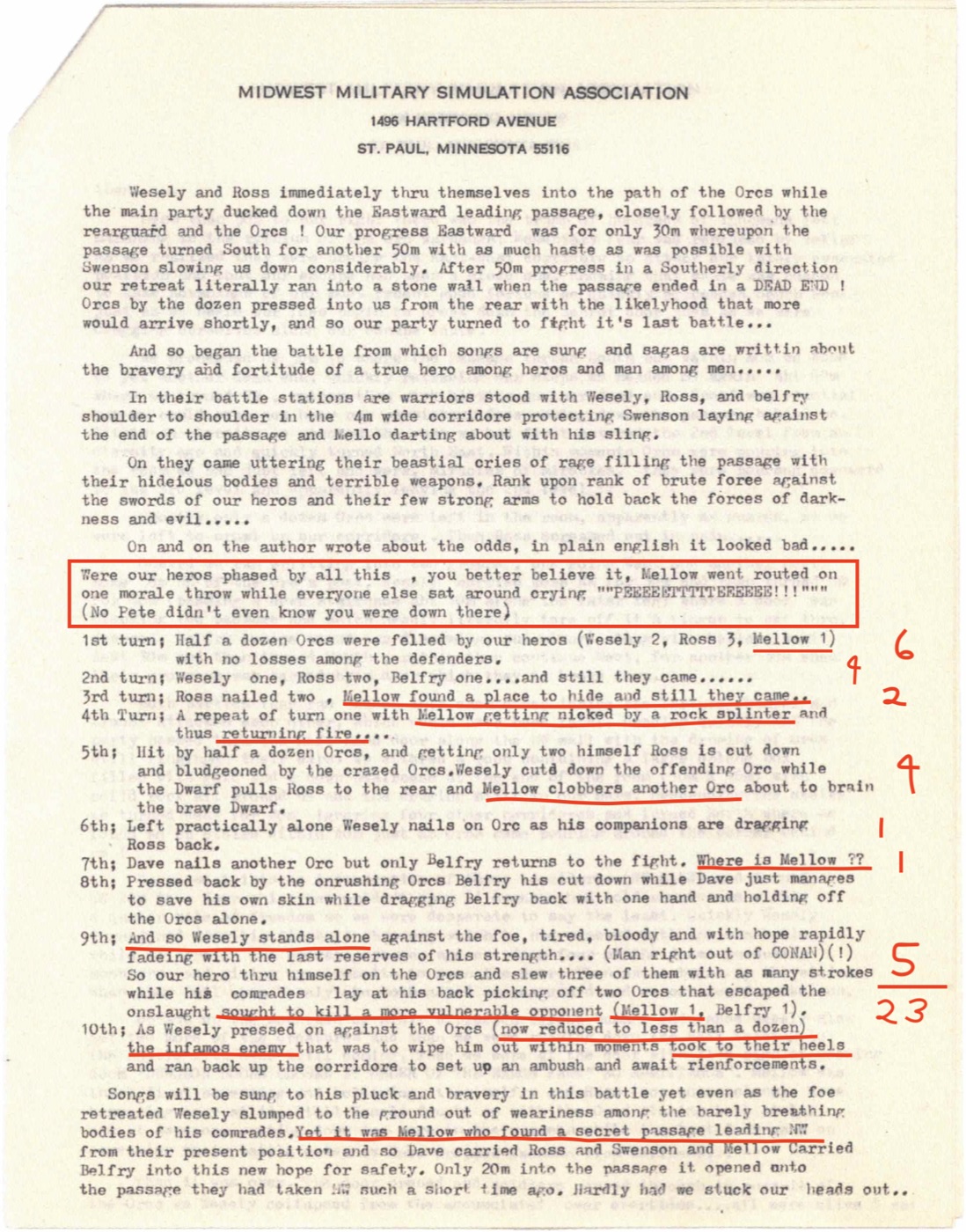
We see that it isn’t until Wesely’s Super Hero and the other party members kill enough Orcs to put them to flight (i.e. they failed their own morale roll) that poor Mellow stands a chance of doing something really proactive.
Incidentally, assuming the Orcs were reduced down to 11 (less than a dozen) in the 9th turn, their numbers may have been as many as 34 at the beginning of this 10 turn combat. Thus, in turn 8 the Orcs had suffered 18 losses but still had 16 left. But after losing 5 more, they ran.
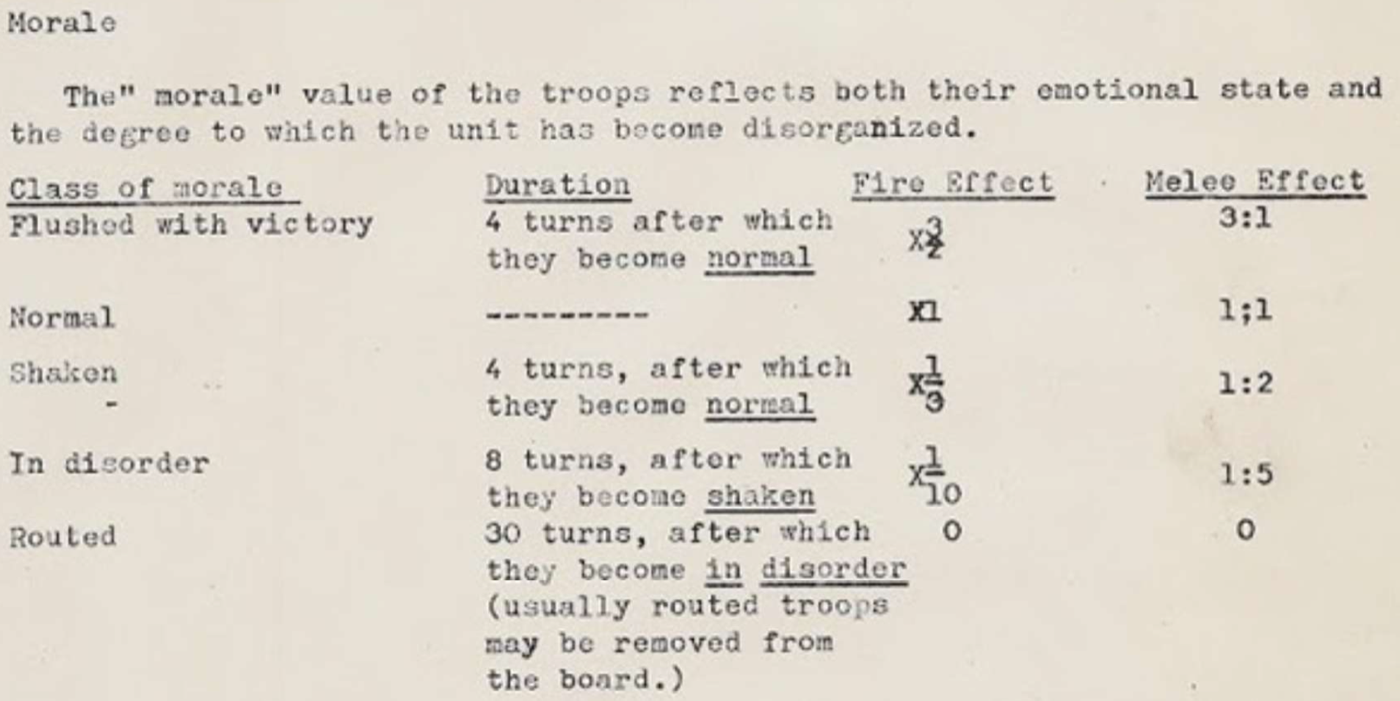
Strategos has numerous levels of morale, yet here we see morale is either good, or it is bad which is more in line with CHAINMAIL. (Excerpt from Wesely’s Strategos-N shown below)
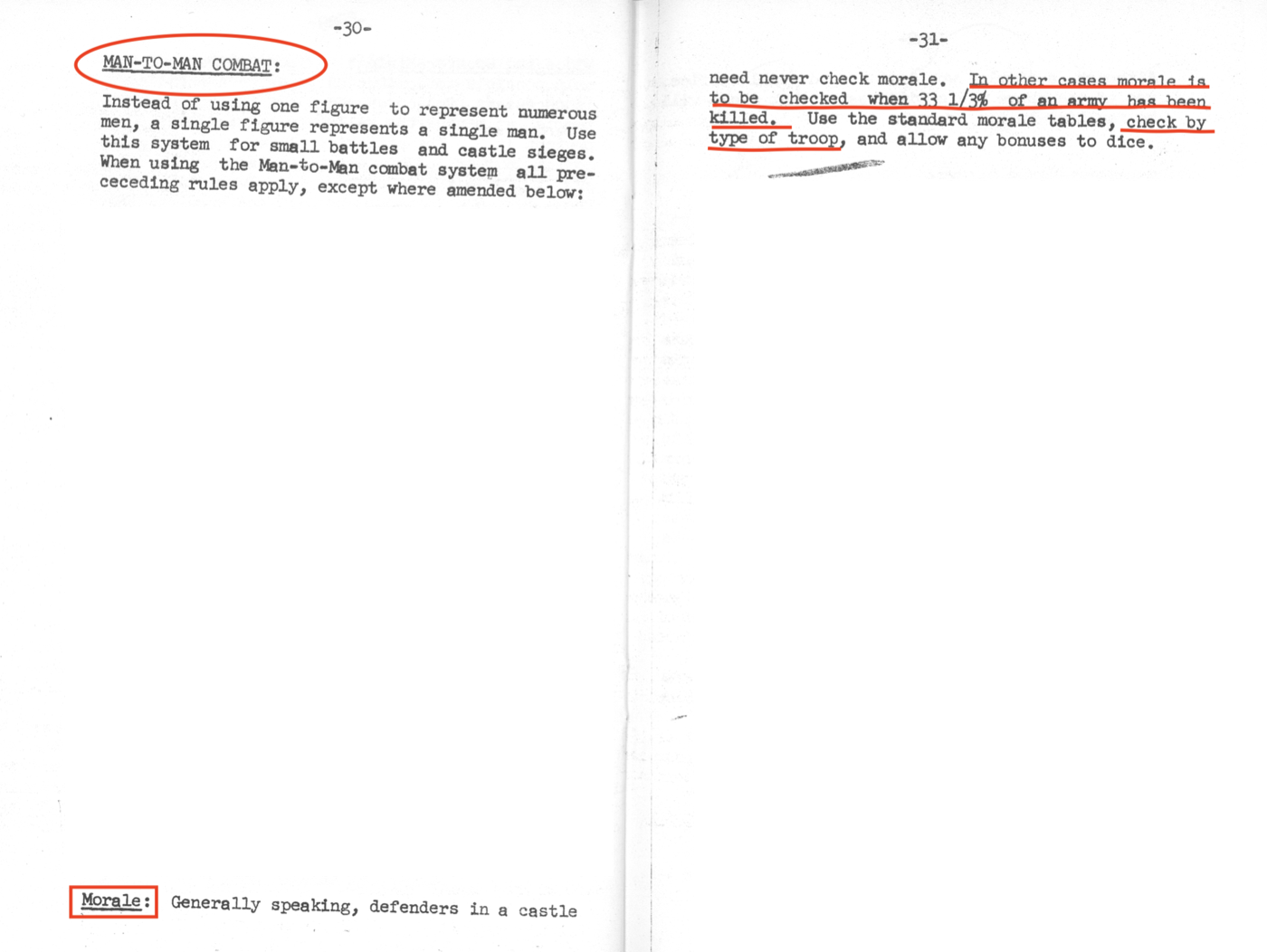
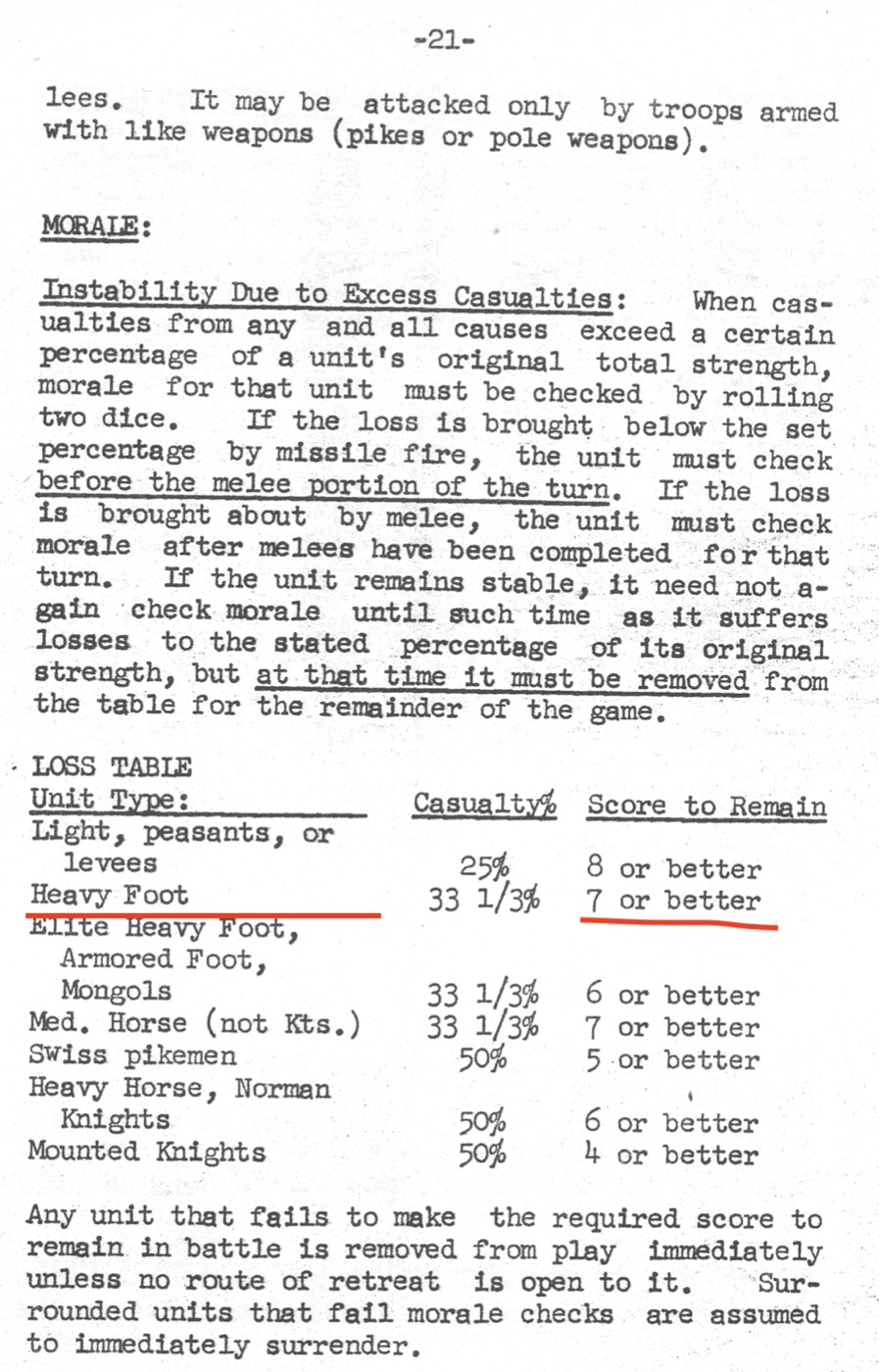
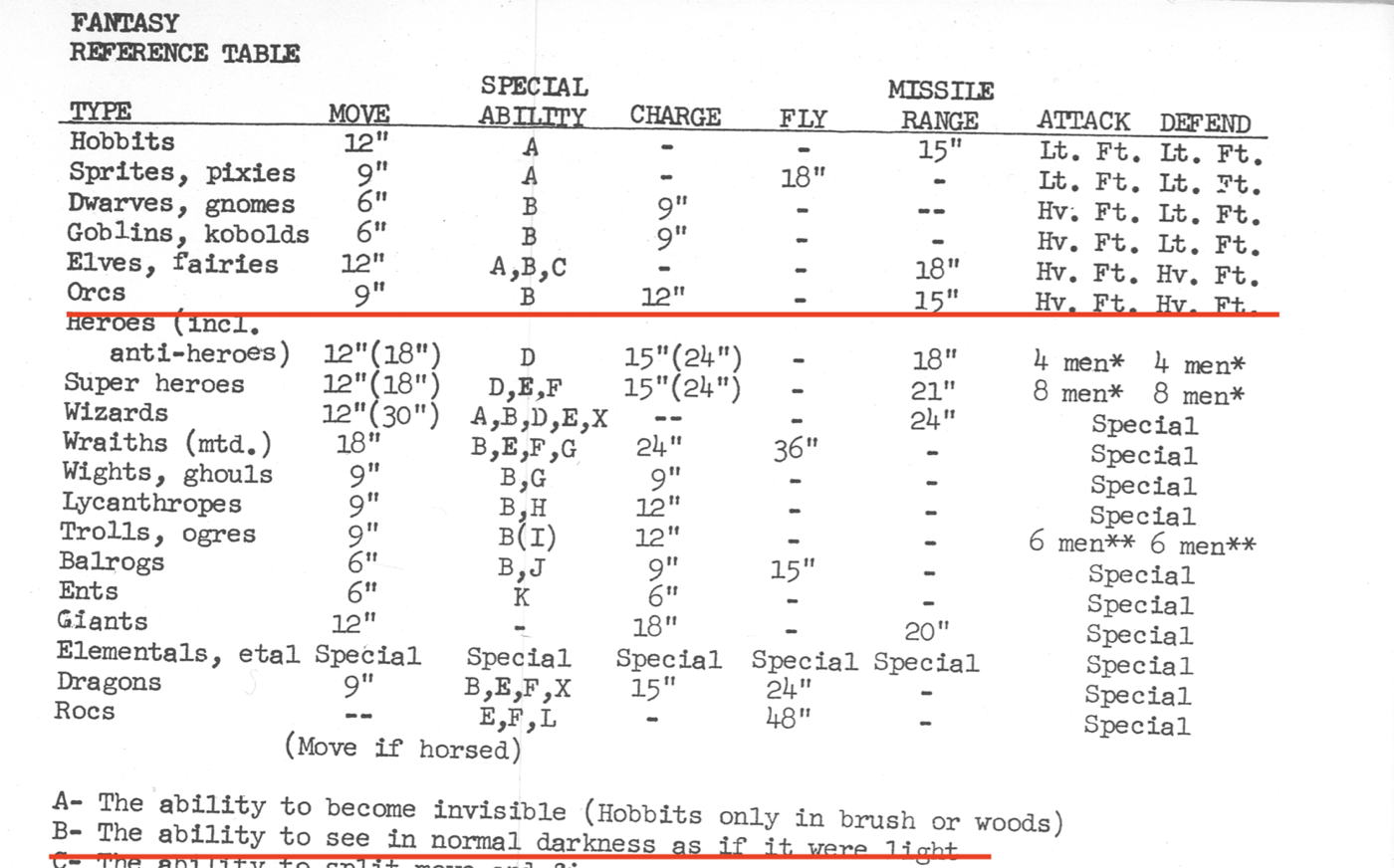
In CHAINMAIL, for man to man, morale is checked at 33 1/3 losses. Orcs in CHAINMAIL 1st edition are treated as Heavy Foot for both attack and defense. Did the Orcs pass an earlier morale check and then automatically fail when they hit 66 2/3 casualties? The math only works if the Orcs were down to 10 figures. But if the math works, does that mean Arneson was using CHAINMAIL in 1972? It sure feels that way.
Excerpts from CHAINMAIL 1st edition below. Hat tip to my colleague who got us a copy of this document to share with others. He can comment below if he wants full credit.
Originally published on Substack on April 17, 2026.