Gygax, Armor, and Appendix (N - 1)
Rodney Hampton
- 4 minutes read - 658 wordsLet’s not kid ourselves, Gygax got this right
Before there was CHAINMAIL, there was the Domesday newsletter. Specifically, Domesday 7 from September of 1970. Readership at that time included Gary Gygax, Jeff Perren, and Dave Arneson (members 2, 4, and 7 respectively). A side note for the #BrOSR: even your gaming club needs to have ranks and rankings . . . do you even grade your club members, bro?
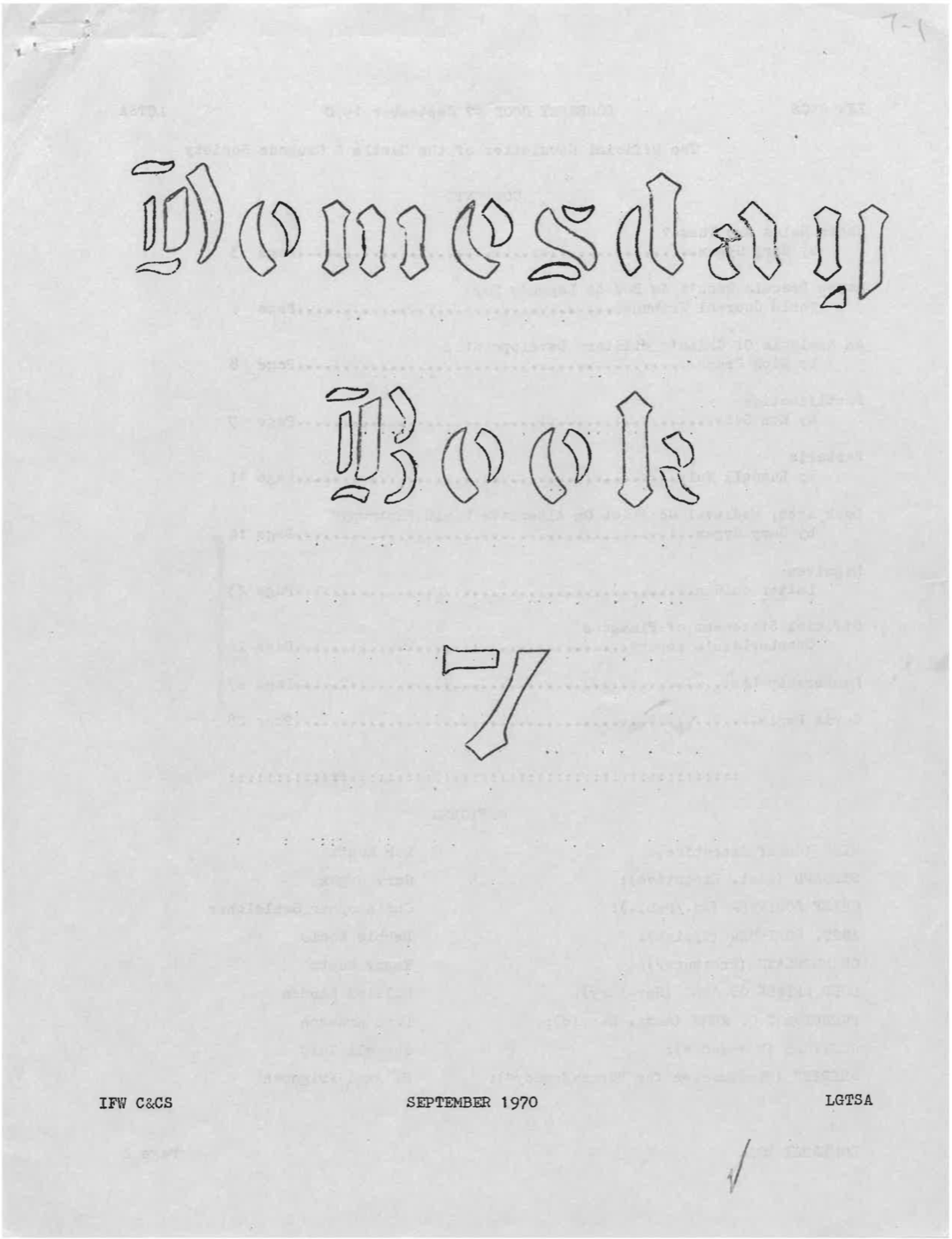
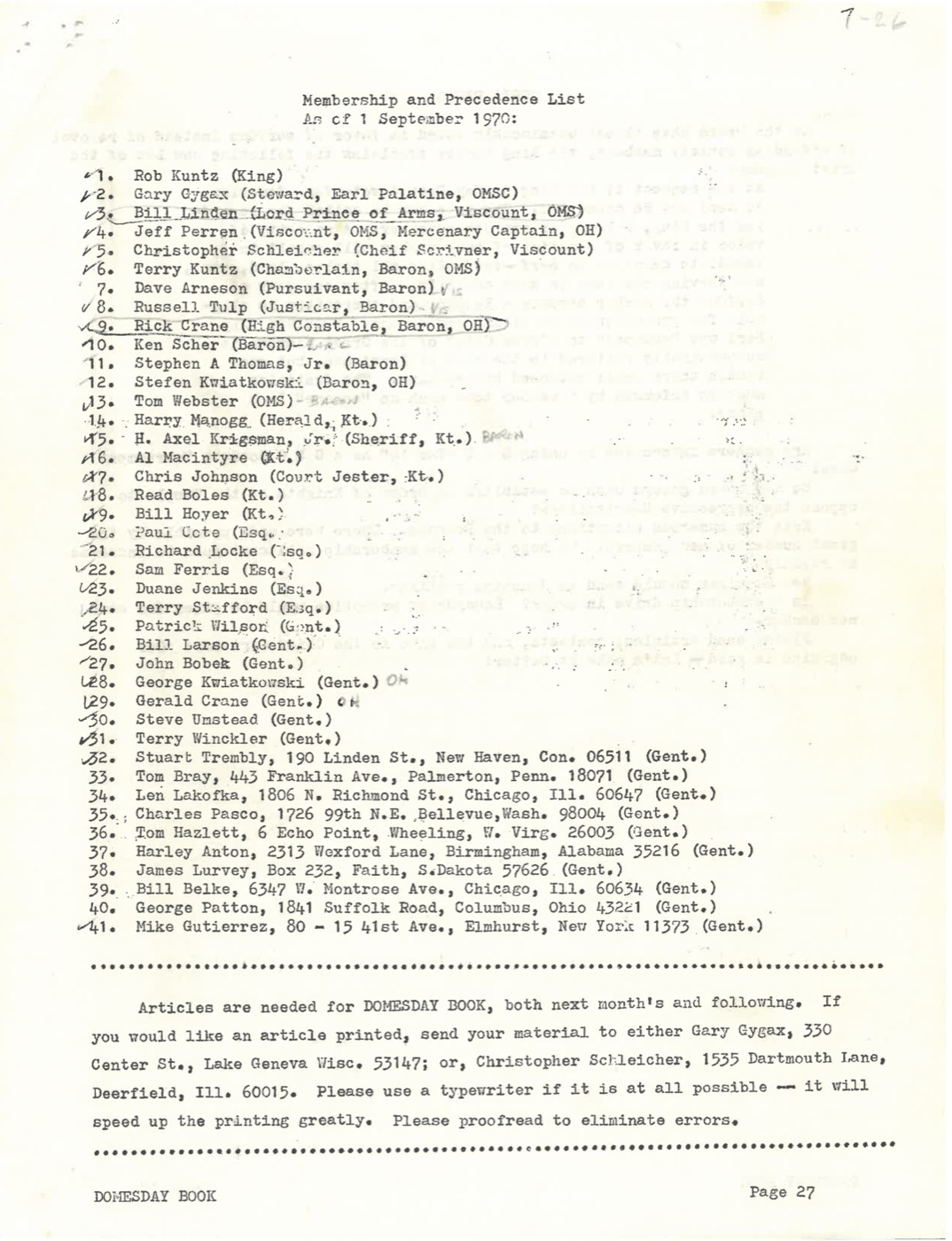
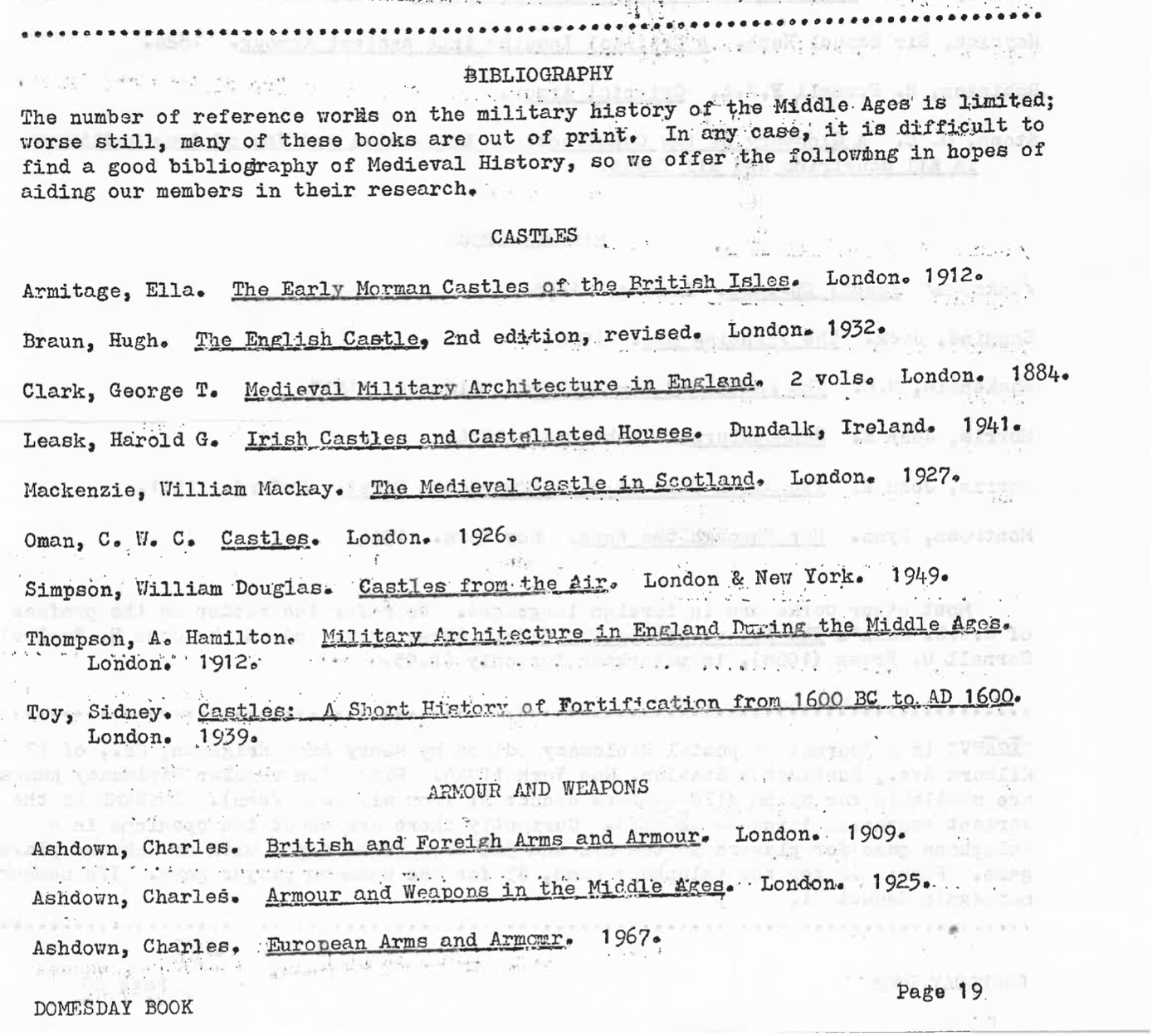
On pages 19-20, one contributor to this 41-person enterprise has sent in a Bibliography. I like to call this Appendix (N-1). One of the titles appears in Gygax’s magnum opus, the 1st edition AD&D DMG. Another title is the source of the cover illustration for CHAINMAIL.
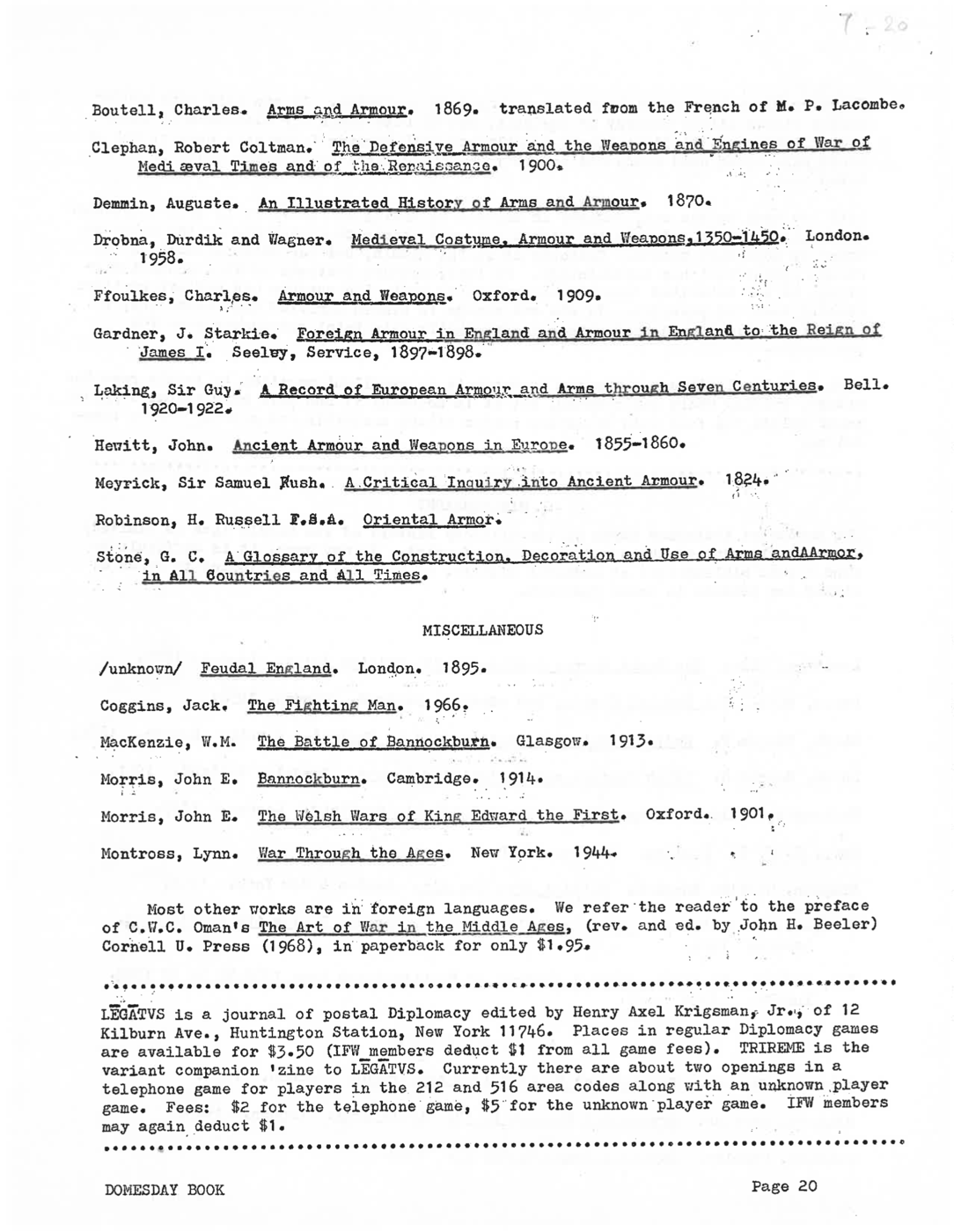
Within Jack Coggins’ work on p. 114 of The Fighting Man: An Illustrated History of the World’s Greatest Fighting Forces Through the Ages you see this very familiar image:
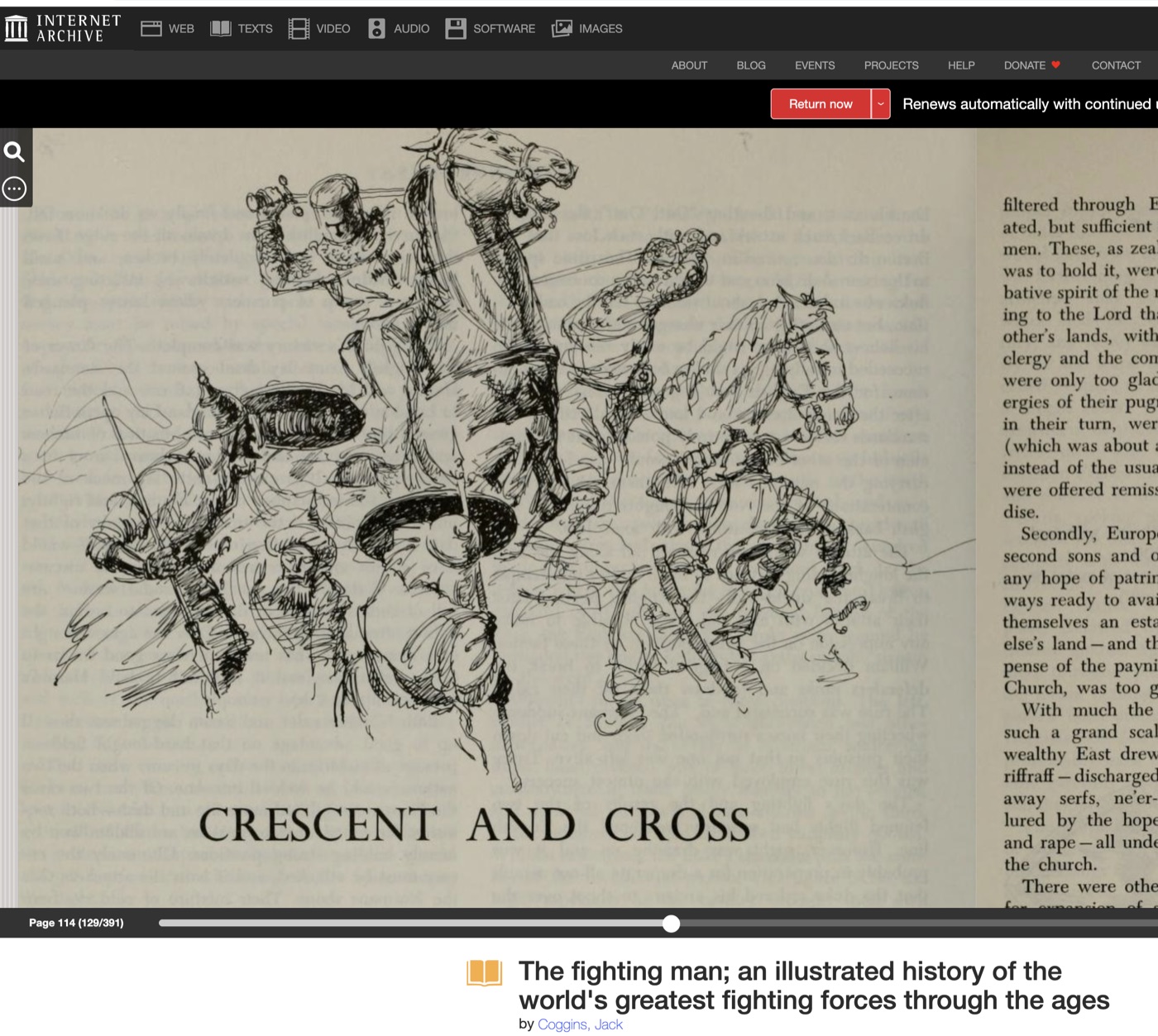
I won’t linger here long, but just be aware that I am about to start reading this volume very closely as it seems to have had quite an influence on CHAINMAIL’s historic troop types and may have also been the inspiration for Tactical Studies Rules’ Cavaliers and Roundheads (a copy of which we now have in toto!). In 2012, Jon Peterson already made the connection between the Crescent and Cross illustration and CHAINMAIL, but he did not delve down these other pathways as far as I know. Jack Coggins was not the only author to use the term “Fighting Man” so we can’t give him sole credit there, but given the other influences present, it wouldn’t be a stretch to call him CHAINMAIL’s Godfather.
Turning to another title from Appendix (N-1) we see an entry for “Ffoulkes; Charles. Armour and Weapons. Oxford. 1909.” Paging through Gary’s 1e DMG, we have one of the rare citations within the text on p. 165 to this exact edition from Ffoulkes.
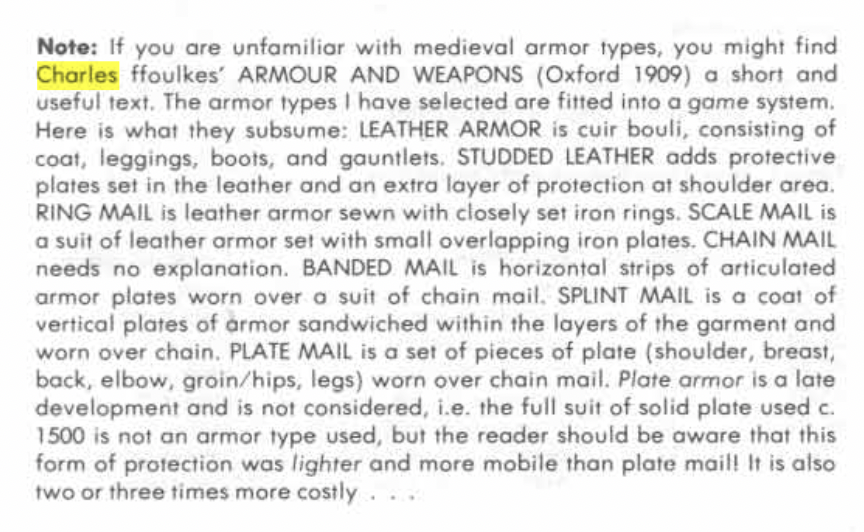 1st edition AD&D DMG p. 165
Much criticism from midwits on YouTube has been directed at Gygax and “fantasy armor,” in particular studded leather, ring mail, and his comment about cuir bouli. When I wrote Dragons Beyond I had already looked closely at Ffoulkes’ book as well as finding a German source that preceded it by two years.
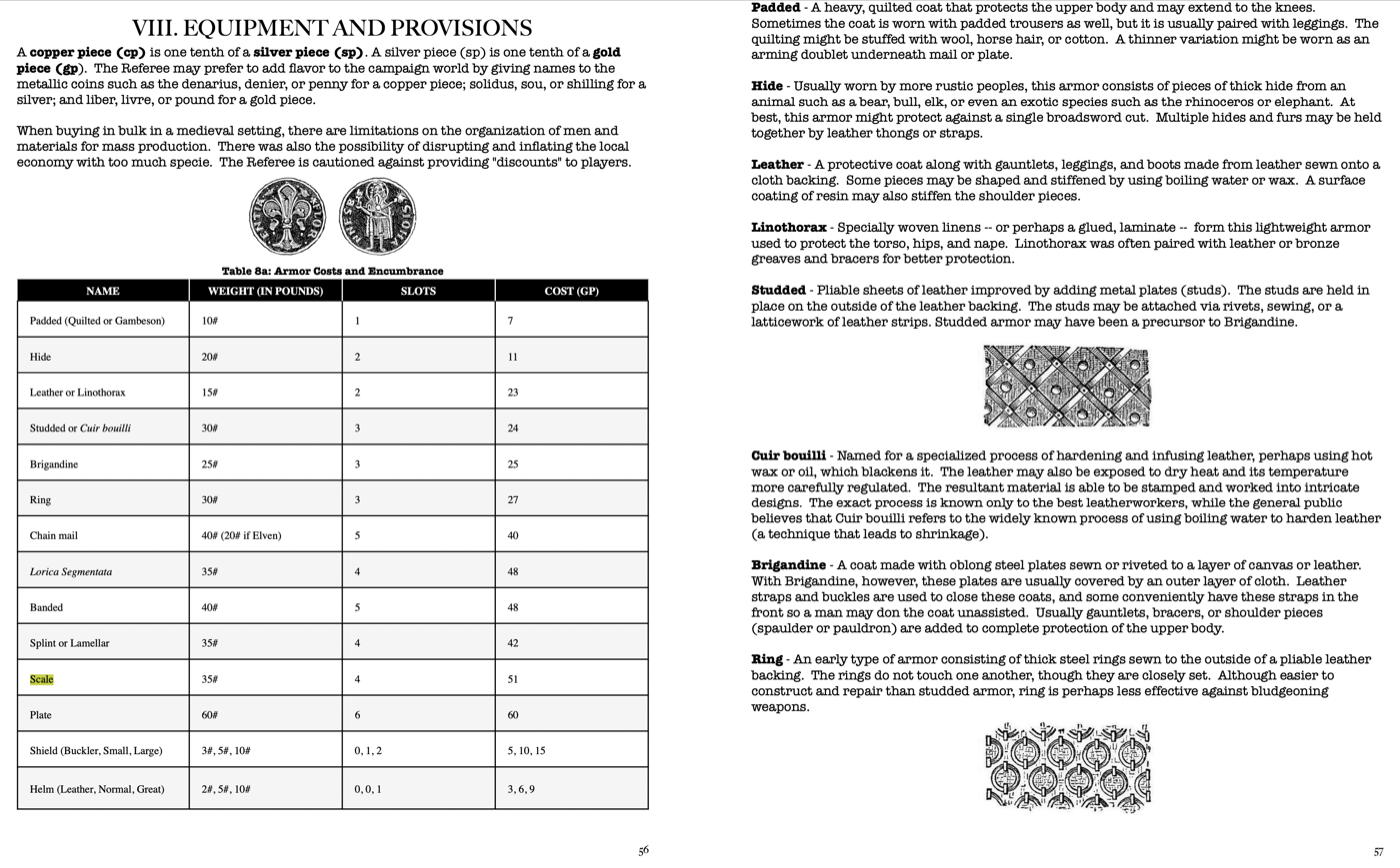
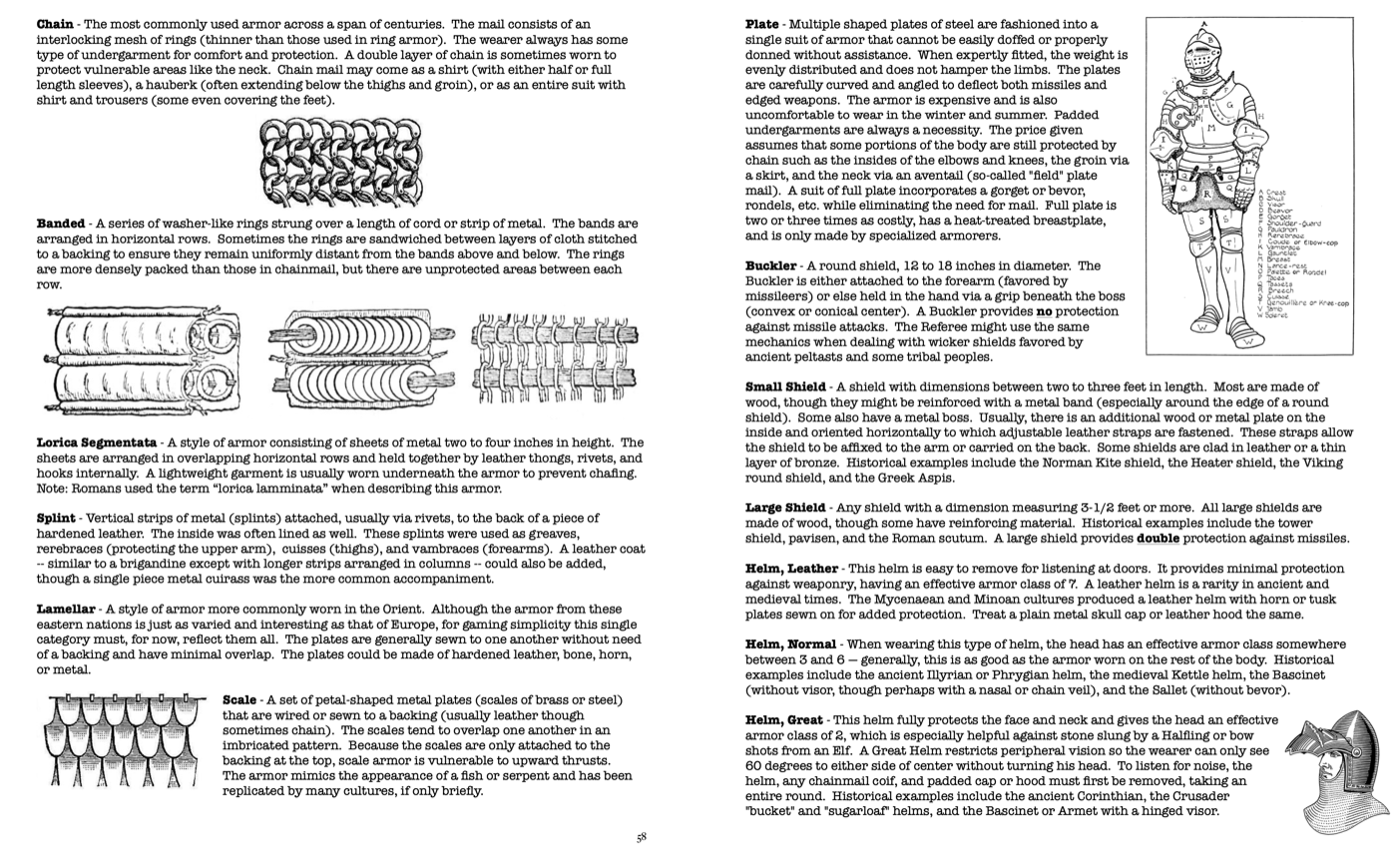
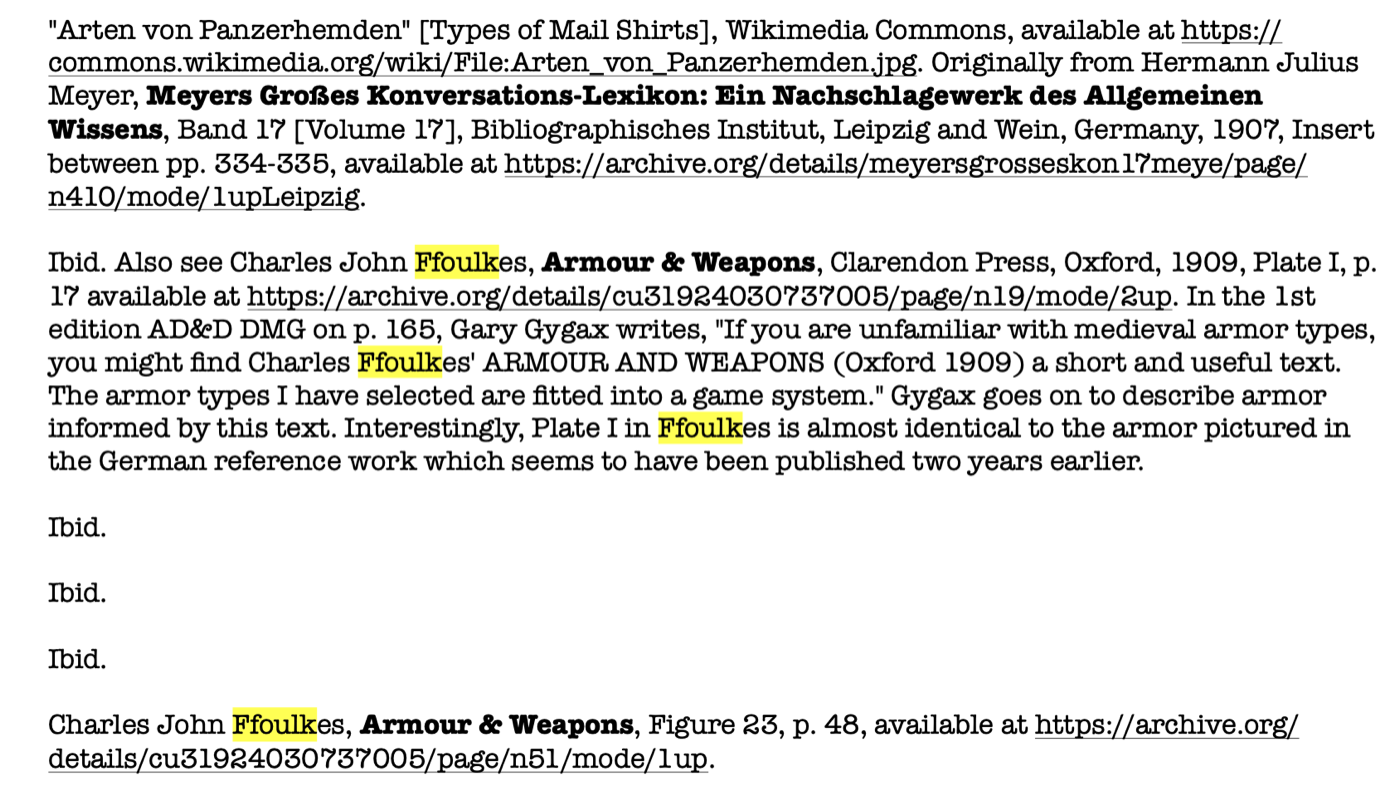
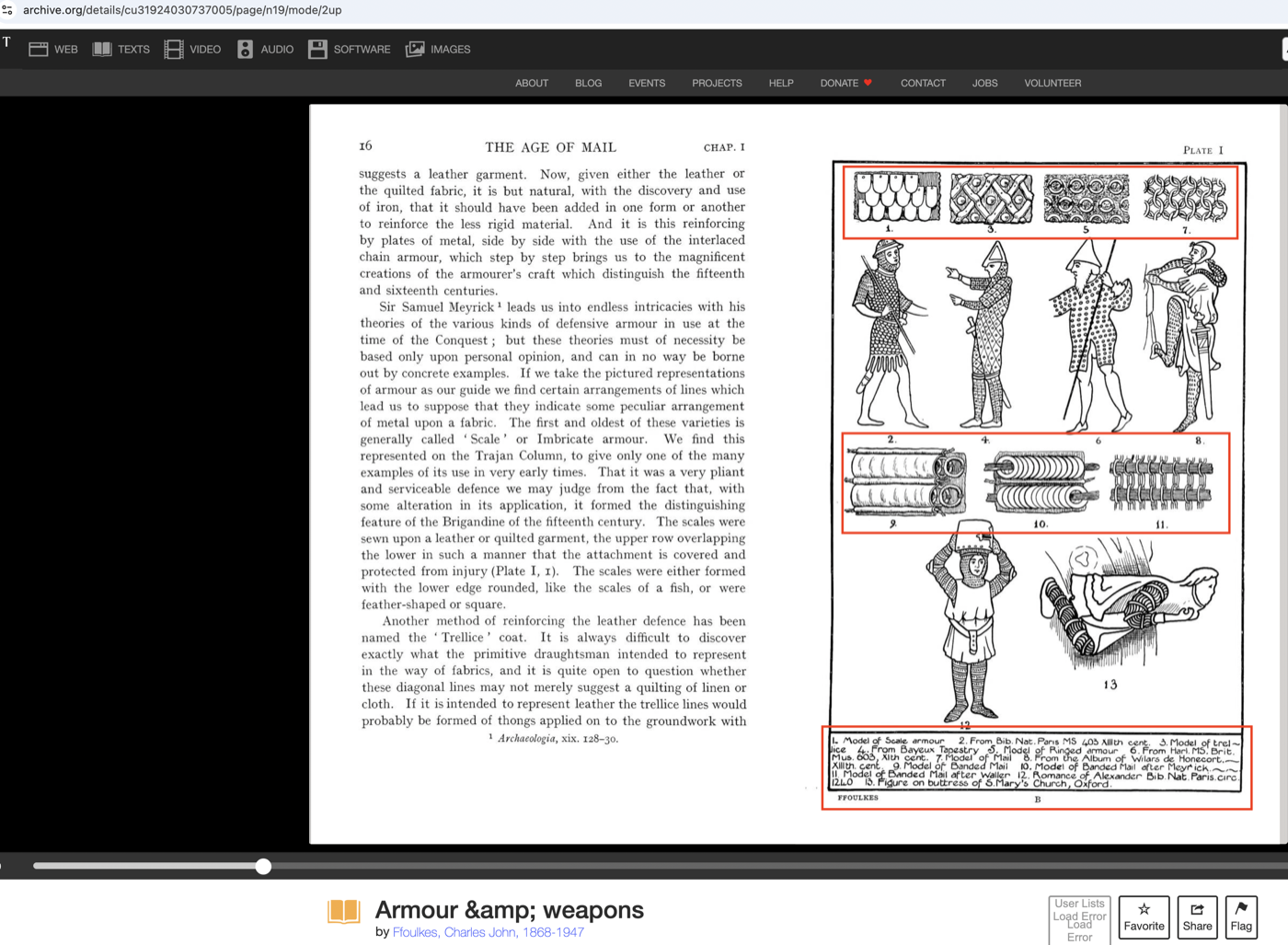

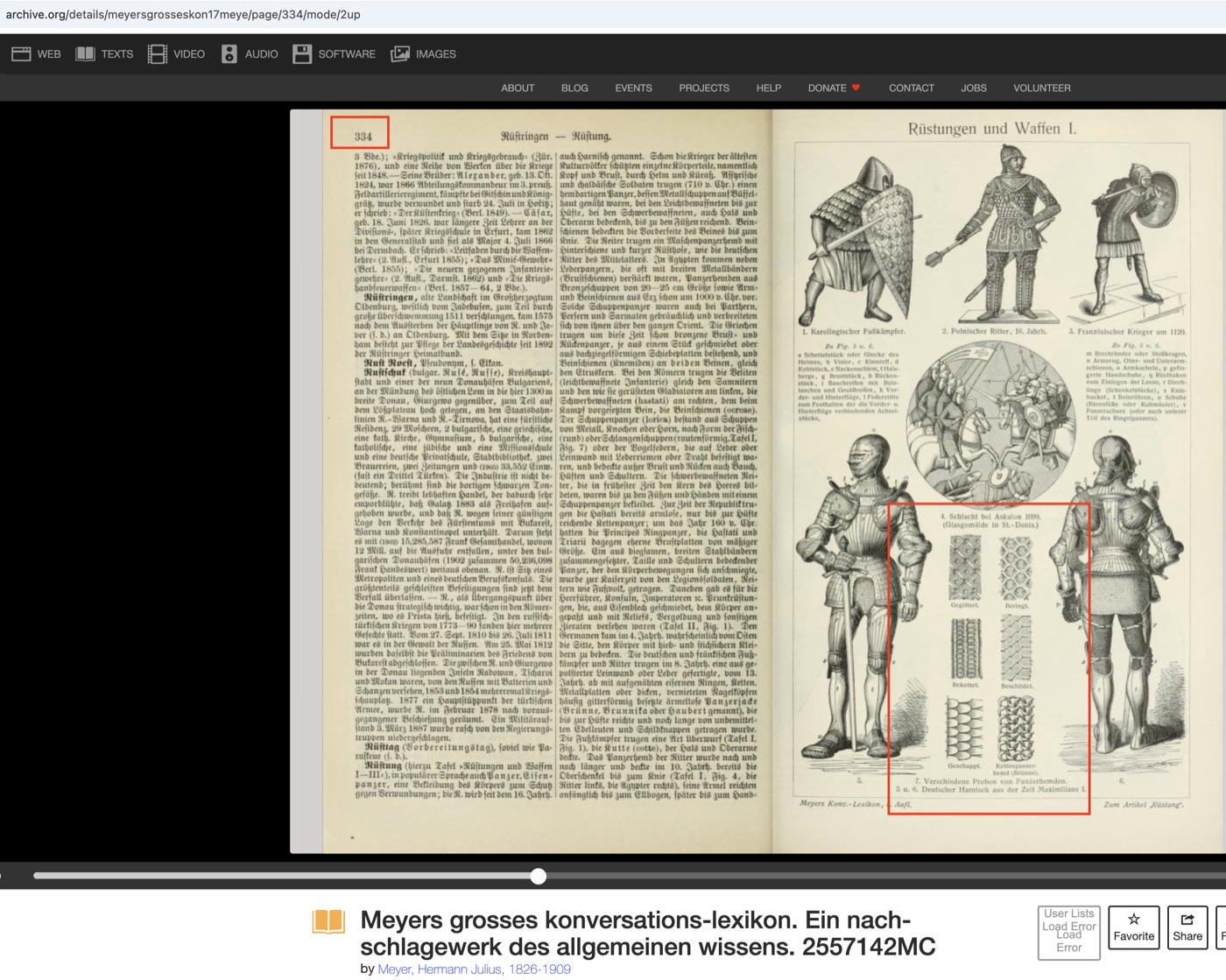
What became clear to me was that Gygax was relying on genuine scholarship in making his assertions. When I got my hands on a copy of Domesday 7 and found a Bibliography within, I couldn’t help but go looking to see what they had to say about these various types of armor. Unfortunately, some of the other titles are more obscure and require using intra-library loan and other arcane arts. But one title was online!
George Cameron Stone’s 1934 work entitled A Glossary of the Construction, Decoration and Use of Arms and Armor in All Countries and in All Times, Together with some Closely Related Subjects contains many illustrations and photographs of armor. I suspect the other titles in Appendix (N-1) are just as scholarly. I don’t know that I need to dig any further to confirm that Gygax and his fellow travellers were on solid ground in describing these transitional armor types (studded, ring, banded, etc.) and that examples of such armor are rare due to the materials with which they were constructed or the short time it took to master better armor making techniques (ring→chain).
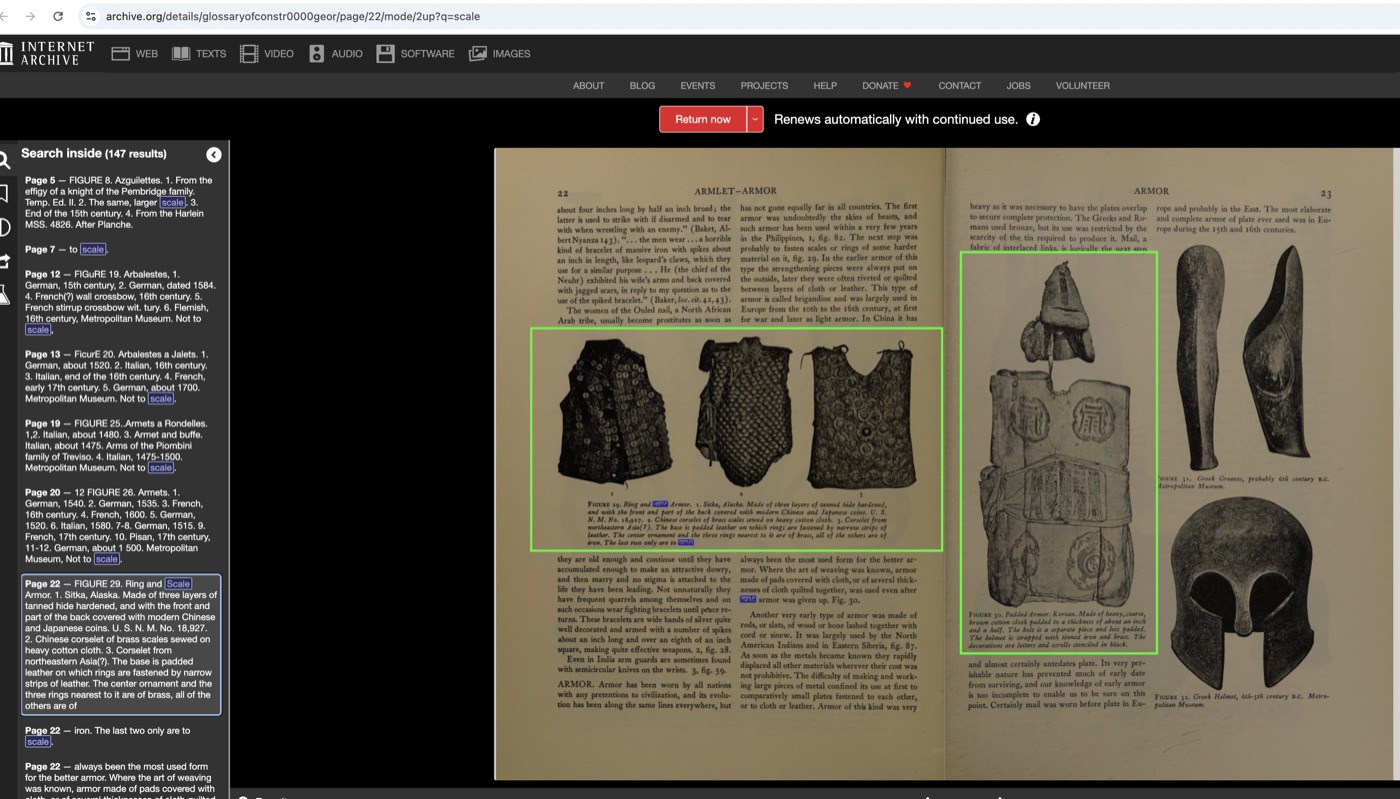
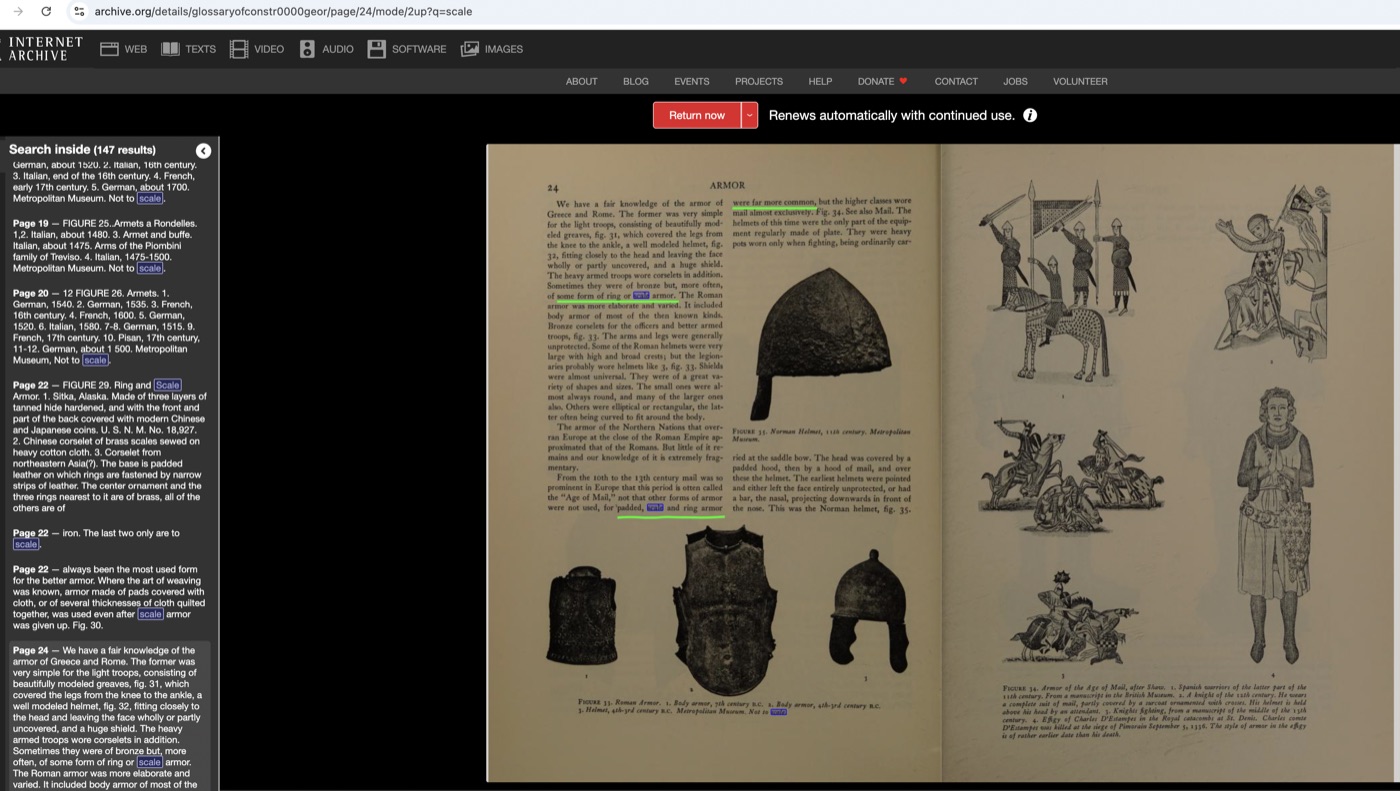
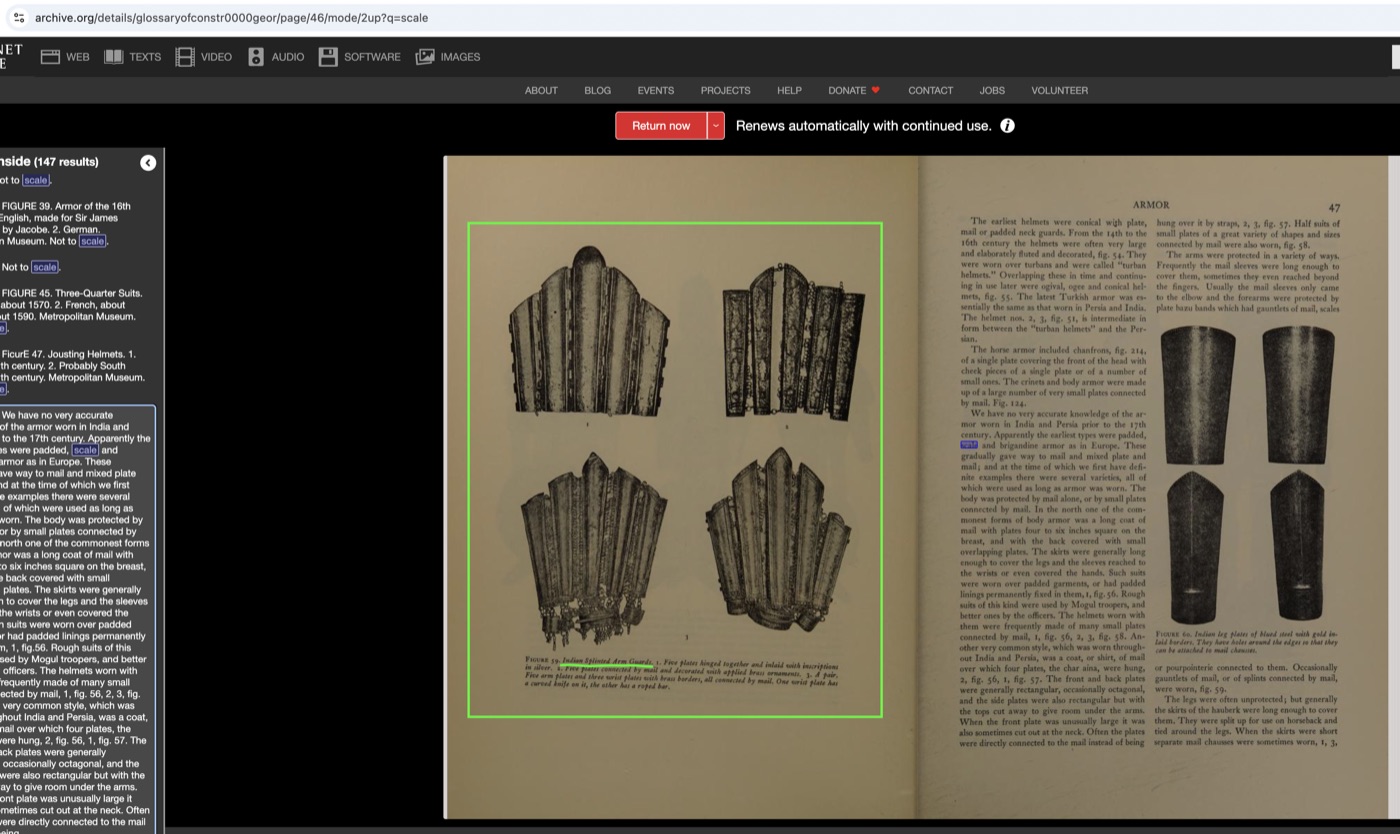
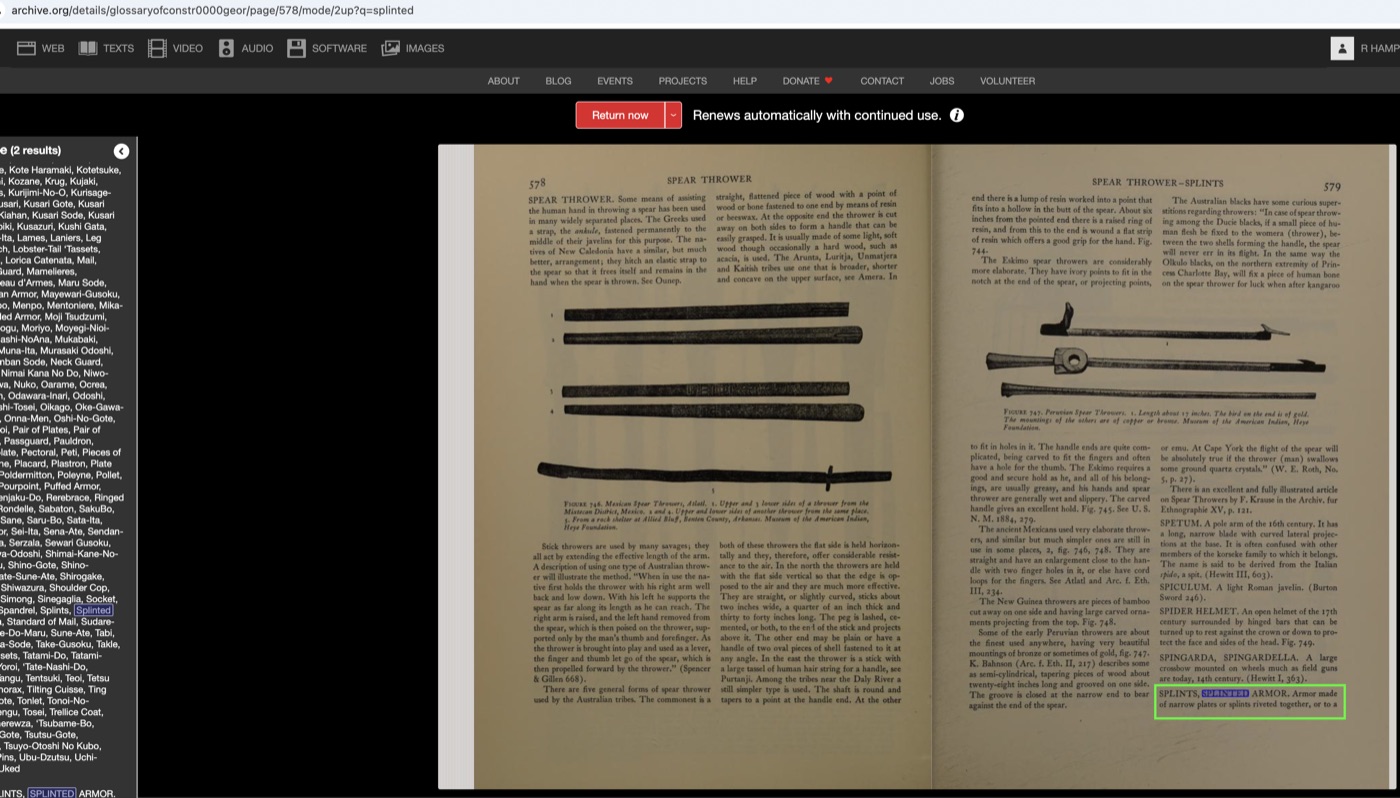
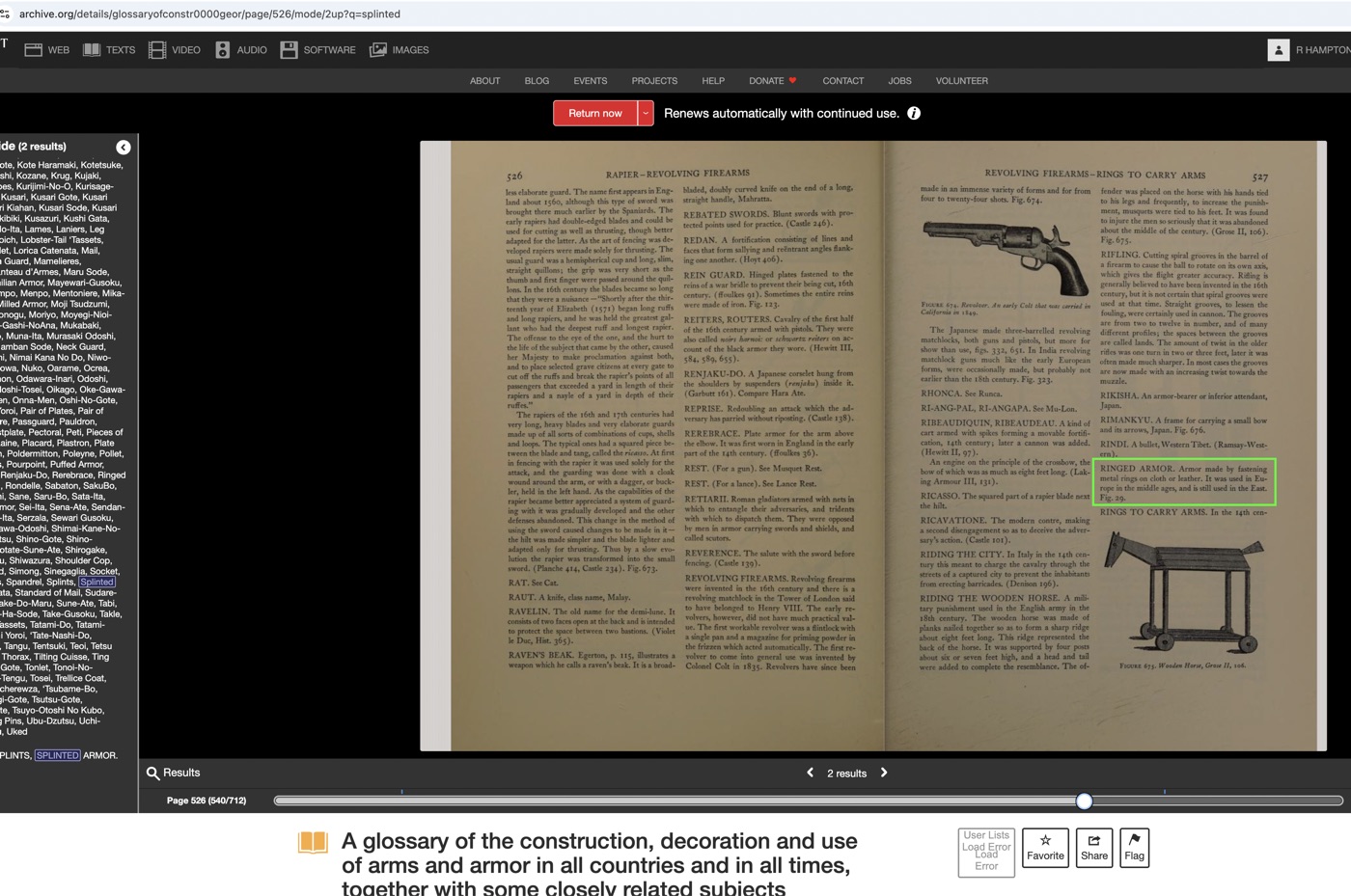
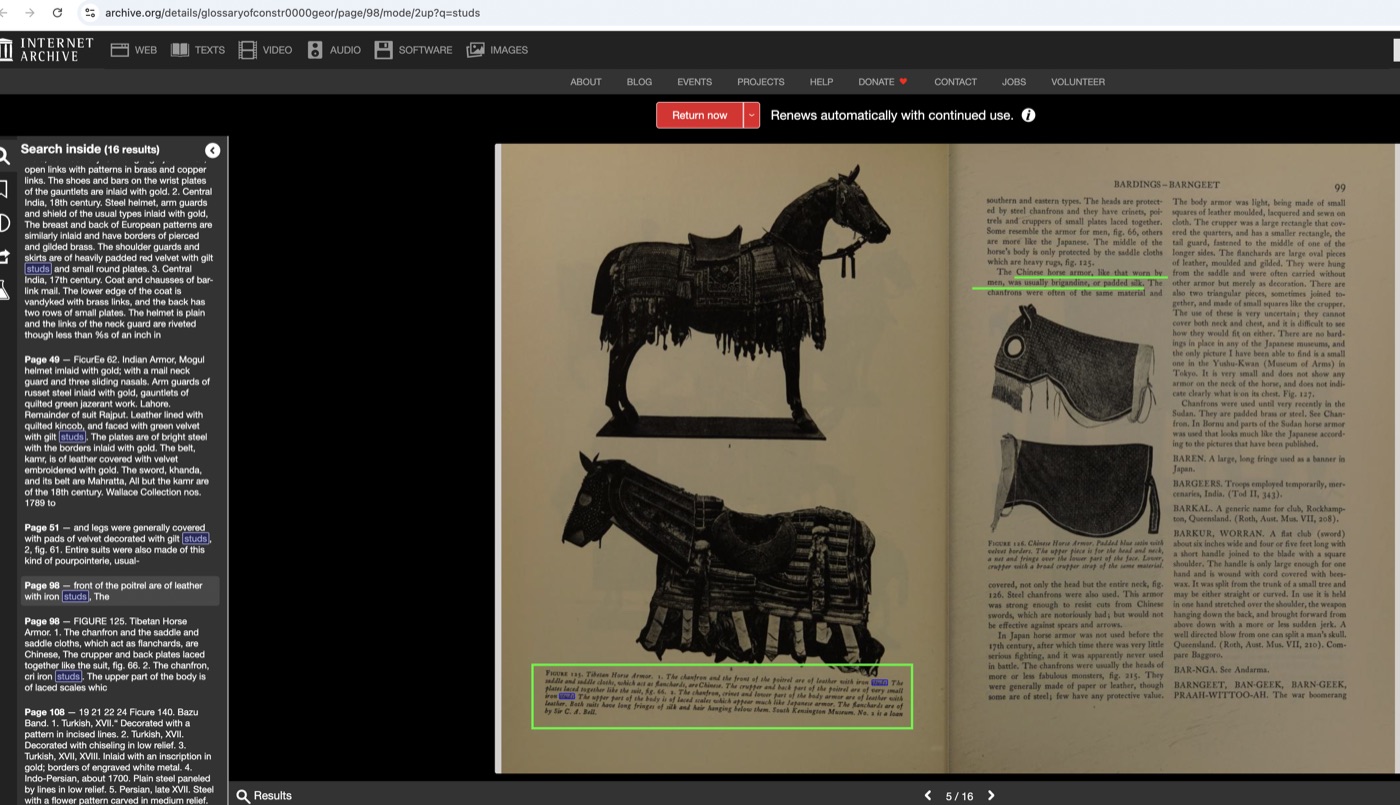
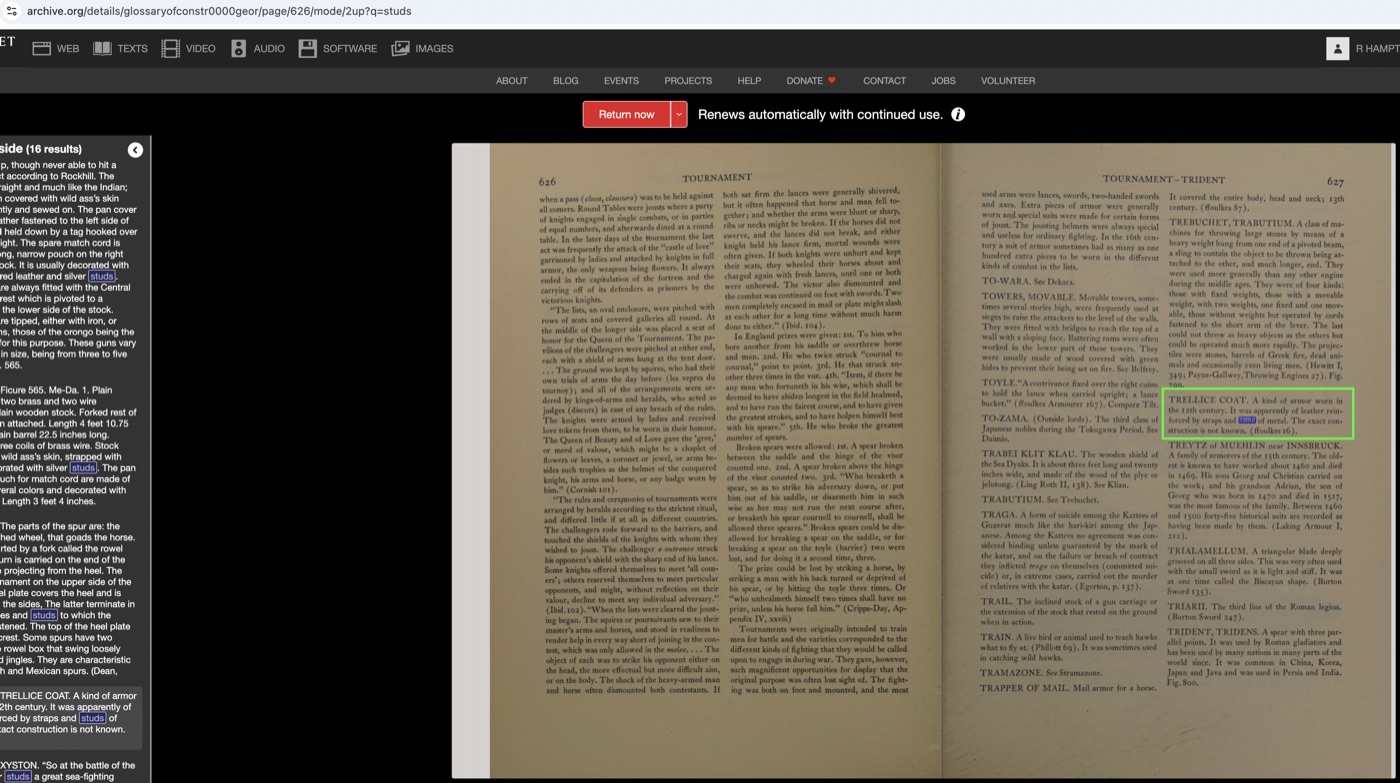
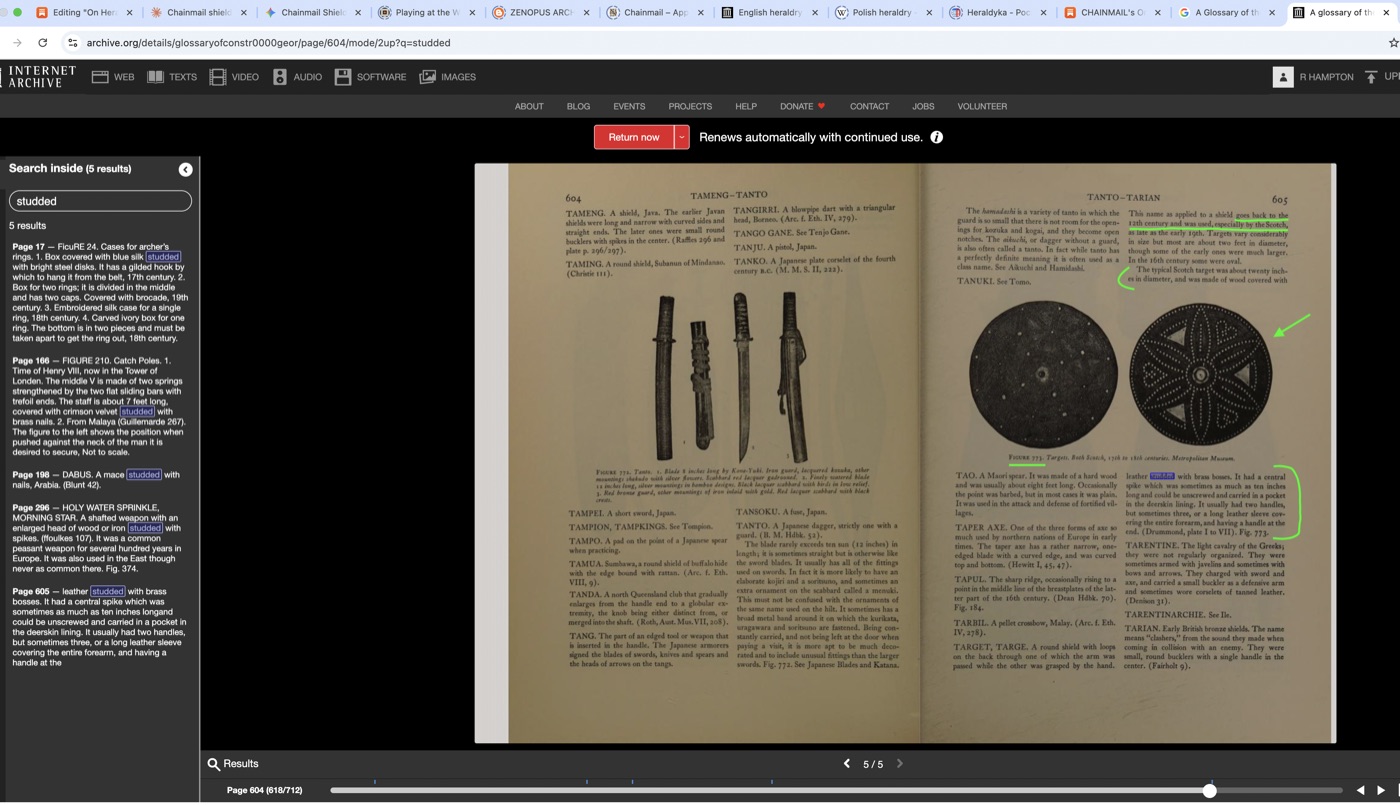
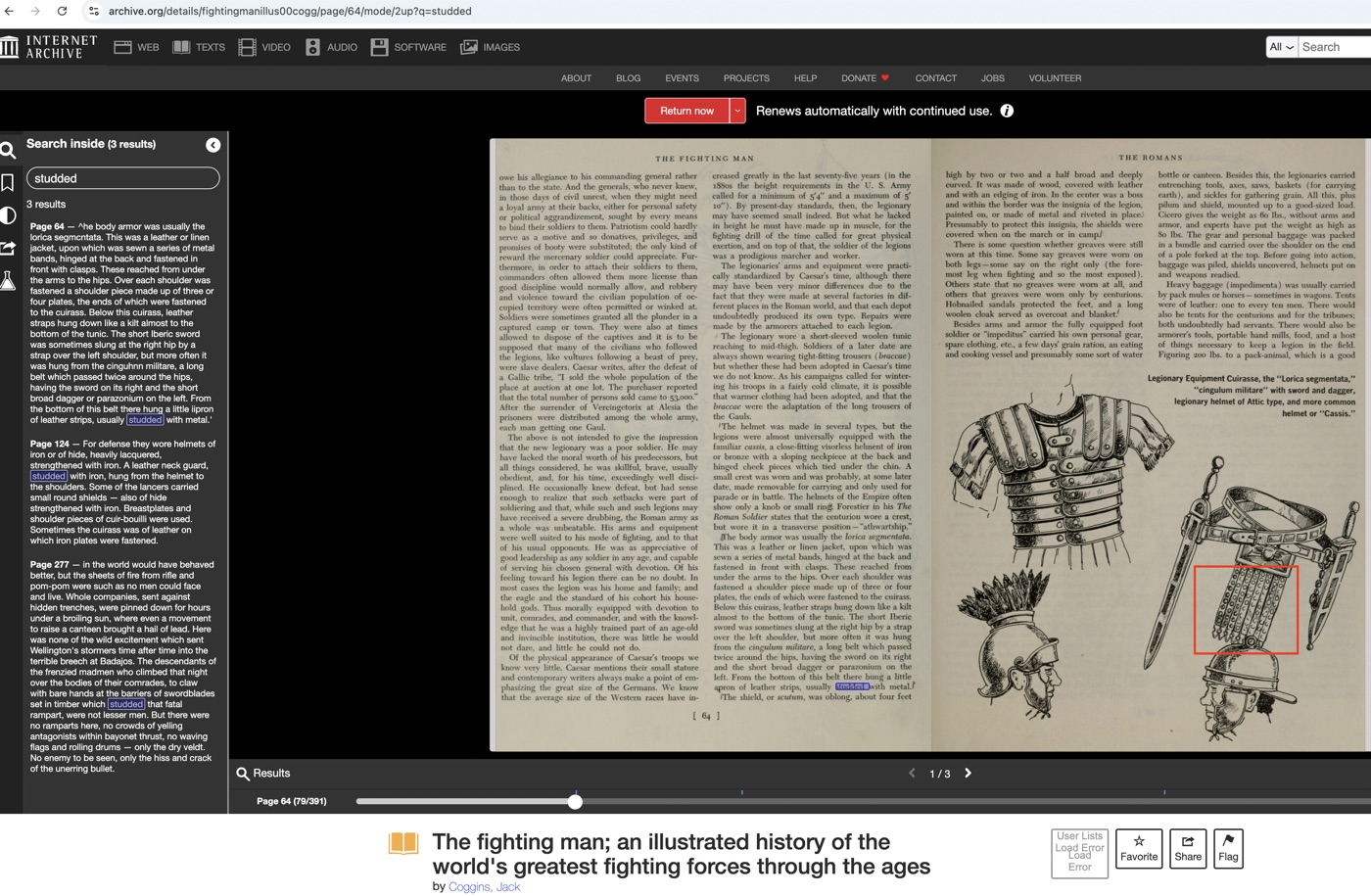
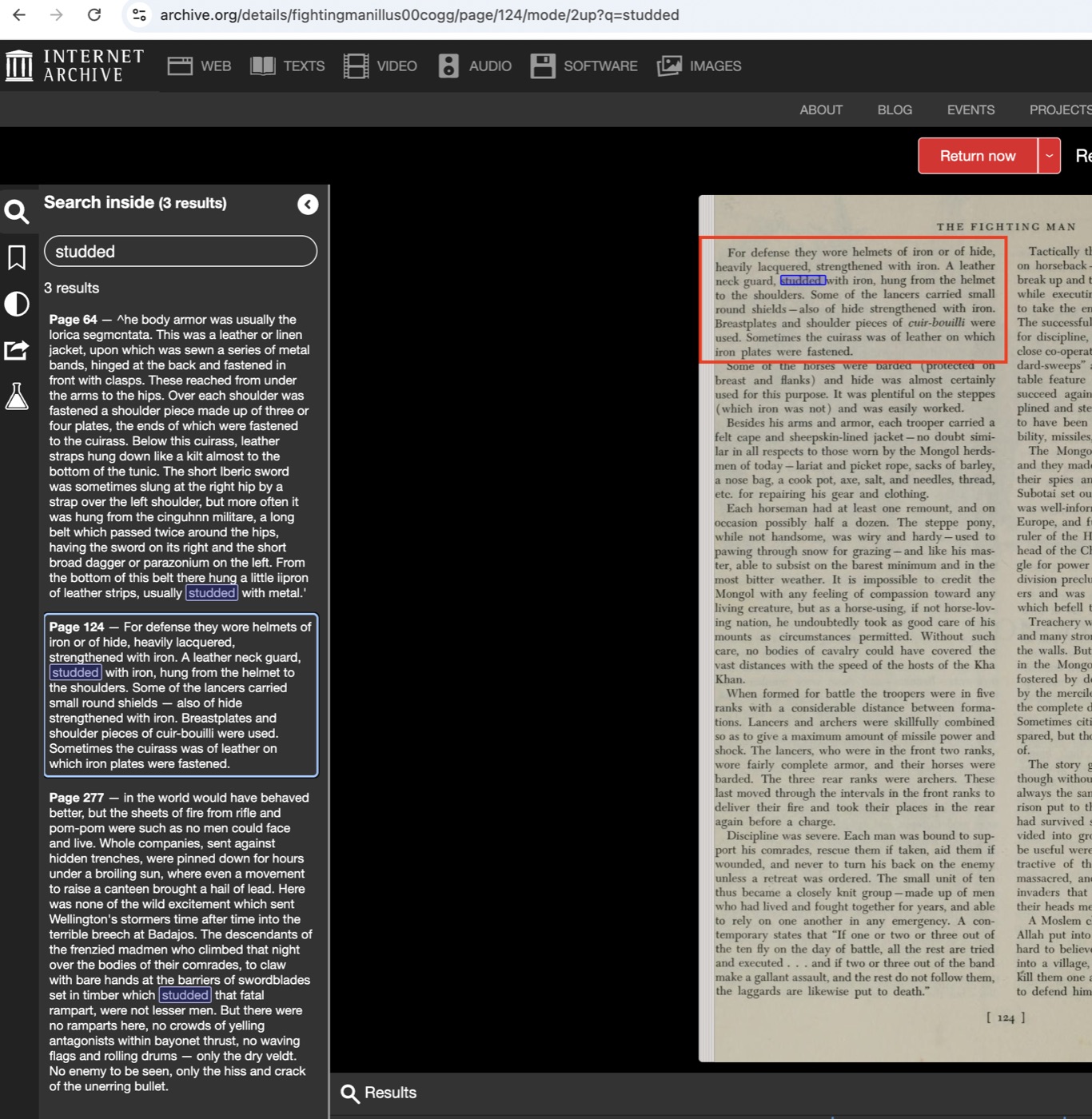
Finally, I happened to take another look at Jack Coggins’ work on the Fighting-Man and found two references to studded leather (Romans on pp. 64-65 and Mongols in the time of Ghengis Khan on p. 124). Case closed?
Post Script
If you like this kind of deep dive into gaming history, check out my article about the armor types present in Dave Arneson’s First Fantasy Campaign published by Judges Guild.
Originally published on Substack on July 24, 2026.