Give Me Some of that Old School Ochre Jelly!
Rodney Hampton
- 8 minutes read - 1586 wordsIs Blackmoor on Janus VI? Is Greyhawk?
For many of us in the know, there’s an auction underway on eBay wherein greed is on full display. The Collector’s Trove is auctioning off some graph paper pages, pencil scribblings, and drawings that were the seed for the original dungeon beneath Castle Greyhawk. Hoping to make $350K minimum (per the email advertising this auction), the 9 bidders have reached $60K and seem to have paused to reconsider their options.
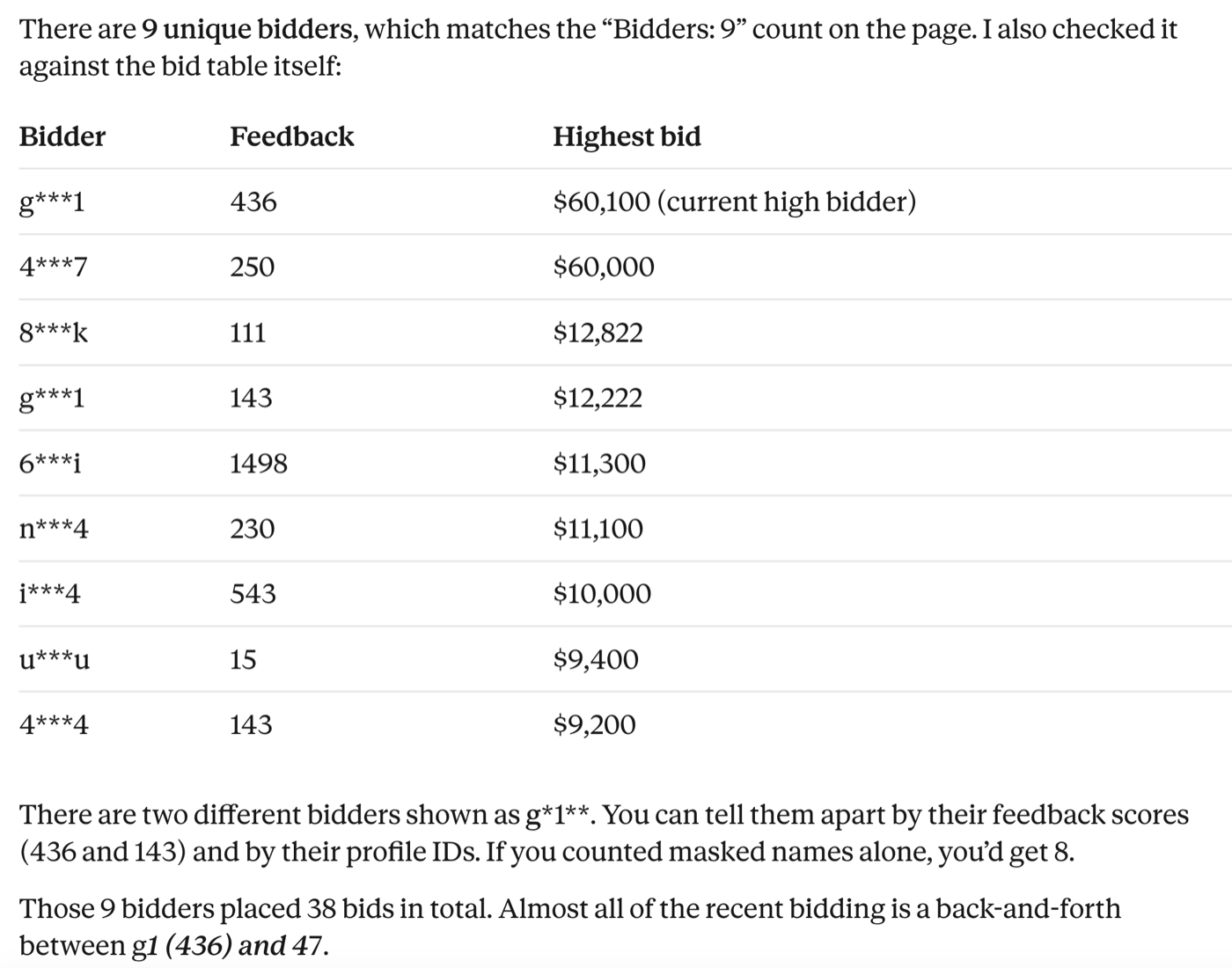
I won’t comment on the potential shenanigans here with the price jump.
It hurts my heart that we are, once again, witnessing our hobby’s origin story being sold off piece by piece to private collectors instead of donated to a university collection or provided to the gaming community at large under some type of OSR compatible license. If the purpose is to benefit Gary’s actual descendants, why not run a proper GoFundMe or Kickstarter like Tonisborg? But I digress.
When I wrote Midwest Fantasy Wargame: The Primeval RPG, I wanted to get as close to the original zeitgeist of the hobby as possible. One of the things I paid particular attention to was making the monsters as gonzo as they were potentially capable of being. For this, I borrowed some ideas from Tunnels & Trolls, Arneson’s First Fantasy Campaign, and other sources that may have informed Gygax and Arneson’s thinking such as the Mummy series of movies. For the Ochre Jelly, the OD&D and B/X and 1st edition AD&D descriptions left me kind of cold.

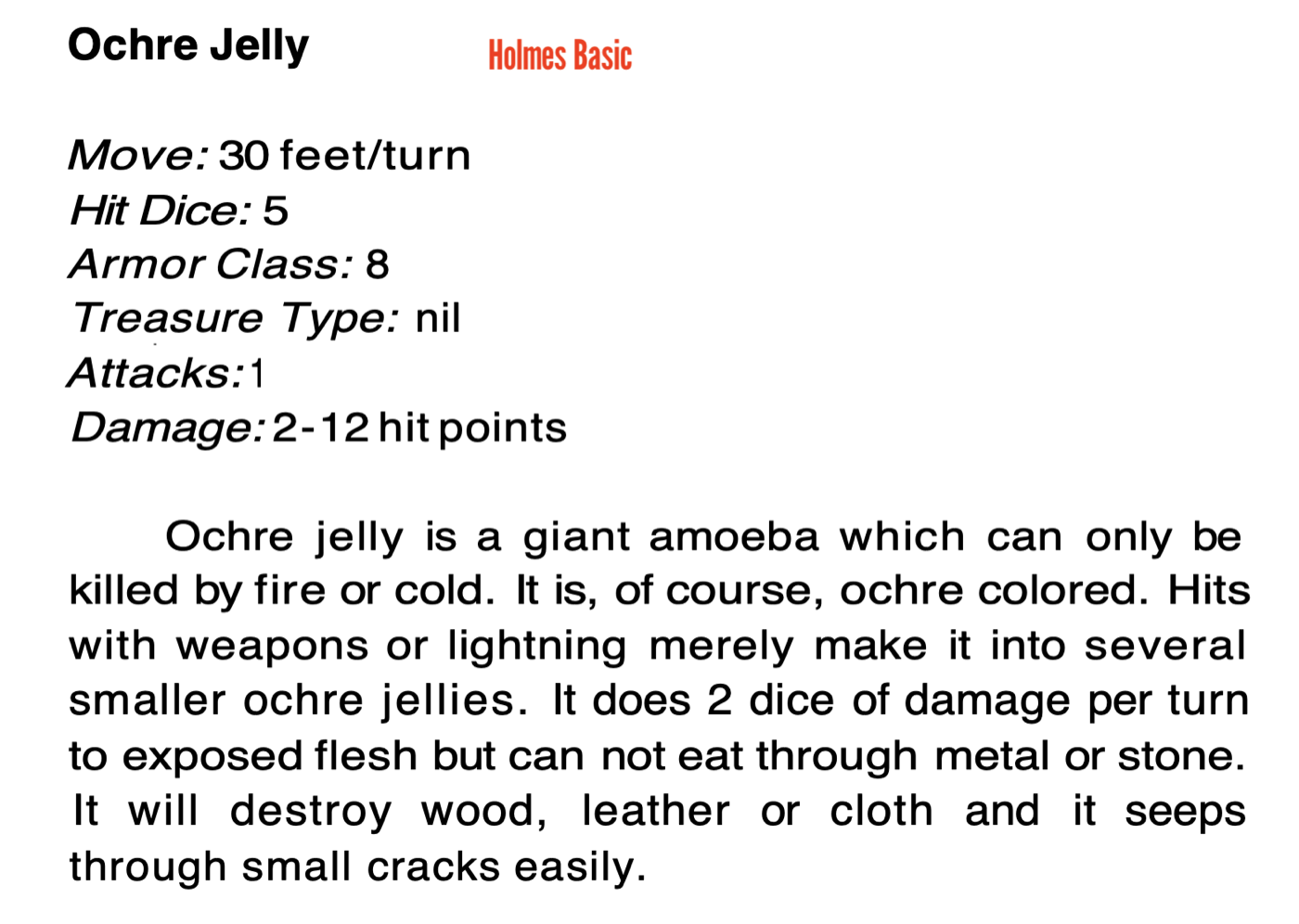
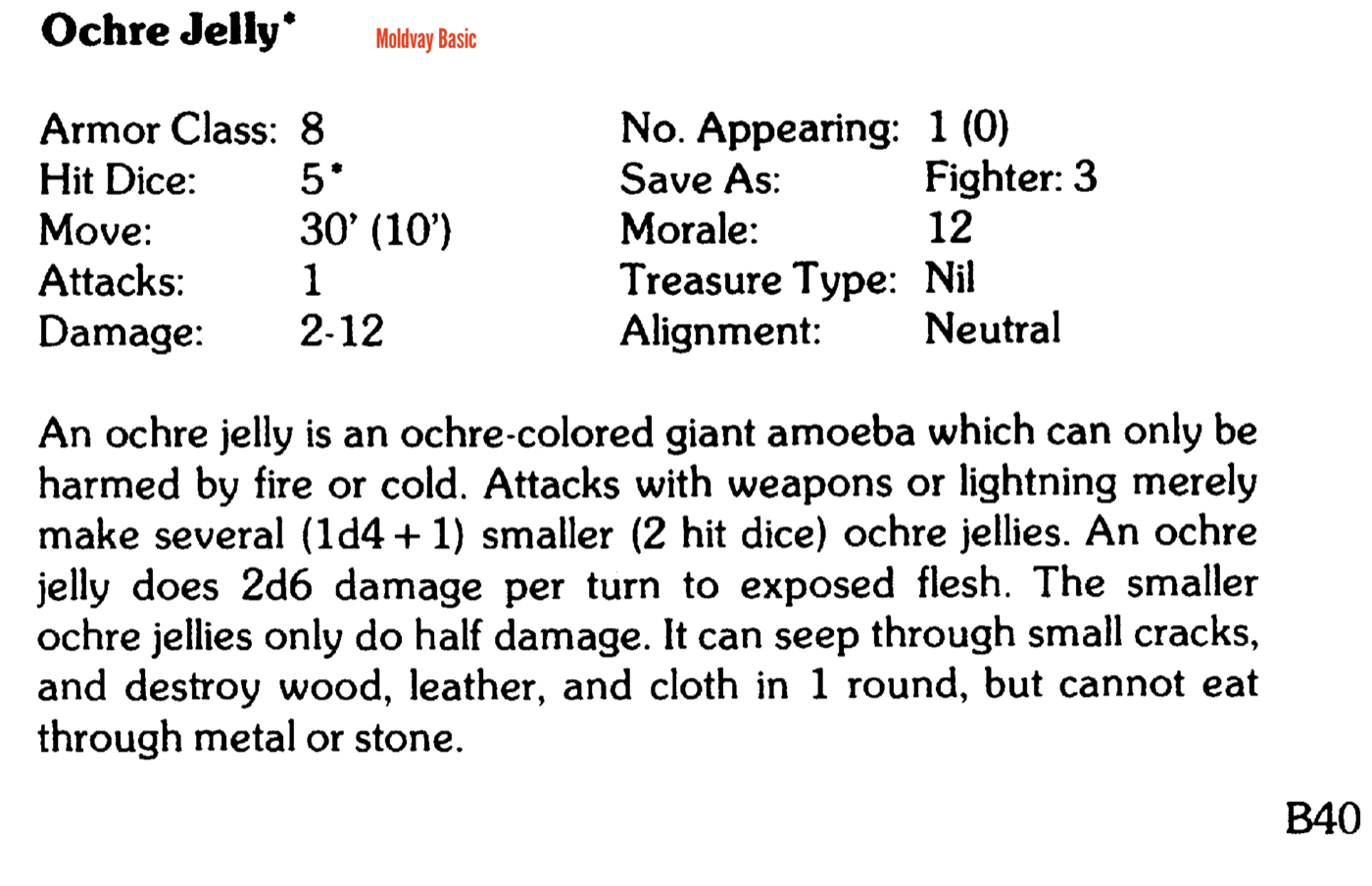
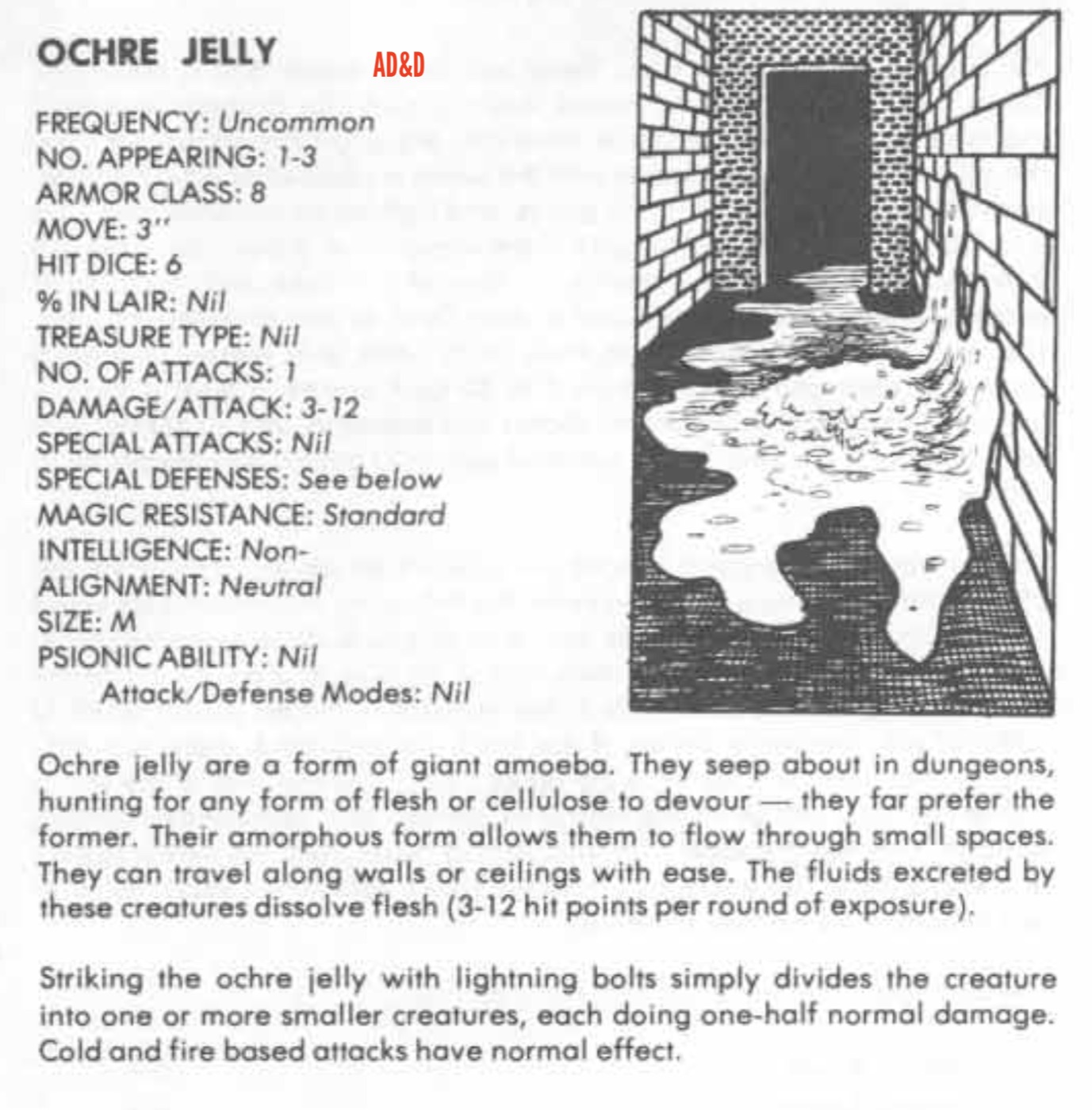
The stats are AC 8, 3” rate of movement, and 5 Hit Dice except AD&D which bumps the Hit Dice for this monster to 6. The only picture we have of this monster is in AD&D where it has a very low profile to the ground. I looked in the Monster and Treasure Assortment and there are multiple entries for this monster. The number in parenthesis is the number encountered, #AT is the number of attacks, AL is attack level which is the base number to score a hit on an unarmored (AC 9) opponent, ST/F3 means saves as Fighting-Man/Fighter level 3. It is interesting the note the slight differences in special abilities (SA). The hit points fall in the range of 18 to 35. If you assume 3.5 hit points per d6 hit die, this puts the monster in the HD 5 to HD 10 range. Interesting!
- Third level encounter # “60. Ochre Jelly - (1) HP: 18; #AT: 1; AL: 6; AC 8; ST/F 3; SA: Not affected by weapons or lightning, destroys wood.
- Third level encounter # “90. Ochre Jelly - (1) HP: 21; #AT: 1; AL: 6; AC 8; ST/F 3; SA: Not affected by weapons or lightning, destroys wood.
- Fourth level encounter # “53. Ochre jelly - (1) HP: 20; #AT: 1; AL: 6; AC: 8; ST/F 3; SA: Not harmed by weapons or lightning, destroys wood, does 1 die of damage to exposed flesh.”
- Fifth level encounter # “89. Ochre Jelly - (1) HP: 23; #AT: 1;AL: 6; AC: 8; ST/F 3; SA: Not harmed by weapons and lightning. Destroys wood, one die of damage to exposed flesh.”
- Sixth level encounter # “89. Ochre Jelly - (1-2) HP: 30, 16; #AT:1; AL:6; AC:8; ST/F 3; SA: Dissolves wood. Not harmed by lightning or weapons.”
- Seventh level encounter # “39. Ochre Jelly - (1-3) HP: 35, 30, 20; #AT: 1; AL: 6; AC: 8; ST/F 3; SA: Not affected by weapons or lightning, destroys wood. Does 1-6 damage to exposed flesh.”
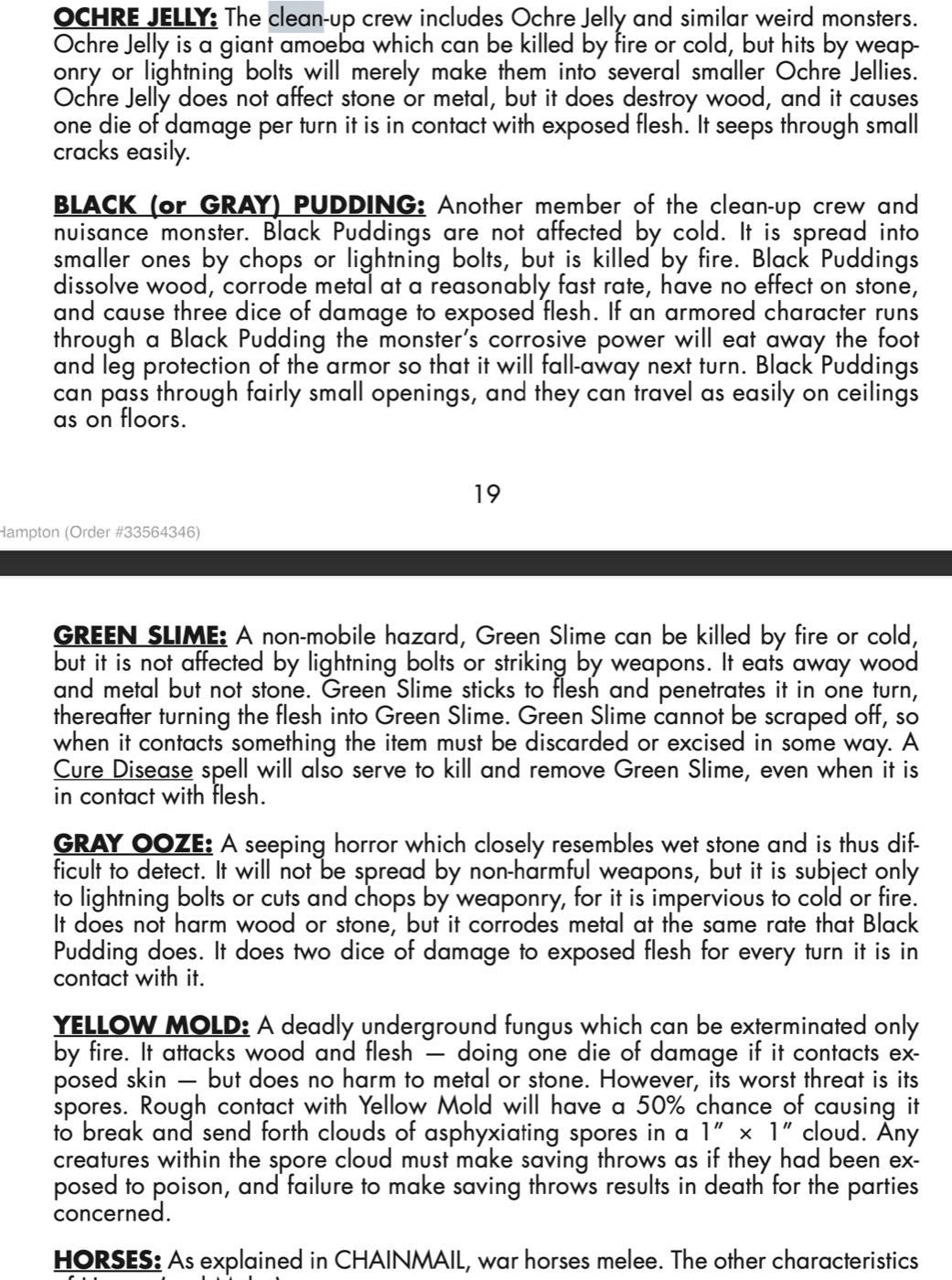
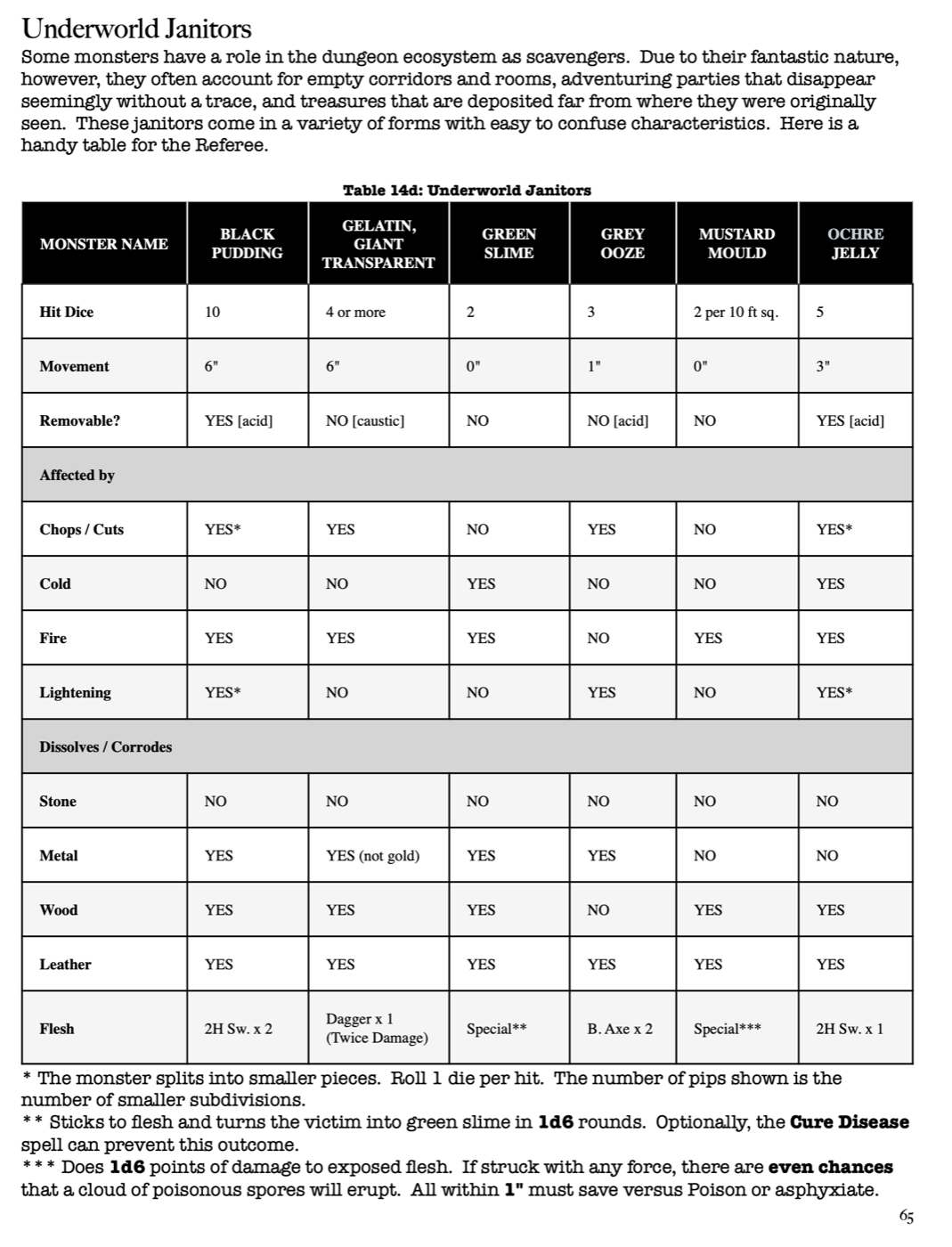
The monster is described as being part of the “clean-up crew” in OD&D. OD&D lists several monsters that seem to fall in this category including Black (or Gray) Pudding, Green Slime, Gray Ooze, and Yellow Mold. In my unpublished expansion for Dragons Beyond entitled “The Usual Monsters” I have created a side-by-side comparison of these “underworld janitors.” For any old school retroclone, the Referee can usually benefit from creating a matrix like this for easy comparison when stocking a dungeon.
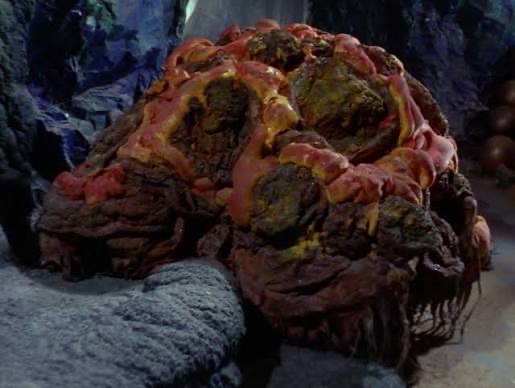
Here’s where the story with the Ochre Jelly gets strange. I read one post by DH Boggs that had an interesting footnote: “Monsters – Black Pudding, Ochre jelly . These two classic baddies were staples of early Blackmoor. Ochre Jelly, btw owes much to the silicon monster of Star Trek.” See D.H. Boggs, The Mystery of the 18 Pages of Notes, November 2014 available at https://boggswood.blogspot.com/2014/11/the-mystery-of-18-pages-of-notes.html. The silicon monster is the Horta which appeared in Star Trek (the original series) season 1, episode #25 : The Devil in the Dark.
Taking Boggs at his word, I decided to incorporate this into the monster description that I wrote for the Ochre Jelly in Midwest Fantasy Wargame.

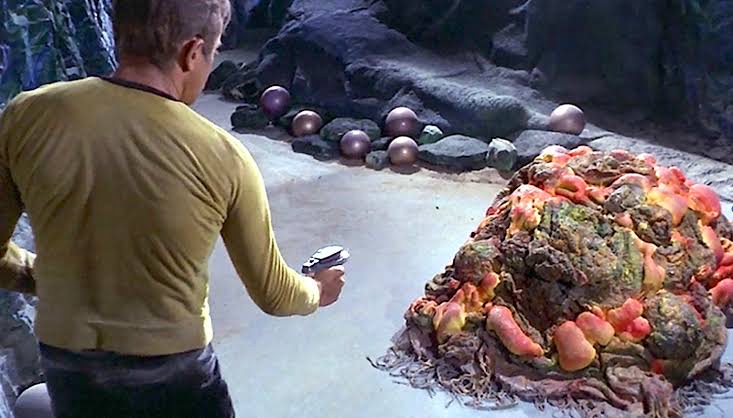
For reference, here is what the Horta looked like:
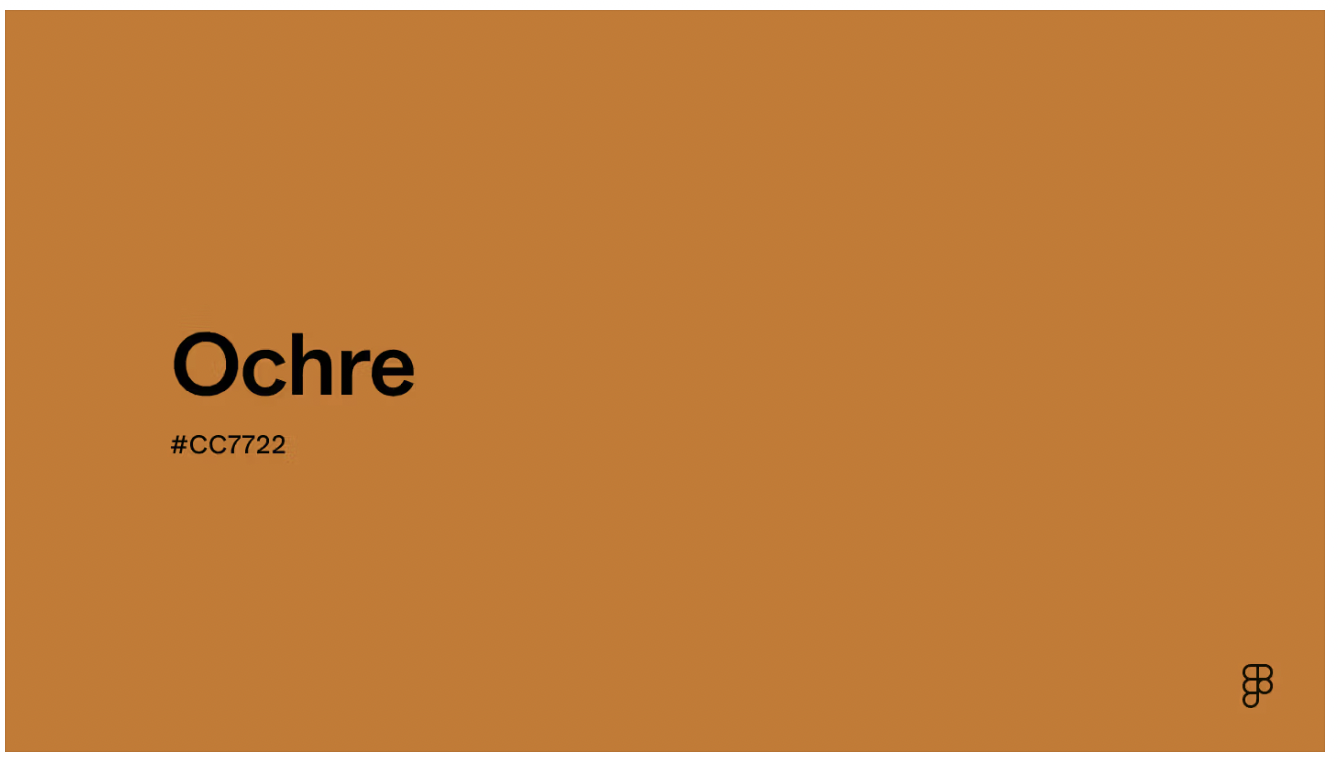
And here is what the color Ochre is generally considered to be (along with its hex code):
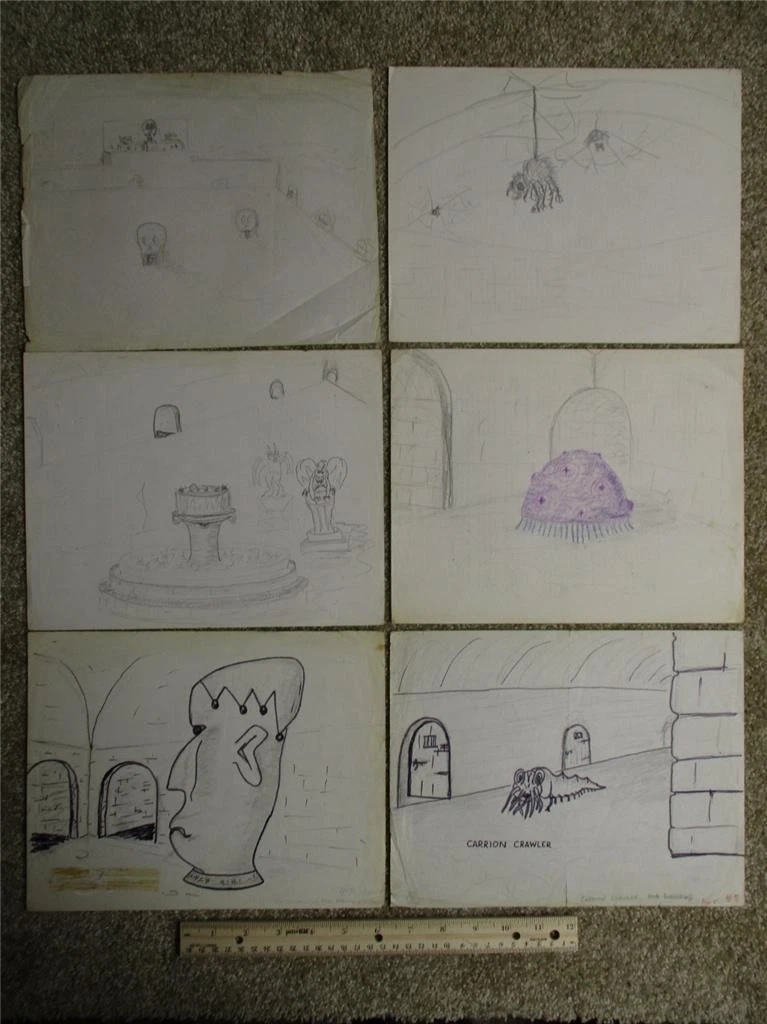
This brings us full circle to the auction of the Greyhawk materials. Although most things are very hard to make out in the pictures, there is a page showing some familiar artwork and one very unfamiliar monster . . . at least up until now. What is the monster in purple? It looks to be half the height of a doorway. It also has a fringe on the bottom.
About 3 feet high with a fringe on the bottom. Hmmmm.
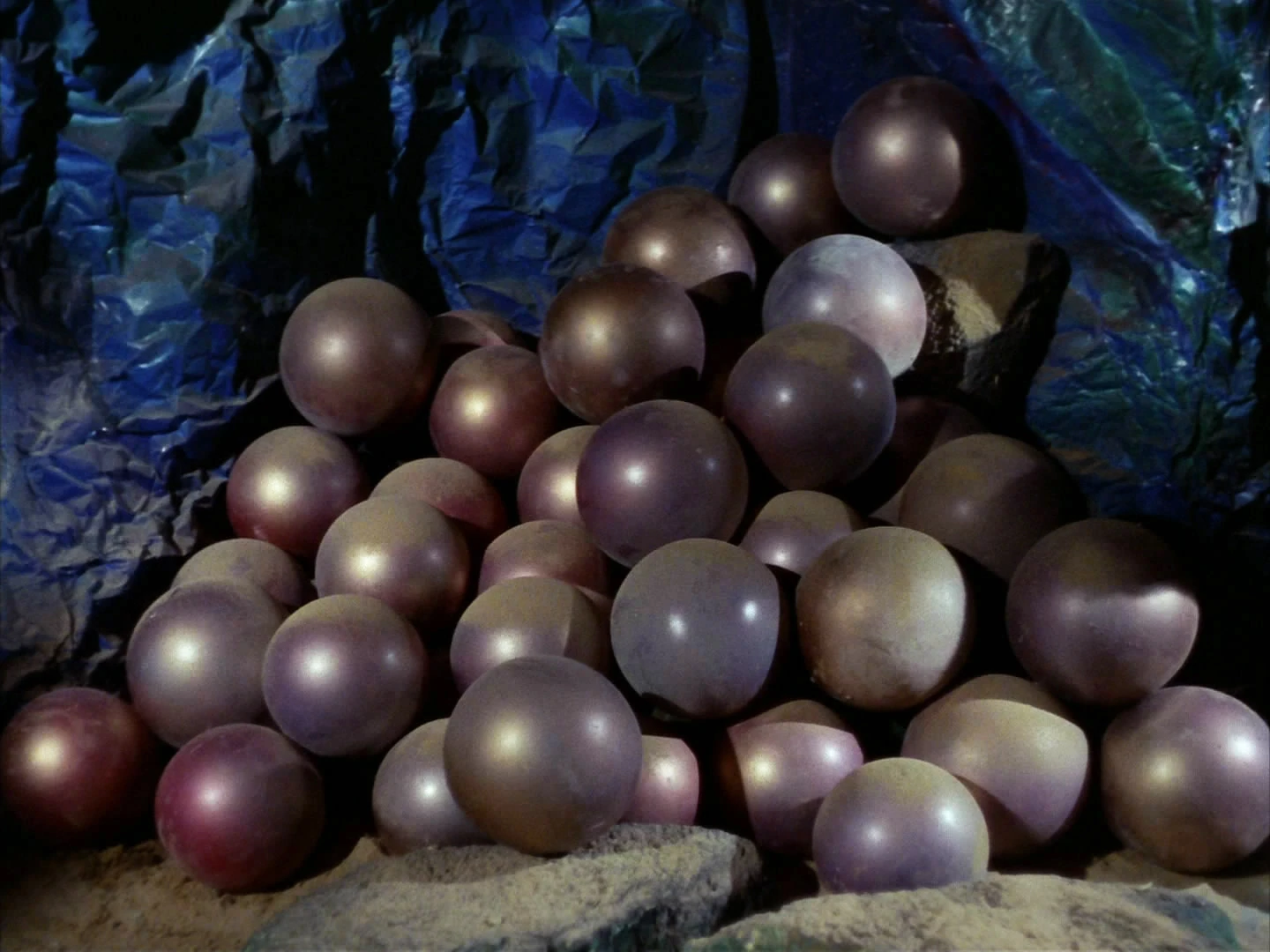
The nodules in the background are the Horta’s eggs. These are some shade of purple though.
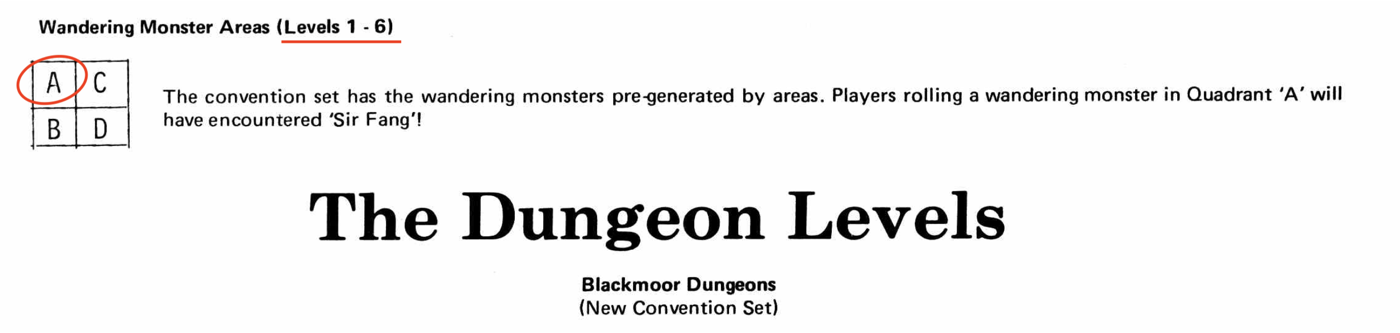
Perhaps this is where I go off the rails completely, but let’s look — once again — at Dave Arneson’s notes as recorded and published in Judge’s Guild First Fantasy Campaign (FFC). There is exactly one page referencing the Ochre Jelly. It is a keyed encounter for room 4 on level 4. It also shows up as a potential wandering monster for quadrant A on level 4. These are two different monsters. They both have AC 8 (the worst armor class in FFC) and 5 Hit Dice. One of them takes 22 Hits to Kill (hit points) and the other takes 17. The 4/2/2 is obscure and I don’t want to go down that rabbit hole with you right now.
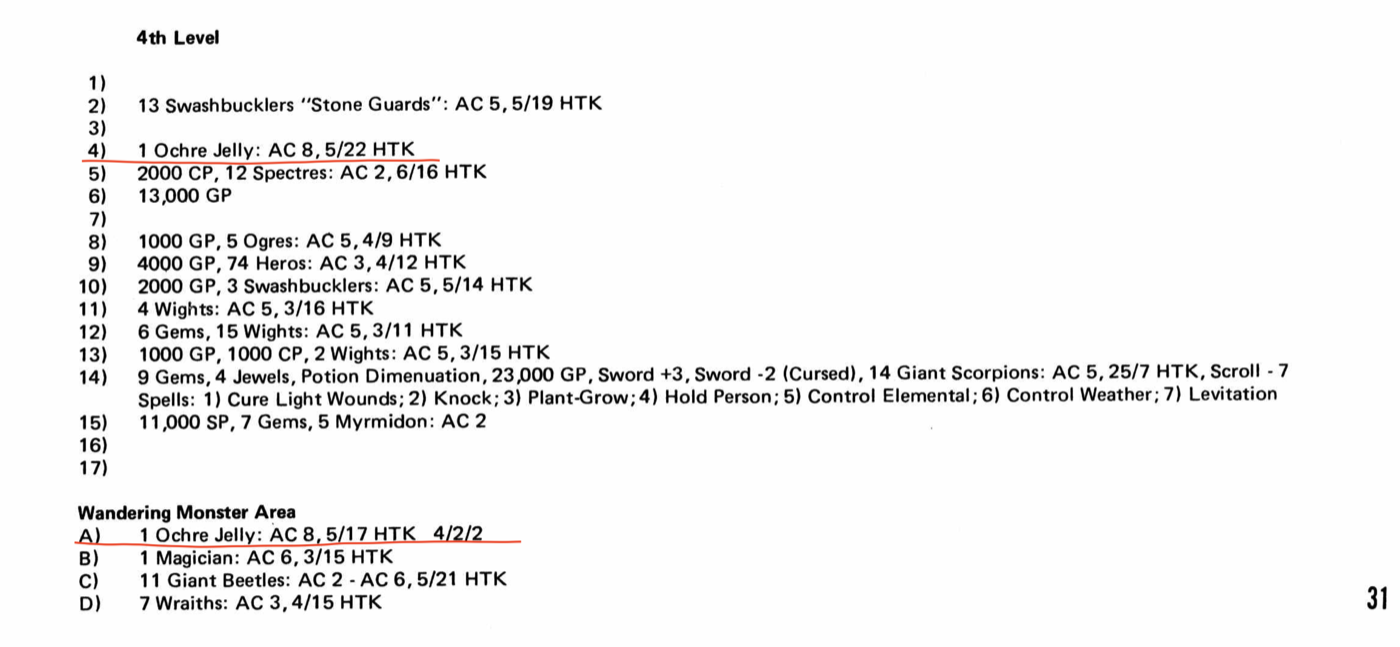
Arneson divided his mega-dungeon into quadrants and used those to key different sets of random encounters.
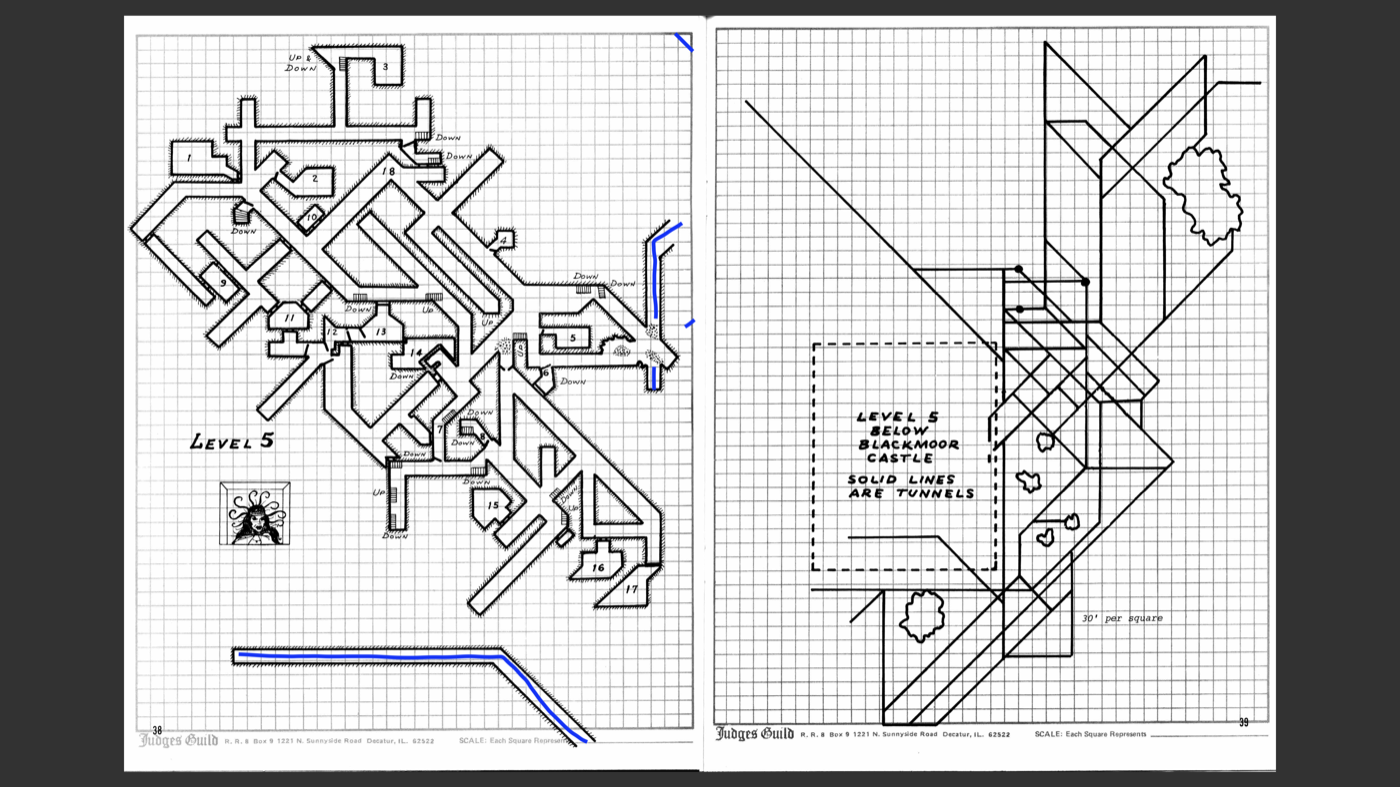
Looking at Level 4, we can see that quadrant A has some caved in areas. Room 4 isn’t strictly in that quadrant but is nearby. But where things really get interesting is that level 4 is one of only two levels in the dungeon with extra-ordinary tunnels that lay outside the footprint for the normal Blackmoor castle dungeons. These tunnels run underneath the environs around the castle and connect with portions of the town of Blackmoor. The map shows us the relative locations of the Church, the Inn, and the Cemetery. The scale on the tunnel map is 30’ per grid. As you might know from Star Trek, the Horta caved in a portion of the cavern in Act 3 which cut Kirk off. Also, the monster was known to create tunnels at an incredible rate of speed, dissolve flesh, etc.
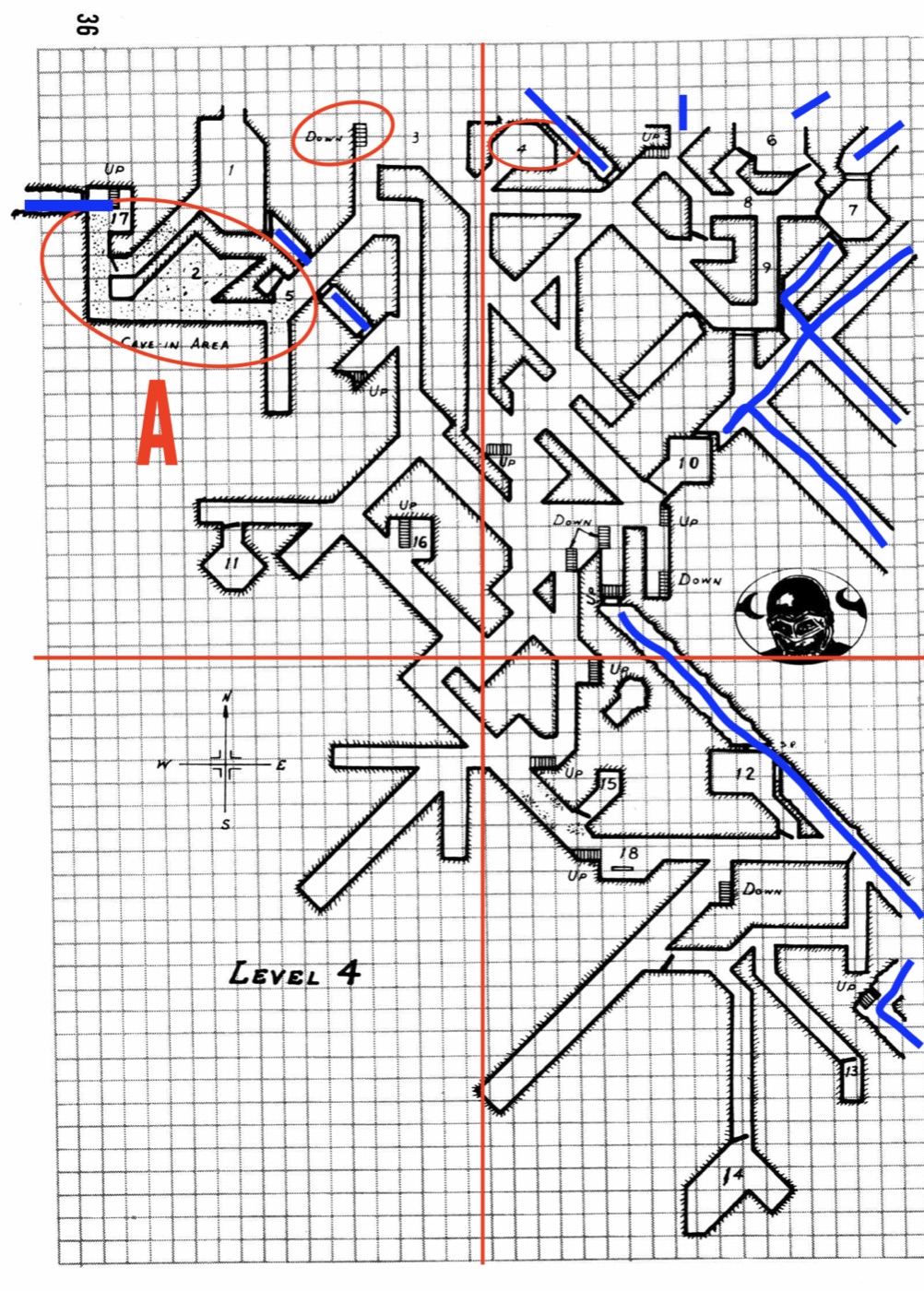
There is a stairway down to level 5 from quadrant A in level 4. Level 5 is the only other level which has these extraordinarily long passages underneath the lands of Blackmoor, though Arneson implies on pp. 17-18 there might be many more tunnel complexes scattered throughout the land.
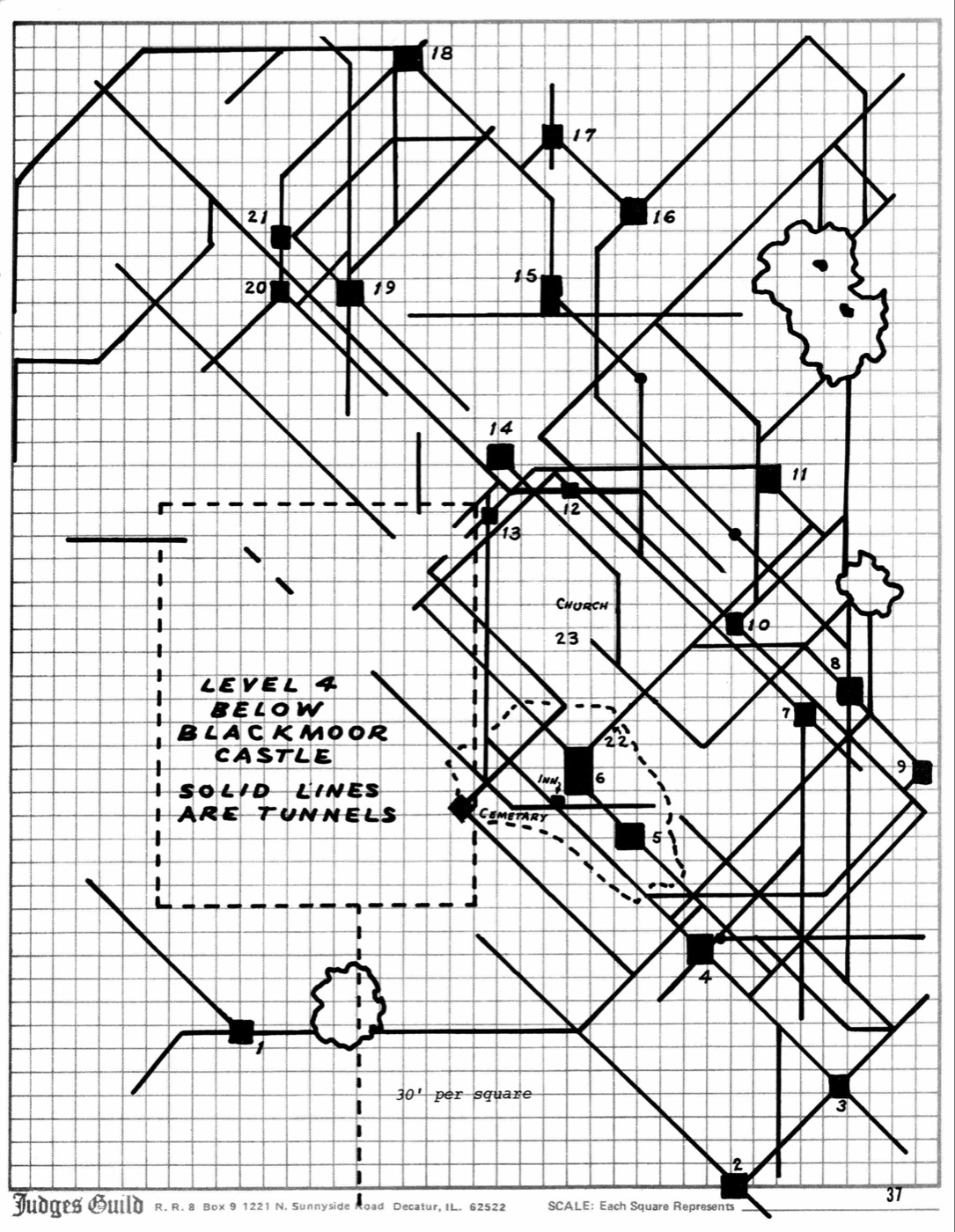
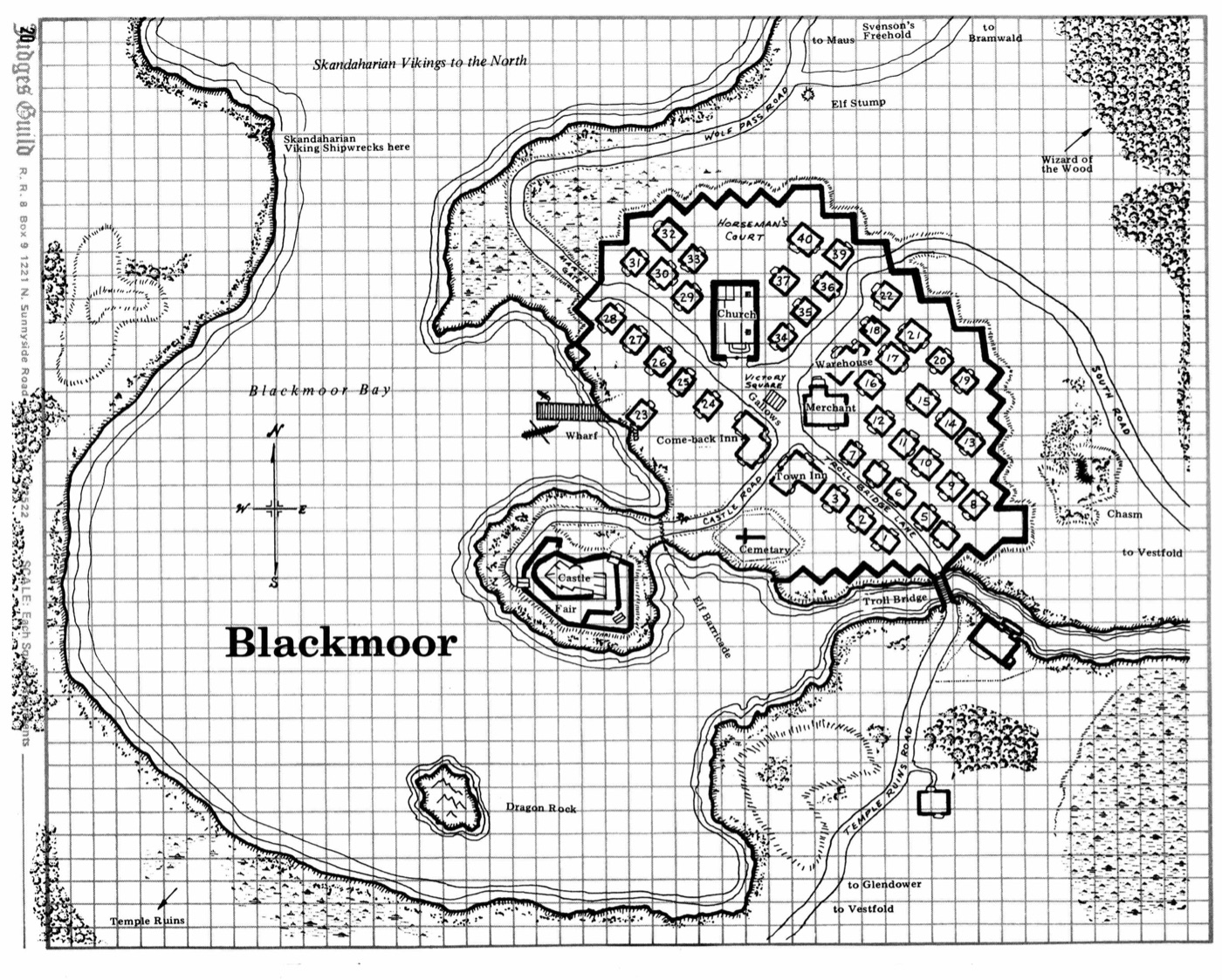
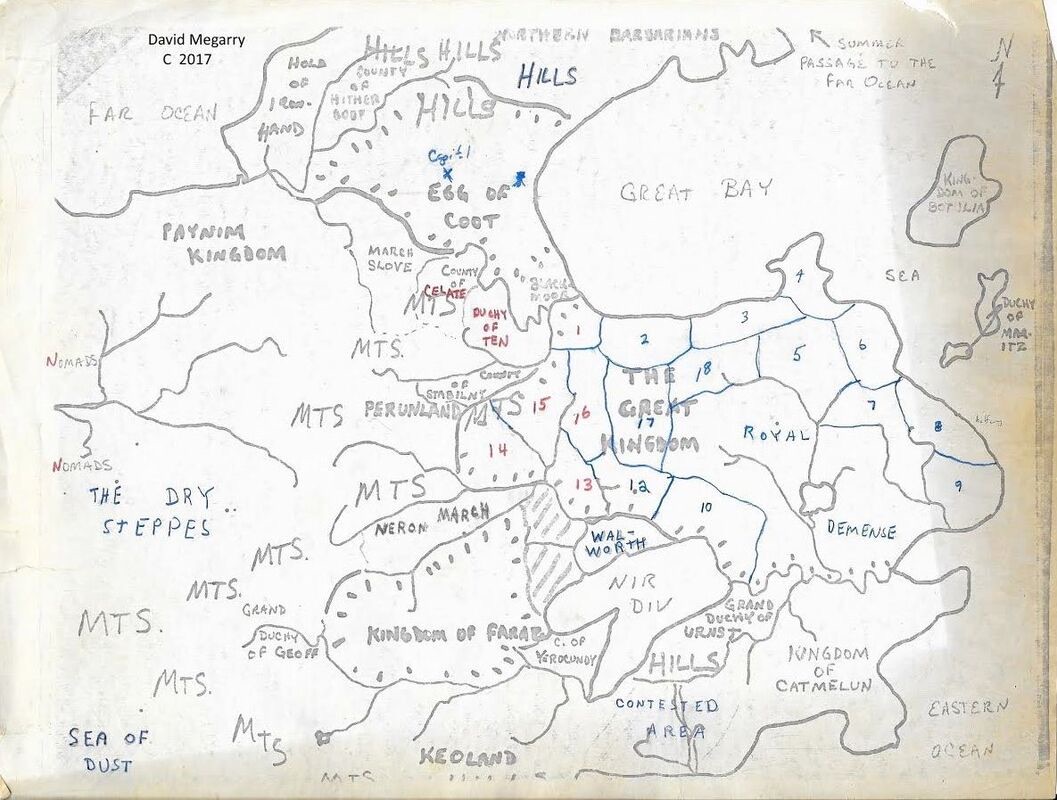
As you might recall, the lands of Blackmoor and Greyhawk were loosely coupled in the early days of both the Twin Cities and Lake Geneva campaigns. Here I will paste in something from Griff’s Secrets of Blackmoor Blog as I think it is fair use. Thanks Griff! and David Megarry for preserving this.
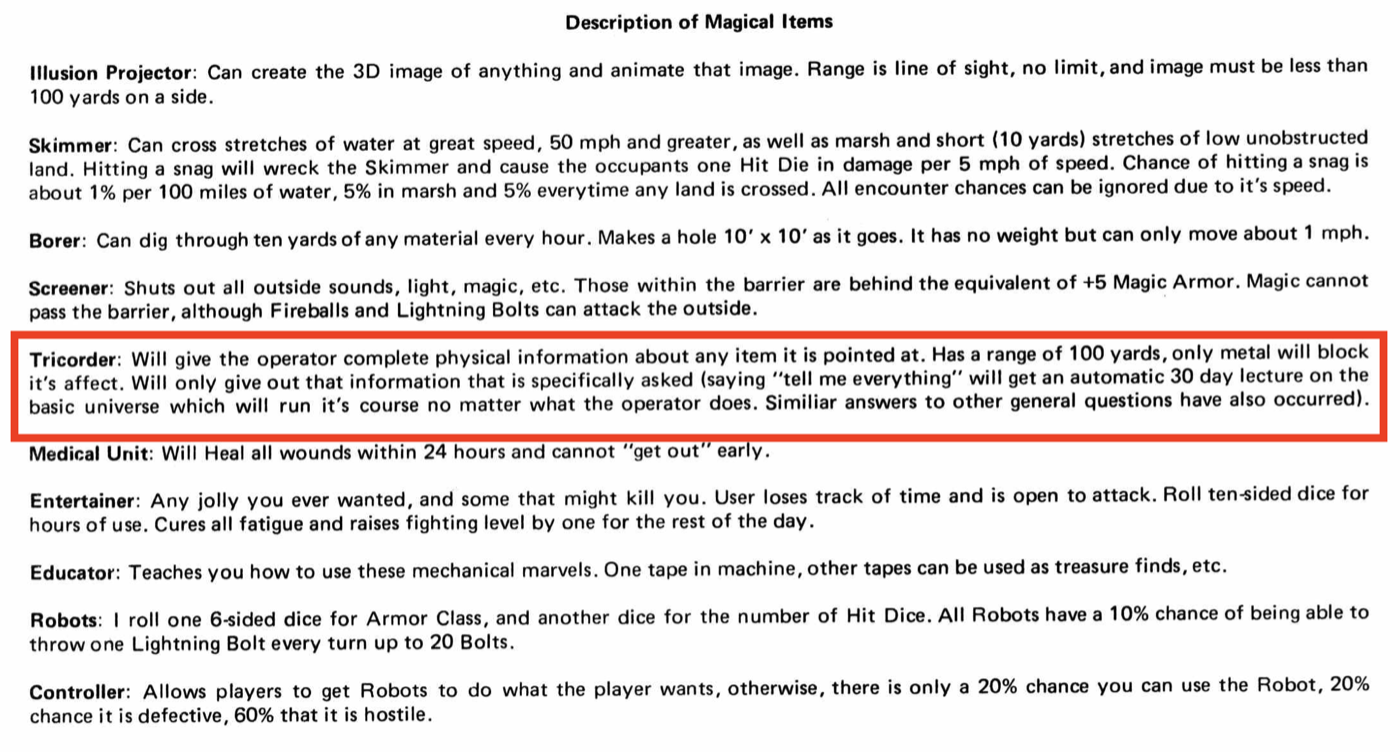
We also know that Dave Arneson had other Star Trek references throughout his campaign. For example, in FFC he has a Tricorder and other alien technologies. (The Entertainer may be a reference to the 1973 movie The Sleeper which has an “Orgasmatron.”).
In OD&D’s Supplement II: Blackmoor, the Temple of the Frog adventure has a backstory that includes a takeover by an alien who is “an intelligent humanoid from another world/dimension. Originally, he and his compatriots were sent to the area to police it against incursions of similar beings, for it was discovered that a dimensional nexus point existed in this area that allowed such possibilities.” (p. 34). One of the things this alien has at his disposal is a module that has “the ability to instantly teleport itself anywhere on the planet, or even to the scout craft. It can carry only one person comfortably but two may be squeezed in. It teleports by voice command as it is programmed for all languages and can also act as a translator. It also can be placed on automatic for further convenience.” (p. 35). This sounds a lot like Star Trek’s transporter and universal translator technology.
Blackmoor’s City of the Gods and Greyhawk’s Expedition to the Barrier Peaks also reference alien technology and add gonzo elements that most people would not associate with a medieval, low-fantasy world.
With all of this said, I submit that the original Ochre Jelly is the Horta race from Janus VI. Furthermore, since there are numerous members of this species still alive, that would place Blackmoor somewhere in time far prior to the events of Star Trek’s original series. Lastly, a Referee can confidently place both Blackmoor and Greyhawk side by side on that world with all that it implies.
Originally published on Substack on November 8, 2026.